Strengthening the work of internal political security protection in the Military in the new situation
Internal political security protection in the Military is an aspect of the Party’s work and a component of the Military’s security protection work; it includes activities aimed at fighting hostile forces, reactionary elements, and malicious individuals who seek to sabotage the Military’s internal affairs. Through these efforts, it helps firmly safeguard organisations and personnel within the armed forces, ensuring that the Vietnam People’s Army (VPA) remains politically pure, ideologically and organisationally strong, and worthy of being an absolutely loyal and reliable political and fighting force of the Party, State, and people.
The work of internal political security protection in the VPA plays a particularly important role, directly contributing to protecting the Party’s ideological foundation, maintaining the Party’s absolute, direct leadership in all aspects and the State’s unified management over the VPA, consolidating internal unity, and cementing the people’s trust in the VPA. At the same time, it proactively prevents internal risks, maintaining the purity and strength of party, command, and masses organisations and the contingent of cadres, party members, employees, and soldiers, enhancing the capacity to detect and defeat all sabotage schemes and activities, ensuring that the VPA remains strong in political, ideological, and organisational terms.
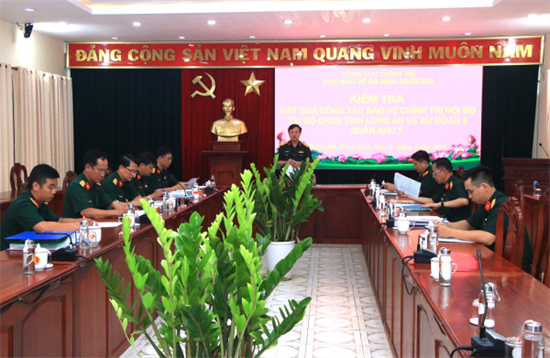 |
| Department of Military Security Protection inspects the work of internal political security protection at Long An Provincial Military Command and Division 5 of Military Region 7 in 2025 |
In recent years, under the leadership and direction of the Central Military Commission (CMC), the Ministry of National Defence (MND), and the General Department of Politics, the work of internal political security protection has been led, directed, and performed by party committees, party organisations, political commissars, commanders, and political agencies at all levels in a serious, rigorous, synchronised manner. The system of directives, resolutions, regulations, and guidance has been improved to meet the requirements of building a “revolutionary, regular, elite, modern” VPA. Security protection agencies and personnel across the VPA have effectively promoted their core role, proactively conducting research, making forecasts, proposing solutions to grasp situational developments, promptly detect and prevent hostile forces’ sabotage, infiltration, and collusion activities, intensifying measures to protect state and military secrets, guaranteeing the safety of all military activities under all conditions.
Furthermore, great value has been attached to educating and training cadres and party members, enhancing their political steadfastness and vigilance, making them proactive in fighting “peaceful evolution”, preventing and repelling degradation in political ideology, morality, and lifestyle, as well as signs of “self-evolution” and “self-transformation”. Due attention has been paid to proactively reviewing, appraising, and verifying political standards for personnel in accordance with regulations, thus effectively serving the organisation of an “adept, compact, strong” VPA and the work of preparing personnel for all-level party congresses within the Military Party Organisation, the 14th National Party Congress, and the election of deputies to the 16th National Assembly and all-level People’s Councils for the 2026 - 2031 term. Coordination mechanisms among forces, agencies, and units both inside and outside the VPA have become increasingly effective, contributing to “early preventing and repelling factors causing internal political instability, maintaining political security and social order and safety, preserving and strengthening a peaceful, stable environment for national construction and development”.
Besides the achievements, the work of internal political security protection still has certain limitations. A number of cadres and party members, including some leaders, have not been fully aware of the position and role of this work; there remain manifestations of oversimplification, subjectivity, and insufficient compliance with regulations; “the ability to resist temptations and negative social impacts remains limited”. The grasp and management of the internal political situation have at times been untimely, while some violations of State law and military discipline have been slow to be remedied.
In the coming years, the situation on global and regional scales will continue evolving rapidly, complexly, unpredictably; military conflicts will emerge with new forms and methods; global challenges will affect the development of nations, including Vietnam. The 4th Industrial Revolution, especially artificial intelligence and the Internet of Things, will profoundly impact defence and security, both creating opportunities and posing challenges. The streamlining of the political system’s apparatus, science and technology development, and digital transformation, including the organisation of the Military towards being “adept, compact, strong”, will open up historic opportunities for building a revolutionary, regular, elite, modern VPA. However, the negative aspects of the market economy will affect the thoughts and lifestyles of troops and may give rise to pragmatism, individualism, and wavering will if troops are not promptly educated and orientated. Hostile forces will continue promoting “self-evolution” and “self-transformation”, seeking to “depoliticise” the VPA and separate the Military from the Party’s leadership and the State’s unified management. Against that backdrop, the work of internal political security protection must be carried out proactively, comprehensively, and synchronously by party committees, political commissars, and commanders at all levels. To that end, emphasis should be placed on several key solutions as follows.
First, strengthening the leadership and direction of party committees, party organisations, political commissars, commanders, and political agencies at all levels over the work of internal political security protection. This is the core solution, playing a particularly important role in guiding all organisations and individuals in carrying out this work. Accordingly, party committees, party organisations, and key cadres at all levels, especially party secretaries and political commissars, must clearly identify internal political security protection as one of the key, regular aspects of Party building work and the development of clean, strong, “exemplary” agencies and units. Attention should be paid to educating cadres, employees, and soldiers on vigilance, enhancing their capacity for self-protection, and creating “immunity” against external negative influences among them.
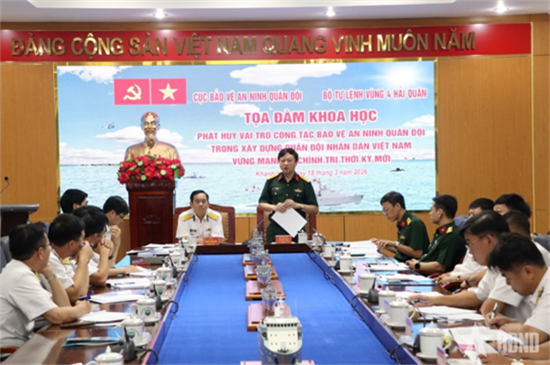 |
| A scientific workshop entitled “Promoting the role of military security protection work in building a politically strong VPA in the new era” (photo: qdnd.vn) |
Second, closely linking internal political security protection with Party building and rectification, strictly and effectively implementing directives, resolutions, and guidelines of the Party Central Committee, the CMC, and the MND on Party building and internal political security protection. Emphasis should be placed on Conclusion 21-KL/TW, dated 25 October 2021, by the 4th Plenum of the 13th Party Central Committee on promoting the building and rectification of the Party and political system, resolutely preventing, repelling, and strictly handling degradation in political ideology, morality, and lifestyle as well as manifestations of “self-evolution” and “self-transformation” among cadres and party members, Conclusion 108-KL/TW, dated 26 December 2024, by the Politburo on strengthening the work of internal political security protection in the new situation, associated with the implementation of the Resolution of the 4th Plenum of the 11th Party Central Committee on urgent issues regarding current Party building work, and Regulation 367-QĐ/TW, dated 4 September 2025, by the Politburo on a number of issues concerning the Party’s internal political security protection. The study and following of Ho Chi Minh’s ideology, morality, and lifestyle, in association with the implementation of Resolution 847-NQ/QUTW, dated 28 December 2021, by the CMC on upholding the virtues of “Uncle Ho’s Soldiers” and resolutely combating individualism in the new situation, should be promoted.
Third, raising the quality of grasping and strictly managing the internal political situation, regularly conducting internal political reviews, promptly detecting cases with political issues and taking measures for handling and properly employing such cases, contributing to purifying the internal environment. The work of appraising and verifying political standards for appointment, conscription, military school enrolment, recruitment, Party admission, and assignment to key and confidential agencies, for cadres going abroad on duty, and for nomination of personnel to party committees at all levels should be proactively performed; signs of degradation in political ideology, morality, and lifestyle as well as “self-evolution” and “self-transformation” from within should be promptly detected, prevented, and repelled. It is vital to grasp the viewpoint “prudence, objectivity, comprehensiveness” and the motto “active, proactive prevention, with self-protection as the main measure”, effectively prevent and combat hostile forces’ sabotage schemes and tactics and other negative, wrongful practices. The work of appraising and approving political standards for personnel must closely follow military activities and promptly serve tasks, especially the planning and appointment of senior cadres to key, confidential agencies, units, and positions; it is essential to comply with procedures and regulations on verifying and concluding political issues of cadres and party members, and on employing those with political issues to ensure that no violations are overlooked while no complaints or denunciations arise regarding personnel standards. Professional measures should be combined with command ones; the operational mechanism of party secretaries and grass-roots protection soldiers should be promoted to promptly detect, prevent, and handle emerging complex issues internally without prolongation.
Fourth, building security protection agencies and personnel in the VPA with political steadfastness, pure ethics, good professional competence, solid legal knowledge, and great professional skills. Party committees and commands at all levels should focus their leadership and direction on making security protection agencies and personnel “adept, compact, strong”, and capable of researching, assessing, analysing, and forecasting situations and giving advice on raising the effectiveness of internal political security protection. Importance should be attached to organising refresher courses for personnel in charge of security protection work and regularly updating them on legal knowledge, specialised expertise, working methods, and skills in handling complex situations. It is necessary to strengthen scientific research, practical review, and experience exchange among agencies and units both inside and outside the VPA to improve their advisory capacity, guidance, and task performance and build a contingent of military security protection personnel as the core force in giving advice and guidance on the work of internal political security protection.
Strengthening the work of internal political security protection in the Military in the new situation is a requirement of urgency and decisive importance to building a politically strong VPA. To achieve practical effectiveness, it is vital to synchronously, resolutely implement the above solutions, thereby contributing to building an increasingly politically pure, ideologically and organisationally strong VPA with great overall quality and combat strength as an absolutely loyal, reliable political and fighting force of the Party, State, and people.
Lt. Gen. BUI TRONG VINH
Director of the Department of Military Security Protection