Stepping up mass mobilisation work in the Military in line with the Resolution of the 14th National Party Congress
The 14th National Party Congress affirms that “the People are the root” and that the People are the subjects and centre of the cause of national renewal, construction, and protection. Thoroughly grasping this viewpoint, agencies and units across the Vietnam People’s Army (VPA) continue to renew and further improve mass mobilisation work, thereby consolidating the close-knit bond between the Military and the People, building an increasingly firm “posture of people’s hearts and minds”.
Practice shows that the strength of the People and the great national unity bloc constitute an enormous resource and an important factor ensuring all victories of the Vietnamese revolution. Hence, our Party has always attached importance to mass mobilisation work, ensured and protected the legitimate and lawful rights and interests of the People, and promoted the People’s right to mastery and creativity, thus strengthening the bond between the Party and the People, cementing trust and consensus within society.
For the VPA, mass mobilisation is a very important component of its function as an “army ready for work”, closely associated with the process of building the close-knit bond between the Military and the People. In nearly 82 years of building, fighting, winning, and growing, our VPA has always relied on the People, maintained a close-knit bond with the People, and wholeheartedly served the People. This has been a great source of strength enabling the VPA to fulfil all its tasks. In the new situation, effectively conducting mass mobilisation work is a requirement, political responsibility, a source of pride, and an important means for the VPA to participate in building political bases, consolidating great national unity, strengthening defence and security, contributing to building strong, modern all-people national defence and people’s security, firm postures of all-people national defence and people’s security, and a solid “posture of people’s hearts and minds”.
Over the years, mass mobilisation work in the Military has been carried out comprehensively and extensively, becoming increasingly practical and strongly orientated towards grass-roots level. Agencies and units across the VPA have actively renewed the content and methods of mass mobilisation, linking this work with their political tasks and practical requirements in each locality, encouraging the People to participate in building grass-roots political systems, fostering socio-economic development, consolidating defence and security, thus contributing to building strong localities.
Through the effective implementation of various movements and campaigns, many good models and creative approaches in mass mobilisation work have continued to be maintained and replicated, creating a widespread impact among the People. Typical examples include “Skilful mass mobilisation”, “The Military joins hands in building new-style rural areas”, “The Military joins hands for the poor - leaving no one behind”, “Supporting children’s schooling”, and “Border Guard Post’s adopted children”. Alongside these efforts, social welfare and “Gratitude” activities have been stepped up, practically caring for the lives of the People, particularly in remote and isolated areas, areas mainly inhabited by ethnic minority communities, and border, sea, and island areas. In natural disaster response and search and rescue operations, the Military has always been the core and vanguard force, being present in dangerous places to provide support for Party committees, authorities, and the People. In the “Quang Trung Campaign” alone, the Military mobilised more than 312,000 cadres, soldiers, and members of the militia and self-defence force, together with tens of thousands of vehicles, to construct and repair 986 houses and civil facilities, etc. This contributed to cementing the People’s trust, building a firm “posture of people’s hearts and minds”, and affirming and spreading the qualities, prestige, and noble image of “Uncle Ho’s Soldiers” in the new period.
In the coming period, mass mobilisation work in the Military will continue to face new requirements, particularly amid complex developments of natural disasters, epidemics, and non-traditional security challenges. Besides, hostile forces are increasingly exploiting sensitive issues to distort information, divide the great national unity bloc, and undermine the bond between the Military and the People. Thoroughly grasping the viewpoints and policies on mass mobilisation work set out by the 14th National Party Congress, Party committees and Party organisations at all levels, key cadres, agencies, and units across the VPA need to focus on leading and directing the synchronous implementation of the following key solutions.
First, thoroughly grasping the viewpoint that “the People are the root”, promoting the role of the People as the subjects and their central position in mass mobilisation work. Agencies and units should be fully aware that: “All lines and policies must genuinely stem from the needs, aspirations, rights, and legitimate interests of the People”, while taking “the happiness and satisfaction of the People as the measure and objective of endeavour”. On that basis, they should renew methods of approaching and organising mass mobilisation towards staying close to, understanding, and respecting the People and taking responsibility for the People. A firm grasp of the situation, thoughts and aspirations of the People, and issues of concern to the People should be regularly maintained, particularly in key areas, remote and isolated areas, and border, sea, and island areas, in order to promptly give advice on resolving issues arising at grass-roots level. In the process of performing tasks in localities, it is necessary to fully assess possible impacts on the People’s daily activities, production, and legitimate interests and proactively explain to the People to ensure that the People clearly understand and agree with the policies and methods of implementation.
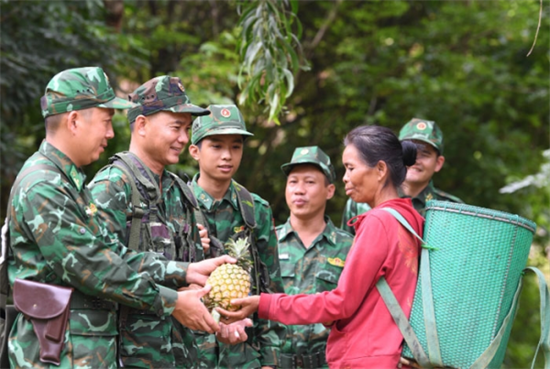 |
| The close-knit bond between Van Kieu ethnic minorities and border guard troops in Quang Tri province (photo: qdnd.vn) |
Additionally, it is important to raise the responsibility of Party committees, commands, and each cadre and soldier in mass mobilisation work and overcome the mindset that this is a task solely for political agencies and specialised personnel. Each cadre and soldier must link the performance of their functions and tasks with respect for the People, strict observance of discipline, and protection of property, the environment, and local customs in their stationed areas; they must practise what they preach, particularly by seriously, practically, and effectively fulfilling commitments made to the People. Formalism and bureaucratisation must be resolutely removed, while practical effectiveness and the People’s consensus and trust must be seen as the measures of the results of mass mobilisation. Through these efforts, the viewpoint that “the People are the root” will be turned into unified awareness and regular action, contributing to cementing trust, strengthening the bond between the VPA and the People, and preserving and spreading the qualities and noble image of “Uncle Ho’s Soldiers” in the new period.
Second, renewing the content and methods of mass mobilisation, strongly orientating this work towards grass-roots level, raising the effectiveness of propagation and mobilisation among the People. Agencies and units need to step up the renewal of methods of conducting mass mobilisation in accordance with the VPA’s tasks, local characteristics, and each target group; priority should be given to remote and isolated areas, border, sea, and island areas, areas mainly inhabited by ethnic minority communities, religious areas, and disadvantaged areas. They should closely combine regular mass mobilisation with twinning activities, effectively implementing the Project entitled “Field marches for mass mobilisation by the VPA and Militia and Self-Defence Force in the new situation”. Propagation and mobilisation should be linked with the performance of defence and security tasks, socio-economic development, care for people’s livelihoods, and the resolution of practical issues at grass-roots level; a strong shift from dissemination based on pre-prepared content to selection of issues, methods, and timing appropriate to each locality and target group should be made to ensure that mass mobilisation work is practical and effective.
It is essential to continue to “renew the content and methods of dissemination and mobilisation, effectively use mass media and social networks in a practical manner, cement consensus, and consolidate the People’s trust in the Party, State, and socialist regime”. The content of propagation must be accurate, timely, easy to understand, and appropriate to each target group; direct propagation should be combined with the effective use of the press, radio, television, digital platforms, and social networks. Great value should be attached to providing official information, promptly addressing issues of concern to the People, raising their awareness and vigilance, and helping the People identify hostile forces’ plots and tactics to exploit sensitive issues for distortion, incitement, division, and sabotage. It is vital to proactively provide guidance and combat erroneous views and distortions, thereby contributing to consolidating trust, strengthening consensus, and building a firm “posture of people’s hearts and minds”.
Third, promoting democracy, strengthening dialogue, listening to the People, and promptly giving advice on the settlement of their legitimate and lawful petitions. Agencies and units need to thoroughly grasp and strictly implement the motto: “The people know, the people discuss, the people do, the people inspect, the people supervise, the people benefit”. Due regard should be paid to improving the quality and effectiveness of mass mobilisation, promoting grass-roots democracy, and creating conditions for the People to provide opinions and feedback on matters directly related to their legitimate rights and interests and their lives. At the same time, agencies and units should strengthen meetings and dialogues, particularly in localities where there are many issues of concern to the People. Leaders and commanders of units must directly listen to and respect the opinions of the People, proactively clarify matters falling within the functions, tasks, and authority of their units; they must not evade issues, impose their views, or engage in formalistic dialogues, or delay settlement.
Consideration should be given to raising the quality of receiving, classifying, handling, and responding to the opinions and petitions of the People, clearly determining responsibilities and deadlines for each matter. Issues falling within the relevant authority must be considered and resolved under regulations; issues beyond that authority must be proactively reported to competent authorities for settlement. For complex and sensitive cases, it is necessary to proactively keep a firm grasp of developments, analyse the causes, select appropriate methods of mobilisation, and combine dialogue, explanation, and persuasion with the proper implementation of lines, policies, and laws. Doing so will help ensure that the People’s right to mastery is exercised in a substantive manner, and that issues arising at grass-roots level are identified and addressed promptly and in accordance with regulations.
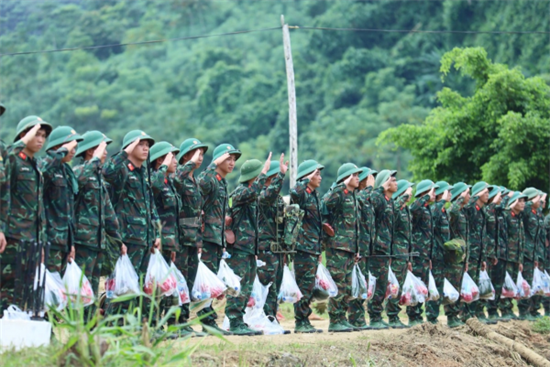 |
| Soldiers of Division 316 after search and rescue operations at Lang Nu village, September 2024 (photo: qdnd.vn) |
Fourth, consolidating the organisational structure and improving the quality of the contingent of cadres engaged in mass mobilisation. Agencies and units should regularly review and “consolidate mass mobilisation organisations at all levels, build a pool of mass mobilisation cadres who have a firm grasp of local areas and cultures and effectively perform ethnic and religious work”. Accordingly, it is important to continue to consolidate agencies and forces engaged in mass mobilisation towards being adept, compact, and effective, correctly determine their functions, tasks, and working relationships, and enable them to give sound advice to Party committees and commands on leadership and direction over mass mobilisation work, as well as guide and inspect the process of implementation. Significance should be attached to the planning, selection, and development of cadres with political steadfastness, moral qualities, prestige, dedication, hands-on experience, the ability to mobilise the masses, and the capability in grasping and analysing situations and local areas, particularly issues related to ethnicity, religion, and security and order at grass-roots level.
There should be a reform in the training and professional development of cadres closely aligned with their tasks and local characteristics; the provision of knowledge should be combined with the cultivation of skills and experience in handling situations in mass mobilisation. Emphasis should be placed on fostering knowledge of socio-economic affairs, law, ethnicity, religion, customs, practices, and languages, developing skills in dissemination and mobilisation at grass-roots level, combining full-time training with routine refresher training and practical experience. The task performance, practical competence, and prestige among the People must serve as important bases for evaluating and employing cadres. Efforts should be concentrated on building a corps of mass mobilisation cadres with political steadfastness, professional competence, and a thorough understanding of local areas to meet their task requirements in the new situation.
Fifth, strengthening coordination and bringing into full play the combined strength in mass mobilisation work. Thoroughly grasping the viewpoint that “mass mobilisation work is the responsibility of the entire political system”, agencies and units across the VPA, based on their functions, tasks, and areas of operation, need to proactively coordinate with Party committees, authorities, the Vietnam Fatherland Front, political - social organisations, and forces in the locality to reach agreement on the content, methods, forces, and responsibilities for mass mobilisation. The role of local military agencies in providing advice and coordination should be promoted to ensure that mass mobilisation is linked with socio-economic development, defence and security consolidation, the building of political bases, and the resolution of issues arising at grass-roots level. Coordination should be maintained to effectively implement the “skilful mass mobilisation” emulation movement and build “units with good mass mobilisation”, in tandem with national target programmes and emulation movements and campaigns both within and outside the VPA, with a focus on disadvantaged areas and target groups and issues of concern to the People.
Resources from the VPA, localities, enterprises, organisations, and communities should be proactively mobilised and effectively used to ensure social welfare, achieve sustainable poverty reduction, overcome the consequences of natural disasters, and assist the People in stabilising their lives and production. When unexpected and complex situations arise, it is necessary to promptly coordinate forces and vehicles, reach agreement on plans, clearly assign responsibilities, and ensure that support is provided according to actual needs, to the right beneficiaries, and in an open, economical, effective manner. These efforts will help create combined strength, improve the effectiveness of mass mobilisation, consolidate the People’s trust, and build a firm “posture of people’s hearts and minds”.
Thoroughly grasping the Resolution of the 14th National Party Congress, agencies and units across the VPA should continue to be place mass mobilisation work within the overall task of Fatherland construction and protection, linked with promoting the strength of the People and consolidating the close-knit bond between the Party, the Military, and the People. This is a regular and long-term task that requires a high degree of unity in awareness, responsibility, and action across the VPA. Effectively implementing the above solutions will contribute to strengthening the “posture of people’s hearts and minds” and provide a solid foundation for the VPA to successfully perform its functions and tasks and meet the requirements of Fatherland construction and protection in the new era.
Maj. Gen. BE HAI TRIEU
Director of the Department of Mass Mobilisation