Some lessons learned from the professional operations of Drug Crime Prevention and Control Task Force No.2
Fighting and preventing drug-related crime at sea is a combat task of the Vietnam Coast Guard (VCG). Fully aware of its assigned missions, Drug Crime Prevention and Control Task Force No.2 has proactively monitored situational developments and synchronously implemented professional measures to resolutely combat and prevent drug-related crime early, from afar, and beyond the national borders, thereby contributing to maintaining political security, order, and safety at sea, protecting the People’s peaceful lives.
Over the years, our Party and State have consistently identified drug crime prevention and control as an important, urgent, regular, long-term task aimed at ensuring security and social order and safety. On this basis, numerous lines, policies, and laws have been issued to mobilise the combined strength of the entire political system, with the Public Security and the Military serving as the core. Besides, measures to combat and prevent drug-related crime have been synchronously taken, thus mitigating the enormous harm caused by this type of crime to social life.
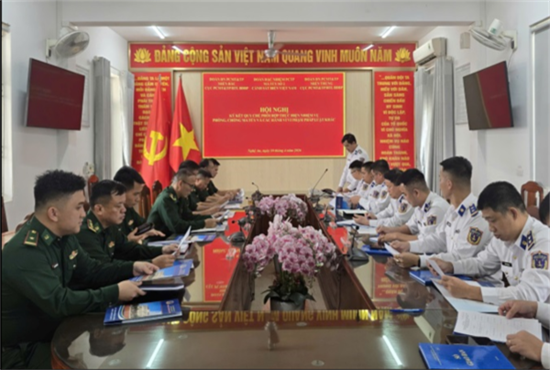 |
| The signing of regulations on coordination in drug crime prevention and control |
However, under the impact of the drug situation in the region and around the world, drug-related crime in Vietnam remains complex and fraught with unpredictable developments. In the North Central Coast's maritime areas, the illicit use, trading, and transport of narcotic substances have continued to show an upward trend, with increasingly sophisticated, audacious methods and tactics. Criminals have taken full advantage of the vast and complex geographical areas, diverse maritime transport routes, and loopholes in management to conceal and transport drugs. When detected, they often use firearms to resist fiercely and fight to the end. Notably, the illegal production, trading, and transport of synthetic drugs and highly toxic psychotropic substances have continued to develop in a complex manner, increasing the risk of crime and social evils, placing increasingly demanding requirements on drug-related crime monitoring, prevention, detection, and combat.
Against that backdrop, the Party Committee and Command of Drug Crime Prevention and Control Task Force No.2 of the VCG have regularly worked with Party committees and authorities of the North Central Coast provinces and relevant agencies to proactively develop specialised operations and plans, focusing on leading and directing its professional teams and sections to maintain a close presence in their areas of responsibility, monitor developments, and actively coordinate efforts to combat and prevent drug-related crime, thereby contributing to ensuring political security and social order and safety in the maritime, island, and inland areas under the Task Force's responsibility, protecting the peaceful lives of the People.
From its practical professional operations, the Task Force has drawn several lessons, which also serve as measures for the coming period.
First, effectively conducting propagation, dissemination, and education on the law and regulations governing the fight against drug-related crime. Identifying this as one of the important measures for preventing crime at grass-roots level, the Task Force has regularly coordinated with local relevant agencies, Party committees, and authorities to intensify dissemination of legal provisions on drug prevention and control and the fight against drug-related crime, as well as information on the scope of responsibility and power of the VCG to enable cadres, soldiers, and citizens in coastal localities to improve their legal awareness, sense of responsibility, vigilance, ability to recognise drug-related offences, and willingness to proactively prevent and report violations of drug-related laws.
The Task Force has determined that the content of propagation and education must be practical, easy to understand and remember, and suited to each target group, geographical area, and mission requirement, with emphasis placed on directives, regulations, and legal guidance on crime prevention and combat and drug control. Following the principle that “the law is the foundation”, it has proactively renewed and diversified the content, methods, and forms of law propagation, dissemination, and education aligned with political and ideological education and the training of its troops’ political zeal, sense of discipline, and responsibility in performing their duties. For people in coastal communes, religious communities, and pupils, it has worked with local Party committees and authorities, the Public Security and Border Guard forces, and schools to organise direct propagation activities, linking legal education with information about criminals' methods and tactics and the consequences and of trading, transporting, storing, and using drugs. These efforts have helped raise public awareness, responsibility, and vigilance, preventing people from being enticed into or assisting drug-related crime. During the first eight months of 2026, the Task Force coordinated with other forces to provide legal education on drug crime prevention and control to more than 6,100 citizens, distribute nearly 10,000 leaflets, and present 100 legal books, among others.
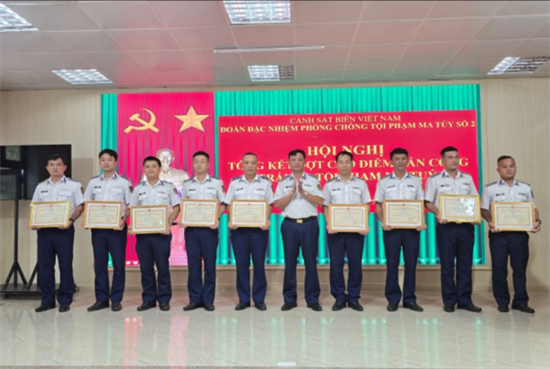 |
| Rewarding collectives and individuals with outstanding achievements in drug crime prevention and control |
Second, focusing on raising the quality of the development of covert networks. In combating and preventing drug-related crime, covert networks play an especially important role as on-the-spot sources of information, helping professional forces monitor developments and detect early signs of criminal activity, particularly along key routes and in critical areas. Fully aware of this, the Task Force has regularly coordinated with Party committees and authorities in the provinces, relevant agencies, seaport management units, and businesses to select organisations and individuals who meet the prescribed requirements, thus gradually developing and consolidating covert networks suited to the characteristics of each area and operational route. To improve the quality, reliability, and effectiveness of each source, it has strictly followed procedures for selection, task assignment, testing, and evaluation, regularly providing guidance and training in professional knowledge and skills, including skills in monitoring and analysing situations, objects of struggle, and geographical areas, identifying drug handover and receipt activities and concealment methods, reporting and secretly providing information about drug-related crime.
At the same time, the Task Force has strictly implemented regulations on assessing the operational effectiveness as the basis for classifying sources and promptly removing those with poor task performance. It has regularly encouraged and motivated those sources and promptly ensured all entitlements and benefits for them. These efforts have enabled the Task Force to establish an extensive covert network with a firm grass-roots presence and a structure suited to local conditions. The network has provided an additional important information channel for the Task Force to monitor and forecast developments, quickly detect drug criminals' methods and tactics, and facilitate the establishment of specialised operations and the development of plans to combat drug-related crime, thereby contributing to maintaining security and order.
Third, attaching importance to developing political steadfastness, courage, resolve, and professional expertise among cadres and soldiers. Combating and preventing drug-related crime is an exceptionally dangerous and complex task that involves intense pressure and may directly threaten personnel's lives. Adhering closely to the motto “great professional competence, good knowledge of the law, close engagement with local areas, practical expertise, mastery of technology, and professional integrity”, the Task Force has directed its agencies and units to strengthen political and ideological education, foster a proper sense of professional motivation and responsibility, and render all cadres and soldiers deeply aware that combating and preventing drug-related crime is not merely a professional activity but also a political responsibility to the Party, State, Military, and People.
In addition to intensifying political and ideological education, the Task Force has regularly updated and disseminated new lines and legal regulations on crime prevention and combat and drug control, promptly providing information on new methods and tactics employed by criminals to help cadres and soldiers strengthen their commitment to legal compliance, proactively prevent violations, and follow the proper procedures and exercise the appropriate authority when performing their duties. Besides, it has attached importance to developing professional expertise and inter-agency coordination capabilities among cadres and soldiers, particularly younger personnel. It has regularly coordinated with the Public Security and Border Guard forces to provide training in investigative techniques, while sending its staff members to professional training courses held by higher echelons. Notably, it has regarded practical experience gained through each specialised operation, case, and activity in each area as an important environment for training its cadres and soldiers.
Given the fact that drug criminals increasingly exploit technology, modern equipment, and sophisticated tactics, the Task Force has encouraged cadres and personnel to engage in self-study and apply science and technology in their professional operations. The effectiveness of personnel development and professional capacity-building has been reflected in the results achieved during the first eight months of 2026. During this period, the Task Force worked with relevant forces to successfully crack 31 specialised operations and cases, arrest 56 suspects, and seize 7.55 kg of heroin, 105,376 drug pills, 9.664 kg of synthetic drugs, 4.2 kg of ketamine, one military-grade firearm, and other exhibits.
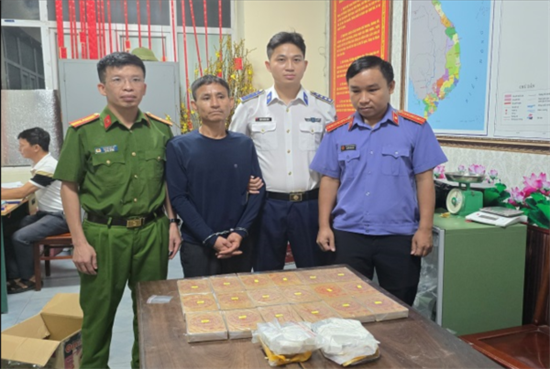 |
| Coordinating with other competent forces in cracking a drug transport case |
Fourth, closely coordinating with other forces to generate combined strength in combating and preventing drug-related crime. Practical experience has shown that combating and preventing drug-related crime at sea and in coastal areas is an extremely difficult and complex task involving numerous geographical areas, levels, sectors, and forces. Therefore, the Task Force has regularly coordinated with relevant forces and units to develop specialised operations and plans to combat and prevent drug-related crime at sea and in coastal areas. It has reinforced reconnaissance forces at seaports, ship basins, and key locations to monitor developments. It has also promptly exchanged and shared information about drug-related crime in maritime, seaport, and inland areas. In the coordination process, it has emphasised commanders' roles and responsibilities and ensured unity in awareness, determination, and action, while strictly observing legal regulations, coordination protocols, and confidentiality principles. In addition, it has strengthened the inspection, control, and monitoring of vessels before their departure, as well as vessels travelling through border, border gate, and seaport areas.
To lay a basis for classifying suspects, the Task Force has closely worked with local Party committees and authorities to gain a firm understanding of local conditions, the activities of businesses in seaport areas, and individuals with criminal conviction records, suspicious behaviour, or potential criminal tendencies, compile lists of such individuals, and consider placing them under surveillance and investigation. When signs of drug-related crime have been detected, it has directed its teams and sections to develop and carry out specialised operations in a rigorous, scientific, specific, meticulous, resolute manner. After suspects have been arrested and exhibits seized, it has coordinated with relevant forces to issue decisions to initiate criminal proceedings and hand over the suspects, case files, and exhibits. After each case, specialised operation, or mission, it has conducted reviews in a thorough, serious, frank, objective, and receptive spirit. It has compiled and systematised practical lessons learned from drug-related crime prevention and combat into documents for personnel training and professional development.
Building on its spirit of initiative, resourcefulness, courage, resoluteness, and flexibility, Drug Crime Prevention and Control Task Force No.2 will continue to coordinate with relevant forces and intensify efforts to combat and prevent drug-related crime, and strive to fulfil its core role in law enforcement and protection of national security, order, safety, and sovereignty at sea, thereby safeguarding the peaceful lives of the People.
Sr. Col. PHAN QUANG HUY
Commander of the Task Force