Promoting the strength of all-people logistics in building strong, modern all-people national defence
Building strong, modern all-people national defence is a strategic policy of the Party, requiring the fullest mobilisation of the nation’s overall strength. In this endeavour, developing and harnessing the strength of all-people logistics is of strategic importance, laying a foundation for building logistics and technical potential and posture, thereby strengthening the country's ability to defend the Fatherland.
All-people logistics is rooted in the principle of relying on the people and harnessing their collective strength to build and defend the country. It has been developed on the basis of Marxism - Leninism, Ho Chi Minh’s Thought, and the Party’s policies on all-people national defence and people’s war. In essence, all-people logistics concretises the principle of harnessing the collective strength of the entire people and mobilising resources comprehensively for national defence. It encompasses the preparation, organisation, mobilisation, and transformation of the logistics resources of the people and the country as a whole into logistics and technical potential, posture, and support capabilities for military and defence tasks.
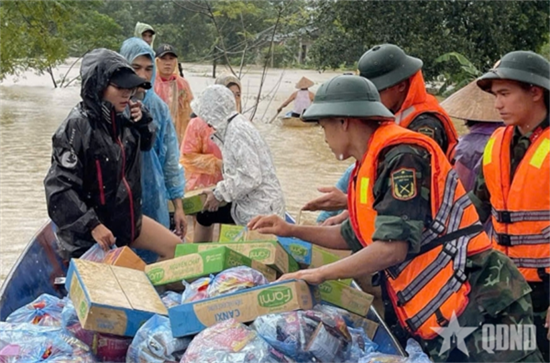 |
| Troops and people join hands in settling the consequences of natural disaster (photo: qdnd.vn) |
The strength of all-people logistics derives from the nation’s aggregate potential, first and foremost its human resources, together with its economic, scientific, technological, infrastructural, transport, logistics, health care, industrial, agricultural, energy, information resources and capabilities, national reserves, and material and spiritual resources of society. These resources are created and accumulated throughout the process of national construction and development. Yet resources alone are not equivalent to the strength needed to support national defence. They become such strength only when they are fully identified, systematically planned, prepared in advance, properly organised, and mobilised, allocated, and employed through appropriate mechanisms.
Therefore, the strength of all-people logistics cannot be measured merely by the scale of available resources; more importantly, it lies in the capacity to organise and transform national potential into effective logistics and technical support capabilities when contingencies arise. In this process, the military logistics - technical Sector (the Sector) plays a core role, which does not mean taking over the responsibilities of ministries, localities, enterprises, or other actors in society. Instead it is reflected primarily in the ability to advise on preparations, provide guidance, develop plans, coordinate efforts, connect resources, and receive, distribute, and effectively use resources for military and defence tasks. This reflects a close, mutually reinforcing relationship between the logistics potential of the entire people and country and the Military’s ability to organise the provision of logistics and technical support. National resources provide the material foundation and constitute a necessary condition, while the Sector serves as the core in organising, coordinating, connecting, and transforming those resources into concrete support capabilities tailored to task requirements under different conditions and contingencies.
Historical experience has clearly demonstrated this relationship. From mobilising manpower and material resources for the Dien Bien Phu Campaign to organising the strategic Truong Son transport route during the resistance war against US imperialists for national salvation, logistics and technical support has always depended on the close coordination between the Military’s ability to organise such support and the strength of the home front, sectors, localities, and the people. This experience shows that the enduring lesson lies not merely in the scale of resources available for mobilisation, but more importantly in the capacity to organise, connect, and coordinate those resources. It lies in the ability to combine national potential with the Military’s capacity to organise logistics and technical support in order to transform the strength of the entire people and country into effective logistics and technical support capabilities that meet the demands of warfare and national defence. This experience also provides an important practical basis for further developing strategic thinking, refining mechanisms, and innovating approaches to building and harnessing all-people logistics under new conditions.
With the Party’s policies on military affairs and national defence thoroughly grasped and concretised, awareness and organisation regarding the mobilisation of national resources for defence tasks have continued to improve in recent years. The logistics and technical potential and posture of the all-people national defence have been consolidated and developed. Mechanisms for mobilising, coordinating, and harnessing resources across different levels, sectors, localities, and society have become increasingly refined. Importance has been attached to closely combining socio-economic development with strengthening national defence and security. Resources in transport, health care, industry, agriculture, energy, logistics, national reserves, and other fields have been increasingly aligned with national defence support requirements. Logistics support in defensive zones and on-site logistics have received greater attention, while cooperation between the Military and ministries, sectors, localities, enterprises, and the people in mobilising manpower and material resources has become closer and more effective. The core role of the Sector has continued to be promoted. In particular, the reorganisation of the General Department of Logistics - Technical Services has enhanced unity and coordination in leadership, direction, and the organisation of logistics and technical support. As a result, the logistics and technical resources of the entire people and country have been increasingly linked with national defence potential and posture, providing an important basis for improving the capacity to mobilise, coordinate, and transform these resources into effective logistics and technical support capabilities when contingencies arise.
However, several issues in building and harnessing the strength of all-people logistics remain to be studied and addressed. There is not yet a consistent understanding of the scope of all-people logistics, the actors and forces involved, or how it operates. Approaches to resource mobilisation remain geared more towards responding to contingencies after they arise. Mechanisms for coordinating, connecting, and transforming resources remain insufficiently effective, while the integration of planning, infrastructure, and socio-economic resources into the development of logistics and technical potential and posture still falls short of requirements in some respects. The capacity to identify, assess, forecast, and manage resources remains limited; databases for resource management and mobilisation are not yet fully interoperable; digital transformation, the application of science and technology, and the development of defence logistics face shortcomings.
At present, the cause of safeguarding the Fatherland in the new era sets increasingly high goals and requirements. Complex changes in the strategic environment, rapid advances in science and technology, and changes in the forms and methods of warfare are reshaping the scale, structure, and requirements of logistics and technical support. Meanwhile, after 40 years of Doi Moi (renewal), the country’s standing, capabilities, and overall strength have continued to grow, creating new potential and resources for national defence.
This reality both creates favourable conditions and places new requirements on building and harnessing the strength of all-people logistics. The key issue is to renew our thinking on how to build and harness this strength. This requires going beyond potential. More importantly, it involves organising, connecting, and rapidly, effectively transforming the potential and resources of the entire people and country into effective logistics and technical support capabilities, while fully bringing into play the core role of the Sector. Accordingly, to harness the strength of all-people logistics and contribute to building strong, modern all-people national defence, emphasis must be placed on effectively implementing the following solutions.
First, maintaining and strengthening the Party’s leadership over building and harnessing the strength of all-people logistics. The experience of the Vietnamese revolution affirms that the Party’s leadership is the decisive factor behind all victories in the cause of national construction and protection, while building a pure and strong Party is a prerequisite for consolidating the political foundation and harnessing the country’s overall strength. Therefore, it is imperative to continue building a comprehensively pure and strong Party and political system, while enhancing the leadership capacity and combat strength of Party organisations, cadres, and Party members. Mass mobilisation work must be effectively executed to solidify the close bond between the Party and the people and harness the strength of the great national unity bloc. Efforts must also be made to build a firm “people’s hearts and minds posture” and strengthen the people’s trust, consensus, and commitment to national construction and defence. This provides an important political and spiritual foundation for rallying, inspiring, and mobilising manpower, material resources, and other resources from the entire people and country to build and harness the strength of all-people logistics.
To that end, the Party’s leadership over building all-people logistics should be strengthened to ensure unified policy direction, coordinated mechanisms, sound organisation, and proactive preparation. The building of all-people logistics should be closely linked with that of strong, modern all-people national defence. Leadership and direction mechanisms, plans, and resource mobilisation arrangements should be promptly reviewed, supplemented, and improved in line with the new apparatus and administrative boundaries, ensuring continuity and consistency without disruption. At the same time, the effectiveness of State management and administration should be enhanced, with the responsibilities of ministries, sectors, localities, the Military, and society as a whole clearly defined in building and harnessing the strength of all-people logistics. In this way, all-people logistics should be incorporated from the outset into the formulation of policy directions, strategies, and plans for socio-economic development, national defence, and security.
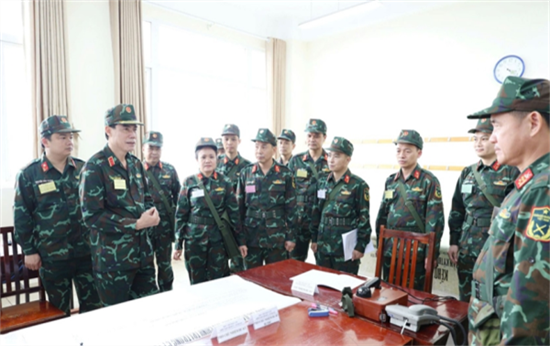 |
| Director of the Military Logistics Academy inspects preparations for an exercise and discusses with cadres and cadets about logistics - technical support for combat (photo: qdnd.vn) |
Second, improving institutions, policies, and the legal framework to create a comprehensive and consistent legal basis for harnessing the strength of all-people logistics. It is necessary to continue fully and consistently institutionalising the Party’s military and defence lines and policies. Due regard should be paid to reviewing, supplementing, and perfecting policies, laws, and coordination mechanisms for building all-people logistics so as to ensure consistency, coherence, feasibility, and alignment with the requirements of building strong, modern all-people national defence. Emphasis should be placed on improving regulations on the combination of economic development with national defence and vice versa. Furthermore, it requires clearly defining responsibilities, authority, and coordination mechanisms among ministries, sectors, localities, enterprises, the Military, and relevant stakeholders with regard to developing, managing, mobilising, receiving, coordinating, and employing logistics and technical resources. This establishes a legal basis for promptly transforming national potential into resources for national defence when contingencies arise. Concurrently, legal frameworks for emerging fields, new strategic domains, and new methods of logistics and technical support should be proactively studied, established, and improved, particularly in relation to the mobilisation of technological resources, digital infrastructure, logistics systems, data, and dual-use facilities for national defence. Amid digital transformation and rapid advances in science and technology, the legal framework must not only meet the requirements for managing existing resources but also provide a basis for connecting, sharing, coordinating, and transforming new resources into support capabilities. This establishes a legal foundation for defining responsibilities, allows flexibility in implementation, and ensures effective coordination capacity to rally, mobilise, and harness the resources of the entire people and country to develop logistics and technical potential and posture in line with the requirements of Fatherland protection.
Third, building strong all-people logistics potential and posture in close association with the all-people national defence posture and proactive, solid defensive zones. This is a key element in establishing the material foundation and deployment posture needed to harness the inherent strength of all-people logistics. Accordingly, logistics and technical potential must be developed proactively in peacetime, in close association with socio-economic development plans, strategic disposition, the posture of all-people national defence, and the building of defensive zones. On-site resources should be closely combined with mobile resources, and strategic logistics with operational and defensive zone logistics to establish a widespread, interconnected, deep-rooted, and highly adaptable support posture. Priority should be given to planning and building systems of bases, depots, stations, support facilities, and logistics and technical reserves. At the same time, the dual-use potential of transport, health care, industrial, energy, information, and logistics systems should be effectively harnessed in each locality, especially in strategic directions, border, sea and island areas, and areas of strategic importance to national defence and security. National defence support requirements should be incorporated comprehensively into development planning and investment, with due attention to dispersal, mobility, reserve capacity, conversion to alternative uses, and operational continuity under conditions of isolation or disruption. The ongoing development of logistics and technical potential must be linked with preparations for mobilising resources when the national defence posture shifts to a new state. Support plans should also be regularly reviewed and supplemented, while training and exercises should be intensified to test the capacity to mobilise, receive, distribute, and use resources. These efforts help establish an all-people logistics posture with depth, rapid mobilisation capability, continuity of support, and high resilience, providing a foundation for transforming the potential of the entire people and country into logistics and technical support strength in all situations.
Fourth, building a strong, modern Sector that truly serves as the core force in harnessing the strength of all-people logistics in the new period. The organisation of the Military's logistics and technical forces should continue to be consolidated towards being elite, compact, and strong, in line with the Military’s organisational structure and modern methods of warfare. The capacity for strategic advisory work, research, forecasting, command, and the organisation of logistics and technical support should be enhanced. Support methods should be made more flexible, modern, and robust. The mobility, self-reliance, and resilience of logistics and technical support systems at all levels should also be enhanced. At the same time, it is necessary to enhance the capacity to identify and manage the country’s logistics and technical resources, prepare for and organise their mobilisation and receipt, coordinate their allocation, and ensure their effective use. Moreover, coordination with ministries, sectors, localities, and enterprises should also be enhanced in preparing and organising support for the Military’s regular tasks, combat readiness, and unforeseen missions. Particular importance should be attached to building strong local military logistics forces to serve as the core of defensive zone logistics in advising, directing, and guiding people’s logistics and other forces in developing logistics potential and posture. These forces should help connect and transform on-site resources into logistics and technical support capabilities under different national defence conditions, thereby further enhancing the Sector’s core role in building and operating all-people logistics.
Fifth, harnessing scientific and technological resources, innovation, digital transformation, and international integration to enhance all-people logistics. Attention should be paid to developing a highly qualified logistics and technical workforce with political steadfastness, strategic thinking, management skills, and technological expertise, particularly leading specialists in their respective fields. Theoretical research and reviews of practical experience should be intensified to further clarify the scope and operating mechanisms of all-people logistics, as well as the core role of the Sector. Training and research should be closely linked with the development, mobilisation, and transformation of national resources into logistics and technical support capabilities for modern warfare. Breakthroughs should be made in science and technology, innovation, and digital transformation in management, command, administration, and support organisation; databases on logistics and technical potential should be built and interconnected; artificial intelligence, big data, and automation should be applied to forecasting, managing, mobilising, and distributing resources. Defence logistics should be developed in close association with national logistics. Efforts should also be made to advance dual-use technologies and build an autonomous, self-reliant, self-strengthening, dual-use, modern defence industry. These help enhance supply autonomy, flexibility, and the resilience of logistics and technical support systems.
Alongside these efforts, international integration and defence diplomacy in logistics and technical affairs should be intensified to make effective use of international resources, scientific and technological advances, management expertise, and experience in training and research, thereby strengthening the potential, self-reliance, and self-resilience of all-people logistics to meet the requirements of firmly safeguarding the Fatherland under all circumstances.
Lt. Gen., Prof., Dr PHAN TUNG SON
Director of the Military Logistics Academy