Thoroughly grasping the guidelines of the Party, the Central Military Commission, and the Ministry of National Defence on developing science, technology, innovation, and digital transformation, the Military Cryptography Sector (MCS) has been synchronously implementing various solutions to build infrastructure, develop digital platforms, master technology, and improve the quality of human resources, contributing to building a reliable and safe digital environment to effectively serve military and national defence tasks in the new situation.
The 4th Industrial Revolution and digital transformation (DT) are deeply changing the methods of military governance, command, control, and operational assurance.
For the MCS, DT creates opportunities and favourable conditions, but also poses numerous difficulties and challenges that need to be solved, including unprecedented issues. Accordingly, the Sector’s mission has shifted from securing the information of leadership, command, and direction across dedicated channels, networks, and technical means to protecting the digital infrastructure, digital platforms, digital data, digital identity, electronic transactions and documents, systems of command and management information, shared software, specialised database, and digital ecosystem.
To meet those mission requirements, the MCS, with the Cryptography Department as its core, has actively advised the Central Military Commission, the Ministry of National Defence Ministry, the General Staff, and party committees and commanders at all levels across the military on numerous guidelines and solutions to enhance the quality of cipher work, information security, and safety in DT. At the same time, it has maintained the efficient operation of the cryptographic technical system and the infrastructure of digital authentication for DT and administrative reform within the Ministry of National Defence; integrated cryptographic solutions into systems of shared software, management, operation, databases, and digital ecosystems in various sectors and levels; and ensured safety and security for all systems of information, military weapons and equipment control, and other vital tasks.
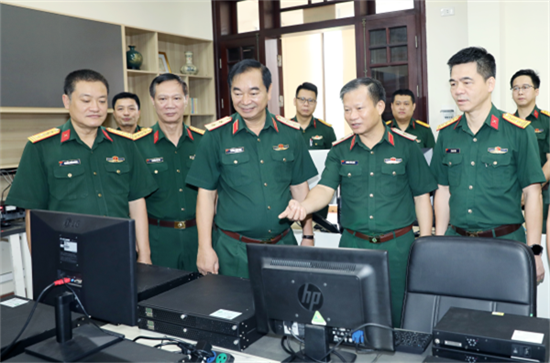 |
| Lt. Gen. Truong Manh Dung, Deputy Chief of the General Staff, works with the Cryptographic Technical Centre in July 2026 |
The Sector has effectively implemented the digital authentication and specialised public-use digital signatures. The issuance, management, and use of digital certificates have become increasingly regular and strict; digital signatures have been gradually integrated into document management and administration systems, specialised software, and work processing in the online environment. Thereby, it contributes to reducing paper documents, shortening work processing time, enhancing management, command, and operational efficiency; and ensuring the authenticity, integrity, non-forgery, and non-repudiation of documents and electronic transactions in the Army.
Regarding the security of digital infrastructure, digital data, and critical information systems, the cipher force has coordinated with the Ministry's functional agencies, information technology and information security personnel to conduct surveys, consulting, appraisal, and integration of cryptographic solutions, transmission security, database security, and the inter-connection safety; inspect the management and use of cryptographic products and digital signatures, contributing to the formation of a unified security foundation within the army's digital ecosystem.
Particularly, the Sector has proactively advised, proposed, researched, consulted, and integrated cryptographic and security solutions for the military weapon and equipment control systems; researched and developed cryptographic products and information security solutions in a modern, automated, synchronised, and specialised manner, aligning with the development of systems of communication, information technology, military weapons and equipment; thereby affirming the role of the Cypher Sector in ensuring the safety of the core technical components of the Army.
Currently and in the coming period, the Army is entering a modernisation phase with very high requirements, many new difficulties and challenges, especially the task of DT. The risks of information insecurity and military secret leaks in cyberspace are increasingly high. Forms of targeted cyber-attacks, malware, account theft, electronic document forgery, data tampering, supply chain attacks, software vulnerability, terminal intrusion, and attacks on control, communication, and sensor systems are becoming more complex, etc. The above reality requires the drastic involvement of all levels, sectors, and forces, with the MCS acting as the core. To meet task requirements in the new situation, the MCS continues to bring into play its core role in DT with several main solutions as follows:
Firstly, well performing the specialised advisory function for all-level leaders and commanders in DT. The Sector continues to thoroughly grasp the resolutions, directives, conclusions, and guidelines of the Central Committee, the CMC, and the Ministry of National Defence on DT, especially Resolution No. 57-NQ/TW dated 22 December 2024, by the Politburo (13th tenure) on making breakthroughs in the science and technology development, innovation, and national DT, and Resolution No. 3488-NQ/QUTW dated 29 January 2025, by the Central Military Commission on making breakthroughs in the science and technology development, innovation, and DT in the Army, basically enhancing research capacity and the quality of advisory work for leaders and commanders at all levels, particularly at the strategic level regarding cipher work and DT; focus on advising and guiding party committees and commanders in all units to fully understand the position and role of DT in the Army, as well as the link of DT with the information confidentiality and security. All digital systems on leadership, command, direction, management, training, and combat readiness, etc. must clearly define the security requirements, digital signing, encryption, and authentication right from the stages of policy formulation, project approval, and system design. In the periodic and annual work plans and programmes of agencies and units on DT, cipher work contents and tasks must be clearly defined; at the same time, the responsibility of leaders of units must be enhanced in managing and using cryptographic products, digital signatures, secret key storage devices, data protection, and ensuring information security in the cyberspace.
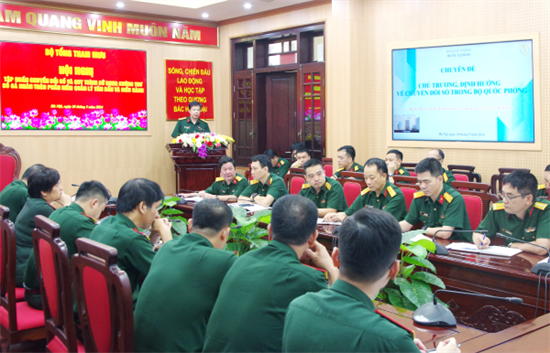 |
| Training on digital transformation and use of personal digital certificate |
Secondly, intensely building and completing a synchronous, modern cryptographic technical infrastructure to promote DT. In the strong development of science and technology, especially artificial intelligence, big data, cloud computing, the Internet of things, unmanned vehicles, smart weapons, and quantum computers, etc., the work of cryptography, security, and information safety face many new challenges. In this context, the Sector continues to advise on investing and upgrading digital certification infrastructure, key management systems, data encryption systems, transmission line security, specialised cryptographic equipment, systems of monitoring, backup, and disaster recovery to meet large-scale, high-speed, wide-interconnection, secure, stable, and expandable requirements; coordinate to build the cryptographic technical infrastructure for agencies and units to ensure it is closely linked with the digital transformation architecture of the Ministry of National Defence, shared platforms, specialised databases, systems of document management and direction, command and control, and systems of various sectors and levels; at the same time, firmly maintain the infrastructure of digital certification service provision within the Ministry, ensuring it meets the requirements of DT, administrative reform, and command and operation in the digital environments.
Thirdly, building high-quality human resources to meet the requirements of cipher tasks and DT in the new context. The focus is on consolidating, training, and further training officers in charge of cryptographic scientific research, teaching, technical support, information technology, information security, DT, data security, system integration, cryptographic technical infrastructure management, digital authentication, digital signatures, and military information system security; closely combining basic training with specialised training, internal sector training with joint training at academies, schools, and research institutions inside and outside the Army; linking training with job positions, title standards, and real using requirements; at the same time, emphasising training, guidance on the management, exploitation, and utilisation of cryptographic products for non-cipher forces assigned to manage and use cryptographic technical equipment, digital signatures, secret key storage devices, and cipher security services, ensuring correct principles and procedures strictness, safety, and effectiveness.
Finally, promoting research and application of science and cryptographic technology, as well as strategic cooperation associated with DT. In the new period, the scientific research of the MCS will focus on solving practical problems of DT; taking the requirements of protecting leadership, direction and command information, data security, protecting digital infrastructure, digital platforms, databases, shared software, high-tech weapons and equipment systems, and internal digital transformation as the central objective. Accordingly, it will focus on researching and developing modern, synchronised, and specialised cryptographic products; solutions for encryption, authentication, digital signing, key management, database security, transmission security, terminal equipment, command-and-control information systems, and military weapon and equipment control systems. At the time, it will proactively research, forecast, and gradually master security solutions for new technology trends, such as artificial intelligence, big data, military cloud computing, the internet of things, unmanned vehicles, and post-quantum cryptography; ensuring that cryptographic products have the capability of integration, expansion, and stable operation in the Army's digital environment.
Together, it enhances the internal DT, focusing on digitising, standardising, and building database to serve the management of forces, equipment, cryptographic documents and products, digital certificates, digital signatures, technical support, training, education, inspection, and supervision; gradually forms a platform for cryptographic operation and management in a digital environment, enhancing the capabilities of timely, accurate, and safe monitoring, statistics, warning, direction, administration, and situation handling; enhances research and mastery of core technologies, develops specialised products to protect the leadership, direction, and command information, database, the digital ecosystems of various sectors, and the safety for military weapons and equipment systems. At the right time, it continues to coordinate with all forces of information technology and security, and military science, academies, schools, research institutes, and technology enterprises, as well as expand cooperation in developing cryptography, information security in accordance with the principles of confidentiality, safety, autonomy, self-reliance, and self-strengthening.
DT is creating significant changes in the methods and efficiency of leadership, command, operation, management, and the strength of the Army; at the same time, it places increasingly higher demands on ensuring information security and secrecy. In this process, the MCS is one of the core forces, continuing to lead in researching, mastering science and technology, and building modern cryptographic technical infrastructure. This contributes to building a reliable digital foundation, protecting data, commanding systems, operations, and the digital ecosystem of various branches as well as key military and defence tasks; accelerating the DT process and building a revolutionary, regular, highly-skilled, and modernised Army, meeting the requirements of national protection in the new situation.
Major General, Dr. HOANG VAN QUAN, Director of the Cryptography Department