In response to the increasingly demanding requirements of Fatherland protection, the Military Vehicle, Machinery, and Transport Sector is further modernising the military water transport force and enhancing this force’s transport capabilities, particularly at strategic and operational levels, to provide effective support for the entire Vietnam People’s Army (VPA) to successfully fulfil its assigned tasks in all situations.
Vietnam has a coastline of more than 3,260 km, with thousands of islands and archipelagos, together with a dense network of rivers, canals, and waterways, creating extensive maritime space and an extensive inland waterway transport system. This provides favourable conditions for promoting the important role of waterway transport in general and military water transport in particular in developing marine economy and logistics, ensuring logistics and technical support, manoeuvring forces, and transporting weapons, equipment, and materials in support of training, combat readiness, and sea and island protection.
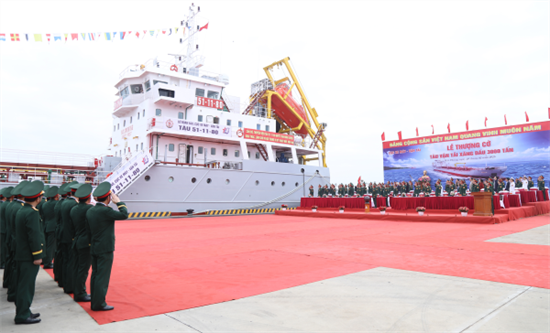 |
| Flag-hoisting ceremony on an oil tanker |
Over the years, the Military Vehicle, Machinery, and Transport Sector, particularly the Vehicle, Machinery, and Transport Department, has given proactive advice to the Central Military Commission (CMC) and the Ministry of National Defence (MND), while directly implementing numerous measures to build an “adept, compact, strong” military water transport force, invest in the modernisation of vessels and equipment, and enhance transport capacity. Thoroughly grasping and realising the guidelines of the CMC and the MND on modernising the military transport force, the Sector has given advice on formulating and executing the Project on Renovation of Means of Military Water Transport for the 2021 - 2030 Period (Project VT-21). After five years of implementation, the construction of new vessels under the Project's 2021 - 2025 Plan has been completed, with its pre-set objectives, schedule, and requirements being met, thus creating an important step forward in modernising the military water transport force, facilitating force manoeuvre and transport as well as logistics and technical support for forces in charge of training, combat readiness, sea and island protection, natural disaster response, and search and rescue in all situations.
At present, in response to modern warfare conditions and the building of a “revolutionary, regular, elite, modern” VPA, providing support for combat operations, particularly in maritime areas, requires the continued modernisation of the military water transport force. Hence, the Vehicle, Machinery, and Transport Department is promoting its role as the strategic staff body for military transport work, proactively giving advice on consolidating force organisation, modernising means of transport, and raising the quality of leadership, command, and management of military water transport operations. On the basis of the results achieved, the Department is focusing on reviewing and forecasting the requirements of military water transport force development in the coming years, assisting the General Department of Logistics and Technology in giving advice to the CMC and the MND on consolidating force structure and planning and developing means of transport in an adept, compact, strong, coordinated, specialised fashion in line with logistics and technical posture planning and operational requirements along strategic directions, particularly at sea. Great weight is given to giving advice and direction on consolidating a corps of managerial cadres, crew members, and technicians in accordance with the organisational structure and road map for receiving newly built vessels under Project VT-21, ensuring synchronisation between personnel, technical equipment, and the capability to operate and master new, modern vessels and equipment.
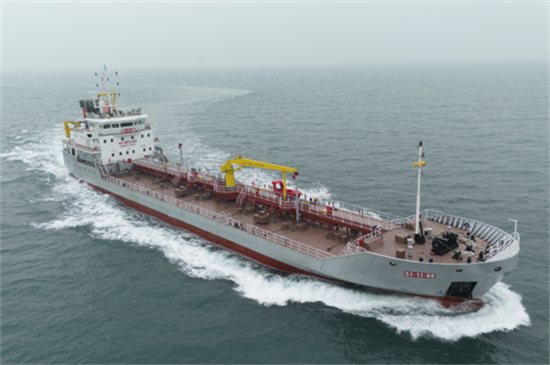 |
| A vessel of Brigade 649 during its acceptance test at sea |
Vessels will be rearranged and transferred between units and forces, with priority given to strategic-level transport units, coastal military regions, and units performing duties along maritime routes and in areas of key importance for defence and security. At the same time, the Department will advise higher authorities, relevant sectors, and localities on combining economic development with water transport potential and posture consolidation, building a water transport reserve force, and developing mechanisms and policies for mobilising vessels from various economic sectors to be ready to provide support in defence situations.
Besides, the Department will further modernise methods of leadership, command, and management of water transport towards a secure, accurate, timely approach. Emphasis will be placed on building a unified transport management and command system across the VPA, developing and deploying a Geographic Information System (GIS) for the Military Vehicle, Machinery, and Transport Sector, with a view to managing transport networks in an integrated manner on digital maps and incorporating data on bridges, ferries, loading and unloading areas, stations, and military and civilian ports. Databases on waterways, meteorological and hydrological conditions, vessels’ technical conditions, and units’ transport demands will continue to be digitalised; forecasting quality, coordination capability, and real-time transport management will be improved to contribute to effectively employing forces and vessels and enhancing transport capacity in both regular and irregular missions. Direction, guidance, inspection, preliminary review, and final review will be strengthened to promptly supplement and perfect management mechanisms and transport procedures, and guarantee uniformity between agencies and units.
While directing units to manage, operate, and use existing equipment and vessels, the Department will continue giving advice on mobilising resources to modernise military water transport vessels, with priority given to strategic- and operational-level transport. Closely following the road map for Project VT-21, the Department will proactively give advice on coordinating the plan for new vessel construction in the period of 2026 - 2030, standardising configurations and technical solutions, particularly for vessels equipped with modern operational and technical capabilities, high manoeuvrability, and the ability to operate at sea for extended periods. In particular, new 3,000-tonne oil tankers for strategic transport will be built, with the capability to receive fuel at Dung Quat and Van Phong ports, as well as at major bonded warehouses and oil and gas ports nationwide, thereby increasing self-reliance in transporting fuel to units across the VPA, reducing the cost of hiring transport services, maintaining readiness to conduct at-sea refuelling missions for forces performing duties.
Infrastructure and technical support systems are among the fundamental factors that directly determine the operational efficiency and mobility of the military water transport force. Fully aware of this, the Department is focusing investment on comprehensive infrastructural development, enhancing technical support capabilities for units. In the immediate term, the Department will continue advising the General Department of Logistics and Technology on planning, investing in, and gradually completing systems of ports, warehouses, technical stations, and repair facilities in an integrated, modern manner, in line with logistics and technical postures and operational requirements along strategic directions. Priority will be given to investment in technical support facilities in key areas serving the protection of outpost archipelagos, DK1 platforms, the south-western waters, and strategic transport units; at the same time, technical support facilities for the operational-level water transport force will be upgraded to facilitate the preservation, maintenance, and repair of the existing vessels.
Notably, direction will be strengthened to promote the application of science, technology, and digital transformation in infrastructural, technical, and technical support management; digital databases on ports, warehouses, technical stations, and vessels’ technical conditions will be developed to ensure that technical support and vessel operation are carried out scientifically and effectively. Due attention will be paid to standardising technical support procedures and closely managing the technical conditions of vessels; equipment and spare parts will gradually be standardised to enhance self-reliance in technical support. Units will continue to be directed to strictly implement regulations on vessel preservation, maintenance, and repair according to their respective levels of responsibility, improve technical readiness, and extend the service life of their vessels. Advances in science and technology will be actively applied to upgrade main and auxiliary engines, communications and navigation systems, and specialised equipment. Lessons learnt from recent military conflicts around the world will be proactively studied to develop early-warning systems, active protection systems, and electronic warfare solutions suited to operational conditions, technical support capabilities, and the development of military art, thus increasing the “survivability” of vessels against enemy unmanned platforms.
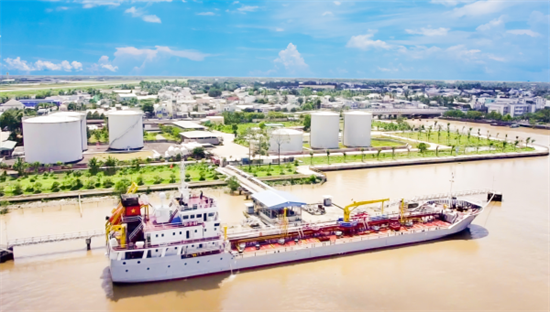 |
| Unloading process of a vessel of Brigade 649 at Depot K34, Military Region 9 |
Furthermore, the Department will continue to give advice on developing high-quality human resources, ensuring synchronisation between organisational structure, professional qualifications, and the road map for vessel modernisation. To that end, it will coordinate with relevant agencies to review and assess the current pool of officers and crew members across the VPA, proactively develop training and education plans for personnel in accordance with the road map for the construction, transfer, and disposal of vessels under Project VT-21 and the requirements of force adjustment among units, ensure balanced personnel strength between units and across regions, and give priority to units performing tasks in maritime and key areas as well as strategic-level transport units. Importance will be attached to building a corps of management and command officers with innovative thinking, organisational capabilities, and the ability to handle complex situations at sea, developing a contingent of captains, chief engineers, and technicians with great professional expertise and the ability to master new-generation vessels.
Water transport units will continue to strictly maintain annual training and refresher training routines, with emphasis placed on renewing training content and improving training quality in accordance with Resolution 1659-NQ/QUTW, dated 20 December 2022, by the CMC on raising the quality of training for the 2023 - 2030 period and beyond. Training will be conducted in a coordinated and specialised manner, with officer training regarded as the key stage and technical and specialised tactical training as the focus. The application of simulation and digital technologies in training will be increased. Training at berths will be combined with training during transport missions. Significance will be attached to training to enhance capabilities in staff work, transport coordination, command, management, and maritime safety assurance; training and exercises will be intensified to improve capabilities in manoeuvring, loading and unloading, cargo clearance, rapid departure from ports, and handling situations, as well as transport support for operations to protect sea and island sovereignty under high-tech warfare conditions. At the same time, due regard will be paid to effectively implementing policies to attract, train, develop, and utilise high-quality human resources and building a favourable working environment to enable officers and personnel to remain committed to the force over the long term, thereby meeting the requirements of modernising military water transport in the new situation.
With the results and experience gained as well as great determination, the Military Vehicle, Machinery, and Transport Sector will continue thoroughly grasping and effectively implementing the policy on military water transport force modernisation set by the CMC and the MND, contributing to building a revolutionary, regular, elite, modern Sector capable of undertaking and excellently fulfilling all assigned tasks.
Maj. Gen. NGUYEN HOANG NAM
Deputy Director of the Vehicle, Machinery, and Transport Department