65 years – From disaster to the joint effort to alleviate the pain of Agent Orange
Deeply aware of the exceptionally severe consequences of Agent Orange/dioxin, the Party and State have been implementing comprehensive policies and measures. Simultaneously, they have mobilised the collective strength of the entire political system as well as domestic and international organisations and individuals, demonstrating a profound sense of responsibility and compassion in the joint effort to alleviate the suffering caused by Agent Orange.
During the war of aggression in Vietnam 65 years ago, on 10 August 1961, the U.S. military conducted its first aerial sprayings of toxic chemicals along National Highway 14 (stretching from Kon Tum to Dak To). This marked the beginning of a decade-long “defoliation campaign” that inflicted devastating consequences on Vietnam’s people and environment, becoming one of the most serious catastrophes of the 20th century.
Between 1961 and 1971, the U.S. military carried out over 19,000 sorties, spraying nearly 80 million litres of herbicides across Southern Vietnam; of this total, roughly 44 million litres are Agent Orange, containing dioxin. The aftermath saw millions of hectares of forest destroyed and ecosystems in many regions severely devastated. Approximately 4.8 million Vietnamese people were exposed to the chemicals, with over 3 million becoming victims. Many families have three generations suffered the effects of Agent Orange. To date, hundreds of thousands of people continue to endure agonising pain caused by the horrific diseases linked to Agent Orange/dioxin. There are households where the pain seems to be felt in every breath taken; Many women are denied the happiness of wifehood and motherhood; many others spend their entire lives confined to the bedside, quietly caring for their husbands and children who are victims of Agent Orange. As former State President Nguyen Minh Triet once remarked: “Victims of Agent Orange endure the depths of suffering and poverty”.
In response to this reality, the Vietnam Association for Victims of Agent Orange/Dioxin (VAVA) was officially established on 10 January 2004. The Association was founded to represent the millions of people affected by Agent Orange/Dioxin during the war. Its inception marked a significant milestone in the mission to mobilise resources for the care and support of the victims, as well as to advocate for justice on their behalf.
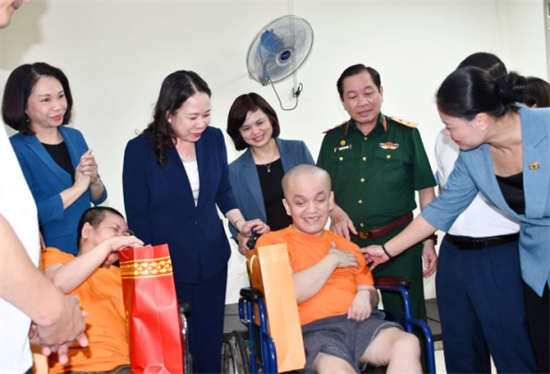 |
| Vice President of the State Vo Thi Anh Xuan visits victims of Agent Orange |
Over the past two decades, the Association has affirmed its role as a bridge connecting the Party, the State, and society with victims of Agent Orange, serving as a helping hand for them in all circumstances. The Association has provided counsel and contributed to the formulation and refinement of legal frameworks concerning war participants and their biological children affected by toxic chemicals. It has also actively engaged in people-to-people diplomacy, garnering support from international friends in the struggle for justice for Agent Orange victims.
Thoroughly implementing Directive No. 43-CT/TW, dated 14 May 2015 issued by the Party Central Committee Secretariat (11th tenure) on strengthening the Party leadership in addressing the aftermath of toxic chemicals used by the U.S. during the war in Vietnam, significant progress has been seen in both awareness and action among Party committees, authorities, the Fatherland Front, socio-political organisations, and mass associations at both central and local levels. The policy framework for war participants exposed to toxic chemicals and their biological children has been progressively perfected. The “Action for Vietnamese victims of Agent Orange” movement, launched by the Central Committee of the Vietnam Fatherland Front, which is of profound political, social, and humanitarian significance, has been implemented extensively, attracting support from both domestic and abroad organisations and individuals. The nation's cherished traditions and moral values of “When drinking water, remember its source” (gratitude) and “Love others as you love yourself” (compassion) have been upheld and widely spread throughout society, contributing to the improvement of the material and spiritual well-being of the victims.
From its inception to the end of 2025, the VAVA and its affiliates at all levels have mobilised 5,086 billion VND to support and care for the victims. Key achievements include: supporting the construction and repair of 15,266 “gratitude houses”; distributing over 6,104,113 million gift packages during holidays and the Lunar New Year (Tet); providing regular care for 6,163 victims at dedicated social protection centres and within the community; providing scholarships and jobs for 53,060 victims; providing livelihood capital to 9,868 victim families; and facilitating rehabilitation and detoxification for thousands of victims at centres run by the Central Association and local chapters. Notably, the struggle for justice for Vietnamese victims of Agent Orange has garnered widespread sympathy and support from the international community. The lawsuit filed by Ms. Tran To Nga, representing Vietnamese victims, against US chemical companies that manufactured and supplied Agent Orange/Dioxin for use by the US military during the Vietnam War remains ongoing, attracting international public attention and receiving support and solidarity from peace and justice-loving forces worldwide.
External relations and international cooperation regarding the remediation of Agent Orange/Dioxin consequences have continued to yield positive results. In 2023, the Belgian Chamber of Representatives unanimously passed a resolution supporting Vietnamese victims of Agent Orange. Numerous international organisations, such as the Aquitara Foundation (Belgium), ABLE (USA), and other partners, have effectively implemented programmes to assist the victims. The U.S. government is strengthening cooperation to address dioxin contamination at hotspots in Vietnam, thereby contributing to efforts to remediate the consequences of war and consolidate friendly and cooperative relations between Vietnam and other nations and international organisations. Sixty-five years on, we have gained a deeper understanding of the Agent Orange disaster in Vietnam and clearly witnessed the profound concern shown by the Party, the State, the community, and international friends in the journey to “join hands in alleviating the pain caused by Agent Orange”.
However, the road ahead remains fraught with difficulties and challenges. The number of people affected by Agent Orange/dioxin remains huge, including the second, third, and even fourth generation-victims who are suffering from congenital deformities and disabilities. There is an urgent need for healthcare, rehabilitation, and livelihood support for the victims, as well as improving their living conditions. Moreover, there are still cases of war veterans exposed to toxic chemicals who have yet to benefit from preferential policies due to a lack of documentation or failure in the assessment and verification processes. The remediation of environmental contamination in areas where dioxin persists requires substantial resources and close coordination among domestic and international agencies and organisations.
In light of this situation, to make the journey “Joining hands to alleviate the pain of Agent Orange” more effective and sustainable, relevant authorities, sectors, organisations, and individuals should focus on implementing the following key tasks and solutions synchronously and effectively:
First, continue to research and advise the Party and the State on supplementing and refining the policy and legal framework for those exposed to or affected by toxic chemicals during the war. In particular, focus should be on thoroughly reviewing and resolving procedural and documentation hurdles to ensure that war veterans exposed to toxic chemicals can benefit from preferential treatments in a full, accurate, and timely manner. There should be mechanisms to include biological grandchildren and great-grandchildren of war veterans exposed to toxic chemicals, who suffer from congenital deformities, disabilities, or a diminished capacity for self-care, in the list of recipients for monthly allowances.
Secondly, continue propaganda to raise public awareness and foster a sense of societal responsibility regarding the long-term consequences of Agent Orange/dioxin, thereby making the mobilisation of social resources more effective. Strongly leverage the roles and responsibilities of the entire political system, organisations, businesses, philanthropists, and the community in caring for the material and spiritual well-being of the victims; prioritise the expansion of humanitarian programmes, the creation of sustainable livelihoods, and support for accommodation and healthcare for them.
Thirdly, accelerate the application of scientific and technological advancements and digital transformation in management, detection, and treatment to minimise the impact of toxic chemicals on successive generations of the victims. Conduct a nationwide survey to assess the number, demographics, and severity of health conditions among Agent Orange victims. A comprehensive and digital database will not only facilitate an objective and accurate assessment of the situation of each victim generation (from F0 to F3) but also provide a solid scientific basis for formulating and refining fundamental, long-term policies on healthcare and social welfare for the victims.
Fourth, strengthen international cooperation in addressing dioxin contamination and supporting Agent Orange victims; persistently advocate for justice for Vietnamese victims through appropriate means that align with the Party and State's foreign policy guidelines, while simultaneously garnering the sympathy and support of progressive people worldwide. Focus on expanding external relations and proactively collaborating with governments, international organisations, and foreign partners to mobilise financial resources and secure the transfer of modern detoxification technologies for contaminated hotspots. Intensify people-to-people diplomacy and diversify international communication channels to widely disseminate the message regarding the Agent Orange tragedy in Vietnam. This is to build stronger consensus and link the legal struggle for justice for Vietnamese victims with global movements for peace and human rights.
The 65-year from the tragedy to the journey “Joining hands to alleviate the pain of Agent Orange” does not only mean a passage of time but embodies a spirit of “Solidarity – Compassion – Responsibility - For the victims”. Lands once devastated are now being revitalised; lives once deeply scarred by adversity now shine with resilience and strong will; and the pain of war has transformed into a message of peace, compassion, and national unity. The journey is continued by the joint efforts of society and international friends, driven by a sense of responsibility and compassion today and aspirations for the future, gradually soothing the “pain of Agent Orange”, affirming the justice, and making the noble values of Vietnam long lasting. It also serves as a warning and firm resolve to prevent similar disasters from recurring worldwide for the sake of peace and our future generations.
Lieutenant General NGUYEN HUU CHINH, President of the Vietnam Association for Victims of Agent Orange/Dioxin