Thanh Hoa Province intensifies the search, recovery, and identification of martyrs’ remains
With unwavering determination, a strong sense of political responsibility, and profound gratitude towards fallen heroes, Thanh Hoa Province has been vigorously implementing the “500-Day Campaign to intensify the search, recovery, and identification of martyrs’ remains”, striving to fulfil comprehensively all objectives set forth by the Campaign.
A sacred political responsibility and profound gratitude reflected in practical and sustainable outcomes
A land renowned for its rich revolutionary tradition, Thanh Hoa Province is home to nearly 60,000 martyrs who made the ultimate sacrifice during the wars of national liberation, national defence, and the fulfilment of international obligations. Of these, many martyrs’ remains have yet to be recovered, while 3,544 martyrs’ graves remain unidentified.
Fully aware of its responsibility towards the outstanding sons and daughters of the homeland who fought and sacrificed heroically for national independence, freedom, and the happiness of the People, Party committees, authorities, and the entire political system of Thanh Hoa Province have consistently regarded the search, recovery, and identification of martyrs’ remains as a task of special political significance. This endeavour is considered a “command from the heart”, embodying profound responsibility, deep affection, and enduring gratitude towards the fallen heroes, while further promoting the nation’s enduring traditions of “When drinking water, remember its source” and “Gratitude for those who rendered meritorious service to the nation.”
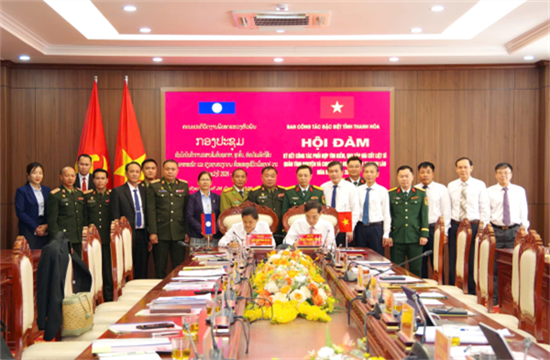 |
| Coordinating with Laos for the search and recovery of martyrs' remains |
Accordingly, over the years, Thanh Hoa Province has synchronously implemented a wide range of policies and measures, while closely coordinating with relevant forces, martyrs’ families, and the People in carrying out this particularly sacred mission. Since 1989, the Martyrs’ Remains Search and Recovery Team under the Provincial Military Command has searched for, exhumed, and recovered the remains of 2,577 martyrs, including 251 within Viet Nam and 2,326 who laid down their lives in Laos. Memorial and burial ceremonies have been conducted with due solemnity, meticulous care, and in strict compliance with prevailing regulations.
Immediately after the National Steering Committee 515 launched the “500-Day Campaign to intensify the search, recovery, and identification of martyrs’ remains”, Thanh Hoa Province identified this as a crucial period to accelerate progress, achieve breakthroughs, and enhance the effectiveness of this noble and sacred mission. To ensure that the Campaign is implemented in a coordinated and effective manner, the Province promulgated coordination regulations and developed an implementation plan with clearly defined objectives, timelines, and roadmaps. Specific responsibilities were assigned to each agency, unit, and locality, while accountability of heads of agencies and organisations was closely linked to implementation outcomes. In particular, the Provincial Military Command, serving as the Standing Agency of the Provincial Steering Committee 515, has effectively fulfilled its central coordinating role by proactively providing advice, guidance, inspection, supervision, and close coordination with relevant authorities, sectors, forces, and localities. This has ensured that the search, recovery, and identification of martyrs’ remains have been conducted in a unified, methodical, and well-organised manner, in strict compliance with established procedures and regulations, following the principle of “precision in every stage and certainty in every step”, thereby achieving high effectiveness. Guided by the spirit of “Lest martyrs’ families await”, the Provincial Steering Committee 515 has intensified information and public awareness campaigns, encouraging organisations and individuals to provide information relating to martyrs and martyrs’ graves. At the same time, it has directed the review, supplementation, and refinement of relevant records; standardised databases; and strengthened the integration, cross-checking, and verification of information concerning martyrs’ places of sacrifice and initial burial sites. These efforts have provided a reliable basis for accurately determining the locations, operational areas, and priority sites for search and recovery operations. The Province has also prioritised surveys in areas where substantial information remains available, key localities, and newly identified sites to organise search and recovery activities. In addition, it has maintained close coordination with domestic localities, the Special Task Committee of Houaphan Province, competent authorities, and the Lao people of all ethnic groups to conduct surveys, verify and exchange information, and organise the search for and recovery of martyrs’ remains.
To accurately identify martyrs’ remains, the Provincial Steering Committee 515 established an inter-agency task force and four biological sample collection teams. Concurrently, it has strengthened professional training for specialised personnel and expedited implementation in accordance with the “Six Principles”. Before expanding the programme province-wide, the Province proactively selected Quang Xuong Martyrs’ Cemetery (Quang Ninh Commune) as the pilot site to draw practical lessons. Building on this experience, all participating forces were required to coordinate closely and strictly follow established procedures throughout every stage, from excavation and sample collection to transportation, preservation, storage, and handover of biological samples. Simultaneously, efforts have been accelerated to collect biological samples from martyrs’ relatives, while working closely with specialised agencies to conduct DNA analysis, cross-check and verify results, and complete documentation for the identification of martyrs’ remains in accordance with regulations. As of 17 July 2026, the Provincial Steering Committee 515 had excavated 457 out of 2,955 martyrs’ graves, of which 355 met the requirements for biological sample collection for DNA analysis.
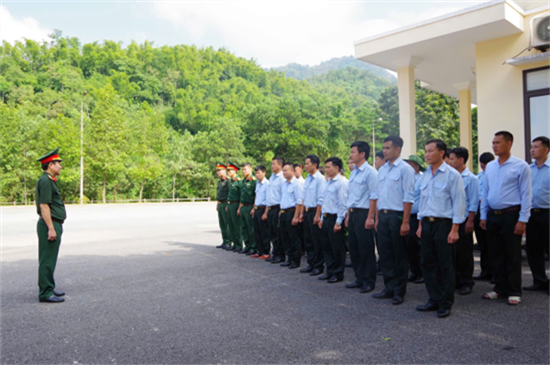 |
| Task briefing for the search and recovery team |
These achievements provide compelling evidence of Thanh Hoa Province’s strong political determination, sound leadership and direction, and methodical, scientific approach to implementing the Campaign. More importantly, they lay a solid foundation for fulfilling the sacred mission of identifying the remains of fallen heroes at the earliest opportunity, enabling them to return to their homeland, families, and comrades. They also help ease the pain of war, bring closure to decades of waiting, and more fully honour the responsibility and gratitude of today’s generation towards those who made the ultimate sacrifice for the Fatherland.
Racing against time with determination and breakthrough measures to fulfil the Campaign’s objectives and targets
Despite these significant achievements, the Province’s search, recovery, and identification of martyrs’ remains continues to face numerous difficulties and challenges. As time passes, information regarding martyrs’ places of sacrifice and initial burial sites has become increasingly incomplete or has been lost altogether. Historical witnesses are becoming fewer in number, while their advanced age and declining health make the collection and verification of information ever more difficult. In addition, the terrain and landscape in many areas, particularly in Houaphan Province of the Lao People's Democratic Republic, have changed considerably over time. Most search areas are located in remote mountainous and densely forested regions with poor transport infrastructure and unpredictable weather conditions, especially during the rainy season, all of which directly affect the progress and quality of operations. Furthermore, as many martyrs were buried decades ago, numerous sets of remains are no longer suitable for DNA analysis. Coupled with the diminishing availability of burial-site information and the lack of synchronised specialised equipment and technical means, these factors continue to pose considerable obstacles to the search, recovery, and identification of martyrs’ remains.
In response to these realities, and with a view to accelerating progress, achieving breakthroughs, and accomplishing the Campaign’s objectives at the earliest opportunity, the Provincial Steering Committee 515 will continue to implement comprehensive and resolute measures. With the utmost determination, it is committed to bringing the fallen heroes back to their homeland, families, and comrades, restoring the identities of those who laid down their lives for the Fatherland, and ensuring that their noble sacrifice is honoured with the fullest measure of gratitude.
First, enhance the effectiveness of leadership and direction to achieve a substantial improvement in the progress and quality of the Campaign’s implementation. To this end, the Province will continue to innovate its leadership and management approaches in a proactive, resolute, flexible, and practice-oriented manner, taking implementation outcomes and progress towards achieving the Campaign’s objectives as the principal measures of effectiveness. Difficulties and bottlenecks will be identified and addressed in a timely manner, while implementation programmes and plans will be adjusted where necessary to reflect practical conditions, thereby removing obstacles and ensuring both progress and efficiency. The role of the Provincial Steering Committee 515 will be further strengthened in mobilising and allocating personnel, equipment, and resources, while promoting effective coordination among relevant authorities, sectors, forces, and localities. The Province is determined to search for and recover 40 to 45 martyrs’ remains, and to complete biological sample collection from 2,932 unidentified martyrs’ graves before March 2027, four months ahead of the Campaign’s scheduled target.
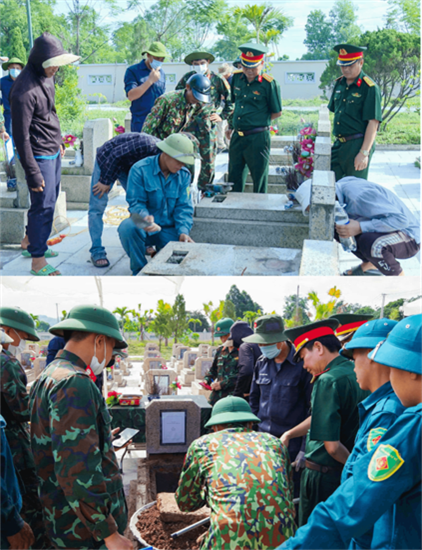 |
| Collecting biological samples from martyrs' remains for DNA testing |
Second, intensify information and education efforts, while harnessing the combined strength of the entire political system and society as a whole. To achieve this objective, the Province will continue to innovate the content, forms, and methods of communication in a practical and effective manner, further highlighting the Campaign’s political and humanitarian significance and thereby fostering greater unity in both awareness and action throughout the Province. It will continue to mobilise the active participation of authorities at all levels, sectors, armed forces, localities, socio-political organisations, martyrs’ families, the People, and the business community in implementing the Campaign. Public communication efforts will also be closely integrated with the collection, verification, and effective utilisation of information relating to martyrs and martyrs’ graves, thereby enriching relevant databases and improving the effectiveness of the search, recovery, and identification of martyrs’ remains.
Third, ensure the Campaign is implemented in a focused, methodical, and scientifically organised manner throughout every stage and every step. Adhering to the principle of “proceeding carefully at every step, thoroughly verifying information, and pursuing every lead to the end”, agencies, units, and localities will continue to review, classify, assess, and rigorously verify all available sources of information. Priority will be given to identifying key tasks, priority areas, and locations where reliable information remains available and the prospects for successful recovery are greatest, thereby concentrating personnel, equipment, and support resources where they can achieve the highest effectiveness and avoiding the dispersion of resources. Every stage of the process, from field surveys, verification, search, and recovery to biological sample collection, documentation, and the identification of martyrs’ remains, will be carried out in a rigorous and scientific manner. Information, biological samples, documentation, and the entire implementation process will be managed under strict control. The “Five Correct Principles” governing the handover of martyrs’ remains will be strictly observed to ensure security, safety, and absolute accuracy, thereby contributing to the early identification of the fallen heroes and their return to their homeland, families, and comrades.
Fourth, strengthen coordination among all participating forces and enhance the effectiveness of international cooperation. The Province will direct relevant forces to continue refining coordination mechanisms for implementing the Campaign, while maintaining regular exchanges, information sharing, cross-checking, and verification. Plans, methods, and implementation procedures will be standardised to ensure seamless and effective coordination across every stage, operational area, and assigned task. Difficulties and shortcomings will be reviewed and resolved promptly, with the responsibilities of each agency and unit clearly defined to prevent overlaps or omissions that could adversely affect implementation progress and quality. At the same time, the Province will proactively expand and deepen cooperation with Party committees, local authorities, competent agencies, and the People of Houaphan Province in information exchange, field surveys, site verification, and the search for and recovery of martyrs’ remains, while providing timely mutual assistance in addressing emerging issues to ensure sustainable and effective outcomes.
Drawing upon its proud revolutionary tradition, and guided by a careful, scientific, and methodical approach together with the unwavering determination that “wherever information remains, the search continues”, Thanh Hoa Province will continue to mobilise the combined strength of the entire political system to successfully accomplish all objectives of the “500-Day Campaign”. In so doing, it will make a meaningful contribution to the implementation of the Party’s and the State’s policies towards those who rendered meritorious service to the revolution, help alleviate the enduring pain of war, fulfil the heartfelt aspirations of martyrs’ families, and further promote the nation’s enduring traditions of “When drinking water, remember its source” and “Gratitude for those who rendered meritorious service to the nation.”
Senior Colonel NGUYEN XUAN TOAN, Deputy Political Commissar of the Provincial Military Command and Member of the Standing Agency of the Provincial Steering Committee 515