Naval Region 2 enhances the effectiveness of political education and ideological management
Political education and ideological management constitute a fundamental component of Party and political work and provide an essential foundation for enhancing the combat power of the Army. Fully recognising their importance, the Naval Region 2 Party Committee and Command have adopted a range of policies and measures to strengthen leadership and direction and improve the quality and effectiveness of this work, thereby contributing to firmly safeguarding the Party’s ideological position, building a politically strong unit, and successfully accomplishing all assigned missions.
Against the backdrop of increasingly complex developments in the East Sea; intensified activities by hostile and reactionary forces in the political and ideological domains aimed at fostering internal “self-evolution” and “self-transformation” and the “depoliticisation” of the Army; an incomplete understanding among a proportion of officers and soldiers of mission requirements; continuing difficulties faced by many servicemen’s families; and the fact that a considerable number of the Region’s officers and soldiers undertake prolonged deployments at sea and on islands under demanding operational conditions, including rough seas, strong winds, and severe weather, numerous factors have exerted a significant impact on the awareness, ideological outlook, and morale of officers and soldiers.
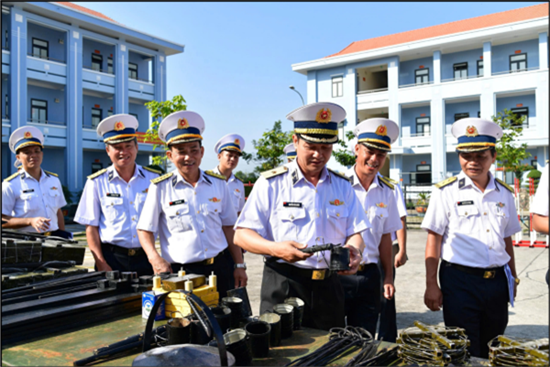 |
| Leader of Naval Region 2 checks the material preparation for training season of 2026 |
To ensure that, under all conditions and circumstances, officers and soldiers maintain firm political steadfastness, remain absolutely loyal to the Party, the Fatherland, and the People, and stand ready to undertake and successfully accomplish every assigned mission, thereby contributing to building a politically strong Naval Region, the Naval Region 2 Party Committee and Command have focused their leadership and direction on implementing a range of appropriate and innovative measures to enhance the effectiveness of political education and ideological management.
Firstly, to promote the role and responsibility of Party committees, Party organisations, and political agencies at all levels in conducting political education and ideological management. The Naval Region 2 Party Committee and Command thoroughly grasp the resolutions, directives, and conclusions of the Party, the Central Military Commission, and the Ministry of National Defence, as well as the Political General Department’s Regulations on Political Education. They intensify communication and education to bring about fundamental improvements in the awareness and sense of responsibility of all organisations and forces, while thoroughly overcoming the tendency to regard political education and ideological management as the exclusive responsibility of political agencies and political cadres. Political education and ideological management are consistently identified as key components of the regular leadership resolutions of Party committees and Party organisations at all levels. Inspection and rectification have been strengthened to address any tendency to underestimate or neglect these tasks during implementation. The Region requires its units to demonstrate creativity and flexibility in closely integrating political education and ideological management with administrative management measures, discipline maintenance, and the building of standardised routines and practices, particularly in units regularly undertaking missions at sea and on islands.
Units effectively promote the role of mass organisations, enhance the effectiveness of grassroots cultural institutions, and intensify the implementation of the Regulations on Grassroots Democracy. They also proactively anticipate, guide, and promptly address emerging ideological issues. At all levels, due attention is regularly paid to ensuring the material and spiritual well-being of troops, particularly officers and soldiers engaged in training, exercises, and search and rescue operations at sea. The effectiveness of political education and ideological management is regarded as an important criterion for the appraisal, classification, and quality assessment of cadres, Party members, and Party organisations. In the implementation process, agencies and units attach particular importance to the management of educational content, curricula, allocated time, organisational methods, and learning outcomes. Political education regimes and routines are strictly maintained; reductions in prescribed content and the omission of particular categories of personnel are resolutely addressed; high attendance rates and a serious attitude towards study are ensured; and learning outcomes are assessed in a substantive and objective manner.
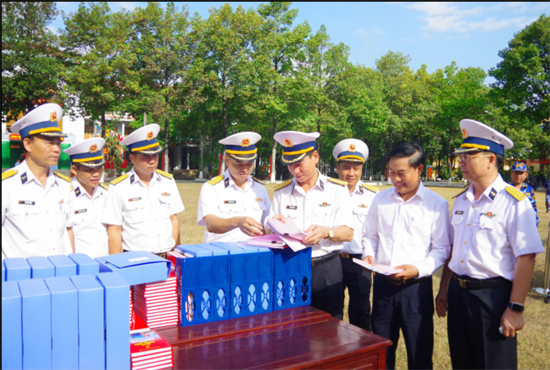 |
| Checking the material of party work and political work |
At the same time, the responsibility of political agencies, cadres, and Party members is emphasised in conducting research, maintaining a comprehensive grasp of developments in all areas, and promptly advising Party committees and commanders on appropriate measures for ideological management. Guidance and direction to subordinate units are provided in a specific, clear, and systematic manner. Records, statistics, monitoring, and quality management relating to political education and ideological management are maintained in accordance with prescribed forms and procedures, thereby ensuring the high effectiveness of this work.
Secondly, to make breakthroughs in renewing the content, forms, and methods of political and ideological education. To enhance effectiveness, Naval Region 2 directs its agencies and units to develop programmes and curricula with an appropriate and balanced volume of knowledge, tailored to the cognitive levels and specific mission requirements of each category of personnel. The objective is to ensure that officers and soldiers thoroughly grasp Marxism-Leninism, Ho Chi Minh Thought, the Party’s guidelines and viewpoints, the State’s policies and laws, and the resolutions of Party congresses at all levels for the 2025-2030 tenure; fully understand the tasks of building the Navy and Naval Region 2 into revolutionary, regular, elite, and modern forces; firmly grasp the principles governing interactions with foreign vessels and fishermen at sea; and heighten vigilance against, and actively counter, the exploitation of artificial intelligence technologies by hostile and reactionary forces for distortion and subversive activities. At the same time, education is directed towards fostering national pride and dignity, as well as a strong sense of honour in being a “Naval Soldier”. Greater emphasis is placed on providing officers and soldiers with timely information and ideological guidance in order to foster a high degree of consensus and unity, particularly in relation to sensitive and complex political issues, while effectively preventing ambiguity, misconceptions, and deviations in awareness, thinking, and conduct.
In delivering this content, the Region requires units to apply the fundamental forms of political education flexibly and in strict accordance with the Regulations on Political Education. A diverse range of teaching methods is employed, including lectures, analysis, illustrative evidence, and practical examples closely related to the realities of each unit in order to guide subsequent action. Particular importance is attached to interactive discussion, multiple-choice questions, and debate-based problem solving, thereby creating an engaging and effective learning environment. At the same time, diverse and flexible forms of education are employed in an open and adaptable manner, suited to the characteristics and missions of individual units and closely aligned with the psychological characteristics and cognitive levels of officers and soldiers. These include study visits, twinning and exchange activities, mass mobilisation work, visits to historical and revolutionary sites, as well as participation in emulation movements and major campaigns launched by the Party, the State, and the Army. Through such activities, officers and soldiers are encouraged to broaden their knowledge and awareness, cultivate a civilised way of life, develop sound character and determination, and remain motivated to successfully accomplish all assigned missions. Alongside these measures, political and ideological activities are maintained in a strict and regular manner, particularly during intensive campaigns aimed at strengthening standardised routines, compliance with State law and military discipline, troop management, and safety assurance. Models such as “One Law per Week,” “Awareness-Raising Quizzes,” and the “Standing-Duty Knowledge Handbook” are implemented effectively. Political and ideological education is also closely integrated with combat training, combat readiness, troop management, discipline observance, and safety assurance, thereby creating a firm and sustainable foundation for this important area of work.
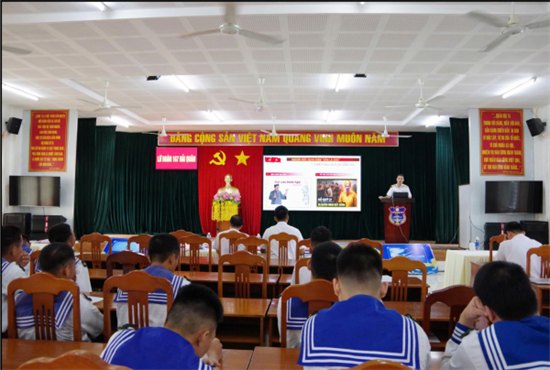 |
| Conducting political eduation for troops |
Thirdly, to improve the quality and effectiveness of monitoring, assessing, classifying, and addressing ideological developments. Given the adverse effects of the market economy, social problems, subversive activities by hostile forces, online fraud, and cybercrime, all of which frequently affect the thoughts, sentiments, and morale of military personnel, Naval Region 2 requires Party committees, commanders, and cadres at all levels to strengthen measures for monitoring and understanding the ideological state of servicemen. This is undertaken through the examination of personnel records and family circumstances, as well as through their daily activities, study, and work; direct conversations and personal interaction; and observation of their behaviour, gestures, speech, interpersonal conduct, communication, and interactions on social media. On this basis, emerging ideological tendencies among servicemen can be anticipated in a timely manner, providing the foundation for appropriate guidance tailored to the psychological characteristics of each category of personnel. The Region requires the management and classification of servicemen’s ideological state to be conducted regularly at all levels, with monthly classification results reviewed and communicated to each serviceman concerned. Established procedures for providing information and guiding public opinion are strictly maintained, particularly in relation to major national political events and significant policies that directly affect society, the Army, and individual units. Activities such as Political and Cultural-Spiritual Day, Law Day, and democratic dialogues are effectively organised to listen to, acknowledge, and address servicemen’s concerns, opinions, aspirations, and legitimate needs.
At the same time, the Region consistently promotes the role of cadres, Party members, and specialised forces in providing authoritative information, guiding ideological awareness, and countering distorted narratives and erroneous viewpoints disseminated by hostile forces in cyberspace. Ideological issues are addressed in accordance with established procedures, promptly and thoroughly, so as to prevent lingering repercussions or adverse public opinion. Positive ideological manifestations are promptly recognised and commended so that they can be disseminated and replicated, thereby generating motivation and fostering a healthy atmosphere of emulation, democracy, solidarity, and unity. Negative ideological manifestations, by contrast, are closely and continuously monitored and managed. Personnel concerned are engaged directly through meetings, encouragement, education, and timely reminders in order to prevent negative attitudes from emerging, spreading, or persisting within units. Each year, Naval Region 2 conducts five to eight intensive periods of political and ideological activities. At all levels, personnel displaying emerging ideological concerns are individually engaged, encouraged, and supported, enabling timely intervention to prevent negative behaviour and violations of State law or military discipline. As a result, the overwhelming majority of officers and soldiers maintain firm ideological and political resolve, demonstrate determination to overcome difficulties, and remain ready to undertake and successfully accomplish all assigned missions.
Finally, to promote the study and practice of Ho Chi Minh’s thought, ethics, and style; actively engage in ideological struggle and firmly safeguard the Party’s ideological position, thereby ensuring sustained effectiveness in political education and ideological management. Naval Region 2 directs its agencies and units to rigorously and effectively implement higher-level directives and guidelines; at the same time, units are required to regularly supplement and refine their systems of standards and criteria for self-improvement in accordance with the characteristics and requirements of their missions and the duties and responsibilities of each individual. The results achieved in studying and following Ho Chi Minh’s thought, ethics, and style are incorporated into assessments of task performance at all levels and across organisations, as well as into the appraisal and classification of cadres, Party members, and members of mass organisations. Greater efforts are also made to disseminate videos, news reports, and articles highlighting exemplary individuals and collectives and their positive actions in assisting the people with disease prevention and control, disaster recovery, flood and storm prevention and response, fire prevention and firefighting, and search and rescue operations. Particular emphasis is placed on publicising exemplary officers and soldiers who accompany and support fishermen as they venture offshore and maintain their presence at sea.
The achievements attained in political education and ideological management provide a firm foundation for the Party Committee and Command of Naval Region 2 to continue leading and directing the effective implementation of Directive No.76/CT-BQP dated 28 April 2026 of the Minister of National Defence on “Strengthening political education, ideological management, discipline maintenance, and safety assurance in the Vietnam People’s Army.” These efforts contribute to building a politically strong Naval Region, thereby laying the groundwork for enhancing its overall quality and combat power and enabling it, together with other forces, to firmly safeguard national sovereignty over the seas and islands in the new situation.
Senior Colonel DO HONG DUYEN, Deputy Political Commissar, Naval Region 2