Building a modern Army – a sound policy and strategic vision of the Party (Continue)
II. Building a modern Army – the context, strategic orientation, and issues
Building a modern Army is a sound policy that reflects the strategic vision of our Party. It is founded on objective and scientific considerations arising from developments in the world, the region and the country, as well as from the Army’s situation and the requirements of national defence and safeguarding the Homeland in the new era.
The new context
The world is currently undergoing epochal changes. Although peace, cooperation and development remain major trends, they are facing numerous new challenges. Major powers and centres of power continue to adjust their strategies and military and defence doctrines, consolidate alliances and expand their presence. While cooperation and competition coexist, competition is becoming increasingly intense. Armed conflicts, localised wars and arms races, together with the militarisation of the maritime, cyberspace and outer-space domains, continue to intensify, increasing instability and unpredictability.
The rapid development of science and technology, particularly artificial intelligence, big data, semiconductor technology, quantum technology and automation, together with the emergence of various smart and advanced weapons, is profoundly transforming the conduct of warfare. New forms and methods of warfare have emerged, including high-tech warfare, non-contact warfare, asymmetric warfare, cyber warfare, information warfare, multi-domain operations, electronic warfare and high-tech weapons operations, among others. The operational environment, targets and methods of warfare continue to expand, with traditional and non-traditional domains becoming increasingly intertwined. This places new and exceptionally demanding requirements on the building of the Army, the consolidation of national defence and the safeguarding of the Homeland.
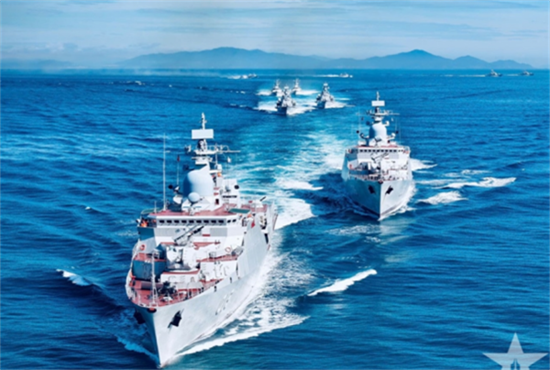 |
| A fleet of Naval Region 4 (Photo: qdnd.vn) |
The Asia-Pacific region remains a theatre of intense strategic competition among major powers and centres of power. Disputes over territorial sovereignty, seas and islands, including those in the East Sea, continue to evolve in a complex manner and harbour numerous factors capable of causing instability. Domestically, after 40 years of Doi Moi (Renewal), our country has achieved great and historically significant accomplishments. Its potential, strength, stature and international prestige have continued to grow, providing an important foundation for consolidating national defence, building the Army and safeguarding the Homeland. In particular, the acceleration of industrialisation and modernisation, national digital transformation, and the development of science, technology and innovation are creating new conditions for gradually mastering technologies, modernising weapons and equipment, and improving the quality of human resources to meet the requirements of Army building and Homeland protection.
At the same time, following a period of building the Army towards a revolutionary, regular, elite and gradually modern force, with some services and forces moving directly to modernisation, the Army’s organisational structure and force disposition have been increasingly streamlined, compact, strong and synchronised, in line with Vietnamese military art. Several new operational forces have also been established. The quality of education and training, and regularity building has improved. The defence industry has made significant breakthroughs. International integration and defence diplomacy have continued to be promoted, creating opportunities to expand cooperation, improve the quality of human resources and gain access to advanced achievements in military science and technology.
However, the cause of national construction and defence is also facing new difficulties and challenges. Hostile and reactionary forces continue to intensify their strategy of “peaceful evolution”, promote “self-evolution” and “self-transformation”, and pursue schemes to “depoliticise” the Army. They are making extensive use of cyberspace to undermine the Party, the State and the Army and to sow division within the great national unity bloc. At the same time, non-traditional security challenges, including cybersecurity, data security, energy security, water security and climate change, are becoming increasingly acute, requiring enhanced capabilities to respond to all contingencies and safeguard the Homeland.
In particular, the realities of recent wars and armed conflicts around the world demonstrate that, should an invasion of our country occur, it would be a modern war in which the enemy would employ high-tech weapons with immense destructive power from the outset. The operational environment would extend across multiple domains, including the air, land, maritime, cyberspace and electromagnetic domains. The distinction between the front line and the rear would become increasingly blurred because the enemy would employ weapons capable of conducting long-range, highly precise strikes.
To firmly safeguard the Homeland from an early and distant stage and in all circumstances, alongside promoting economic, cultural and social development, building a strong and modern all-people national defence posture, and consolidating a strong “people’s hearts and minds posture”, we must attach particular importance to building a modern Army as the core force of the entire people in defeating any war of aggression. This is a matter of national survival and, at the same time, an enduring law of our nation.
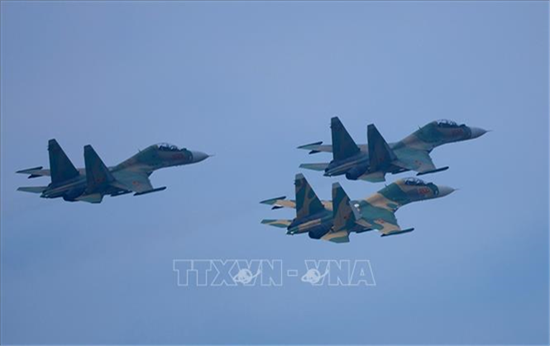 |
| VPA Air Force at the Vietnam International Defence Expo 2024 (Photo: VNA) |
Strategic Orientation
Based on an in-depth review of practice and a comprehensive assessment of the opportunities, advantages, difficulties and challenges facing the cause of national construction and defence in the new era, the 14th National Party Congress set out the objective of “building a revolutionary, regular, elite and modern Army”, clearly defining the goal of building a modern Army. This is a sound policy that demonstrates our Party’s strategic vision in building the Army, strengthening national defence and safeguarding the Homeland in the new period.
The purpose of building a modern Army is to bring about a new qualitative development, ensuring that our Army becomes increasingly revolutionary, regular and elite, with higher levels of expertise, capabilities and combat power, and is fully capable of defeating any aggressor in all forms of warfare, while responding promptly and effectively to traditional and non-traditional security challenges. It is to firmly safeguard the independence, sovereignty, unity and territorial integrity of the Homeland; protect the Party, the State, the People and the socialist regime; safeguard national interests; and maintain a peaceful and stable environment for national development. Our Army’s modernisation is by no means aimed at an arms race, but at enhancing its capacity to prevent, deter and forestall the risk of war, consistently implementing the policy of safeguarding the Homeland from an early and distant stage and defending the country before threats arise in the new era.
The content of building a modern Army is comprehensive, focusing on several core issues. First, building modern personnel. This is the foremost and foundational factor for building and operating the organisation and mastering modern weapons, equipment and methods of warfare. Accordingly, it is necessary to build a contingent of cadres, officers, professional servicemen and soldiers with firm political steadfastness and pure revolutionary ethics, who are particularly elite in political qualities and absolutely loyal to the Homeland, the Party, the State and the People; ready to fight and sacrifice for the independence and freedom of the Homeland and for socialism; determined to fulfil every task, overcome every difficulty and defeat every enemy. They must possess a profound understanding of military science and the art of warfare; the ability to learn rapidly, master and effectively exploit modern weapons and equipment; keen, flexible and creative thinking in responding to new operational situations; scientific working methods and a high sense of discipline; and the physical endurance necessary to adapt to harsh, prolonged operational conditions in complex environments. Second, building an “elite, compact, and strong” organisational structure and force disposition, with agencies and units developed in a balanced, synchronous, rational and scientific manner across their respective components and forces. This must ensure smooth operations, with commands transmitted from the strategic to the tactical level through the fewest possible intermediate echelons, thereby strengthening the effectiveness of centralised and unified command and the ability to respond instantaneously to all situations. Third, possessing modern, high-technology weapons and equipment with strong firepower and high precision, ensuring flexible defensive capabilities and timely responses to sudden, high-intensity strategic and tactical strikes by an adversary. Different types of weapons and equipment must be integrated and interconnected to generate comprehensive combat power under centralised and unified command. Fourth, establishing a complete, modern, integrated and robust automated command system extending from the strategic to the operational and tactical levels, ensuring continuous, unified and comprehensive command and control in all situations. Fifth, continuously developing systems of military and defence theory and military science in close alignment with the country’s development in practice and the requirements of Homeland protection in the new situation. Sixth, ensuring flexible, timely and adequate logistical and technical support for all Army requirements in both peacetime and wartime, across all scenarios of modern, high-tech warfare, as well as in disaster and epidemic response and in addressing other non-traditional security challenges. Seventh, developing a self-reliant, self-sufficient, self-strengthening, dual-use and modern defence industry, mastering foundational and core technologies and possessing sufficient capacity to research, design, develop and successfully manufacture a wide range of modern weapons and equipment to meet the requirements of Army building and Homeland protection, among other tasks.
In essence, building a modern Army means maintaining and strengthening its working-class character, its profoundly people-oriented and national character; ensuring that our Army remains a political and combat force absolutely loyal to and trusted by the Party, the State and the People; maintaining a high degree of unity in thought, organisation and action; establishing an elite, compact and strong organisational structure, together with scientific and effective working methods; developing modern personnel, modern weapons and equipment, and modern methods of warfare; and continuously enhancing its comprehensive quality and combat power, so that it can serve as the core force in firmly safeguarding the socialist Homeland of Vietnam in all circumstances.
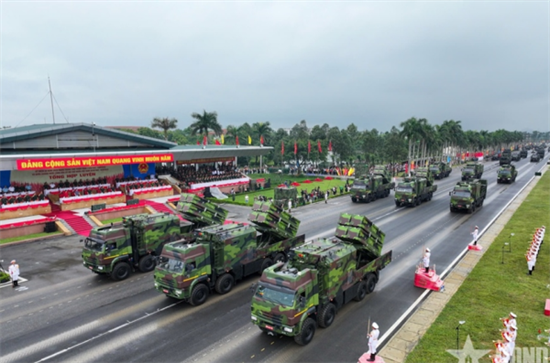 |
| A domestic missile complex developed by Military-owned Viettel group (Photo: qdnd.vn) |
Issues and Requirements
Building a modern Army is a particularly important undertaking that is both an urgent and a fundamental, long-term task. It is the responsibility of the entire Party, the entire population, the entire Army and the whole political system, with the People’s Army playing the core role. This is a glorious mission, but also a weighty one, involving numerous difficulties, challenges and issues that must be addressed.
First, in terms of awareness. Building a modern Army is a sound policy and a strategic decision of the Party, requiring a high degree of unity in awareness and action. However, at present, some cadres, Party members and the People have yet to develop a full understanding of this issue, nor the position, role, necessity and fundamental content of building a modern Army. Some still equate Army modernisation with the procurement of modern weapons and equipment, or regard it as a task solely for the Army. This reality requires intensified communication and education to achieve an even higher degree of unity throughout the Party, the population and the Army regarding the necessity, as well as the position, role, content, requirements and solutions, for building a modern Army. This, in turn, will help heighten the responsibility of organisations and forces in contributing to Army building.
Second, in terms of human resources, organisation and force structure. A modern Army must first and foremost have modern personnel and a modern organisational structure. Accordingly, cadres and soldiers must possess strong political qualities, high professional competence, scientific thinking and commensurate capabilities to master and effectively exploit weapons and equipment. In practice, however, the qualifications and structure of human resources across different fields and forces remain uneven; the ability of cadres and soldiers in some units to master new and modern weapons and equipment remains limited in certain respects; and there remains a shortage of leading experts and renowned chief engineers. This urgently requires breakthroughs in improving the quality of training and education, as well as attracting and making effective use of military talent. At the same time, organisational structures and forces must continue to be consolidated towards being elite, compact and strong, with rational structures suited to the requirements of Homeland protection and the characteristics of modern warfare.
Third, in terms of science, technology, weapons and equipment. Building a modern Army requires a high degree of self-reliance in science, technology, weapons and equipment. Meanwhile, our capacity to master foundational, core and strategic technologies has yet to fully meet requirements; access to, acquisition of and technology transfer from abroad are becoming increasingly difficult; and the infrastructure for research and testing remains limited. This issue requires due attention and resolution in order to promptly remove existing “bottlenecks”, thereby enhancing self-reliance in military science and technology, gradually mastering foundational, core and strategic technologies, and ensuring proactivity, self-reliance and self-strengthening in the research, development and manufacture of weapons and equipment. Particular attention should be paid to strategically significant weapons with high destructive power and deterrent capability, in order to meet the requirements of Army building and combat operations and safeguard the Homeland.
Fourth, in terms of political orientation and resource mobilisation. Building a modern Army is intended to make our Army increasingly revolutionary, regular and elite; at the same time, it requires substantial resources in terms of budget, science and technology, infrastructure and high-quality human resources. This is both an urgent immediate task and a fundamental long-term undertaking aimed at continuously enhancing the country’s defence capabilities. To achieve practical and effective results, it is essential to maintain and strengthen the Party’s absolute and direct leadership over all aspects of the Army, together with the State’s centralised and unified management. Only on this basis can the political orientation be firmly maintained, while all available resources and the strength of the entire population can be mobilised to build a modern Army. This is also a matter of principle, ensuring that our Army consistently maintains its working-class character, profoundly people-oriented and national character, and successfully fulfils all assigned tasks.
Fifth, in terms of military theory and the art of warfare. “Defeating the greater with the smaller and confronting superior numbers with inferior numbers” is a distinctive feature of Vietnamese military art. Today, amid the rapid development of science and technology, the realities of recent armed conflicts around the world demonstrate the emergence of an increasing number of new forms and methods of warfare and new types of operations. To meet the requirements of responding to a modern war in the future, it is imperative to focus on researching and developing military theory and the art of warfare, particularly methods of fighting and approaches to and methods of conducting operations. This is a matter of strategic significance for building a modern Army today.
The above issues not only reflect the objective requirements for translating the Party’s policy on building a modern Army into reality and meeting the requirements of Homeland protection in the new period, but also constitute key areas that must be addressed through a comprehensive, coordinated and feasible system of solutions in the coming period.
CAO THANH – QUANG HOP – THANH TUNG – BA PHU – VIET VUONG – VAN VUONG
(Next issue: III. Seizing opportunities, overcoming challenges, and resolutely building a modern Army)