The role of the Vietnam People’s Army in realising economic development goals according to the Resolution of the 14th National Party Congress
The 14th National Congress of the Communist Party of Vietnam (CPV) was a resounding success, marking a special milestone in the country’s development path and opening a new era - the era of the Vietnamese nation's rise.
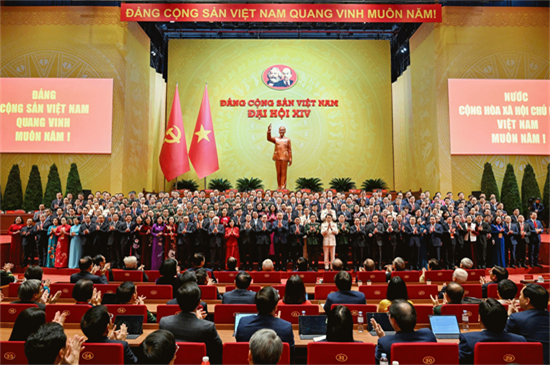 |
| The 14th National Party Congress |
To realise the “two centenary strategic goals”, our Party advocates: “Early identifying and taking advantage of all favourable conditions and opportunities, overcoming all difficulties and challenges to maintain rapid, sustainable national development, promoting breakthroughs in science, technology, innovation, digital transformation, and proactive international integration, closely combining and synchronously, effectively implementing key tasks, in which: Economic and social development and environmental protection are central, Party building is key, cultural and human development is the foundation, and strengthening national defence and security and stepping up foreign affairs and international integration are essential and regular”.
At the same time, the Party defines viewpoints and goals for national construction and development in the new period in the economic field: Vietnam will “strive to achieve an average Gross Domestic Product (GDP) growth rate for the 2026 - 2030 period of 10% per annum or more”, while “average GDP per capita by 2030 will be about $8,500”.
Speaking at the closing ceremony of the 2nd Plenum of the 14th Party Central Committee, General Secretary To Lam emphasised: “Regarding the 'double-digit' economic growth goal, this is an objective demand from national development in the new period and the entire nation’s aspiration to rise. We do not accept low growth. We must persistently pursue high, sustainable, substantive economic growth”. The General Secretary requested “agencies, ministries, sectors, localities, citizens, and businesses to deeply grasp the four core Principles”. He simultaneously called upon “our entire Party, people, and Military to act according to the motto: Strategic autonomy - Persistence in the two 100-year strategic goals - Joint efforts and consensus, with great resolve for the people’s prosperity and happiness”.
From these major orientations, it can be seen that implementing the Party's economic development goals is the central political task of our entire Party, people, Military, political system, and society. Among them, the Vietnam People's Army (VPA) plays a very important role in realising the country's economic development goals, which stems from the basic, unified functions of a revolutionary army: an army ready for combat, for work, and for production. The unity between these functions creates a comprehensive contribution; simultaneously, it affirms the VPA’s role in the successful implementation of the country's economic development goals in the new period; such a role is demonstrated as follows:
First, the VPA plays a core role in protecting a peaceful, stable, secure, and safe environment as a solid foundation for socio-economic development.
Maintaining political stability, firmly protecting independence, sovereignty, unity, and territorial integrity, proactively preventing and controlling the risks of war, conflict, terrorism, and subversion, and effectively responding to traditional and non-traditional security challenges are prerequisites to ensure strategic autonomy and rapid, sustainable economic development. Our Party requires “proactively researching, assessing, and correctly forecasting situational developments, opportunely handling situations concerning defence, security, and social order and safety, in order to avoid passivity or surprise, preventing risks of war, conflict, insecurity, and disorder early and from afar, maintaining political and social stability, preventing riots and terrorism, opportunely and effectively responding to traditional and non-traditional security challenges”. In fulfilling these requirements, the VPA holds a core role in the field of national defence, directly protecting the strategic conditions for development, ensuring the economy operates stably, development strategies, plans, and programmes are implemented continuously, and the country’s growth spaces, key projects, infrastructure, and strategic areas are safeguarded.
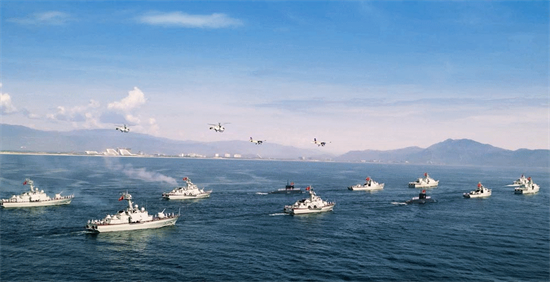 |
| The Navy during a parade at sea |
This role becomes even more prominent amid rapid, complex situational changes in the coming years on global and regional scales; the trends of multi-polarity, multi-centrism, multi-layering, fragmentation, and alignment are increasingly clear; proxy wars, strategic competition, trade wars, disputes over seas and islands, and challenges regarding cybersecurity, data security, supply chain security, energy security, food security, and human security are on the rise. Under these conditions, national defence is not limited to military tasks in the traditional sense, but is also closely linked with the requirements of defending the foundation for development, protecting development spaces and national interests, and maintaining strategic autonomy in new strategic environments and spaces. In this regard, the Military has well performed its combat readiness training tasks and focused on building a revolutionary, regular, elite, modern VPA and improving its overall quality and combat strength for undertaking all assigned missions.
Second, the entire VPA continues to effectively perform its function as an army ready for work and act as a vanguard force in encouraging the people to build political bases, consolidating "people’s hearts and minds posture", protecting the CPV's ideological foundation, creating a solid socio-political foundation for economic development.
The country’s economic development goals require not only material resources, science, technology, or institutions, but also a solid political - spiritual foundation, high social consensus, and great national unity. With its nature as a revolutionary army from the people and fighting for the people, our VPA plays a crucial role in encouraging the people to implement the Party’s lines and viewpoints and the State’s policies and laws. “Along with that, the Military always performs an exemplary role in Party building and rectification, promoting the study and following of Ho Chi Minh's thought, ethics, and lifestyle, protecting the Party’s ideological foundation, fighting against wrong, hostile viewpoints, defeating 'peaceful evolution' strategy and tactics of 'de-politicising', and 'civilianising' the VPA by hostile forces”, participating in building strong political bases, cementing the people’s trust in the Party, State, socialist regime, and renovation cause. This is a dimension of profound significance because sustainable economic development cannot be separated from socio-political stability, the close bond between the Party, State, and people, and the strength of the “people’s hearts and minds posture”.
In strategic areas, especially remote, isolated, border, sea, and island areas, as well as ethnic minority and religious areas, the VPA’s mass mobilisation activities are of special importance to linking economic development with defence and security consolidation. Through efforts to help people eliminate hunger and reduce poverty, build new-style rural areas, respond to natural disasters and epidemics, develop cultural life, and maintain security and order at grass-roots level, the VPA contributes to cementing the “people’s hearts and minds posture” and all-people national defence posture linked with people’s security posture. This is a particularly important socio-political foundation, creating sustainable stability for the country’s economic development process.
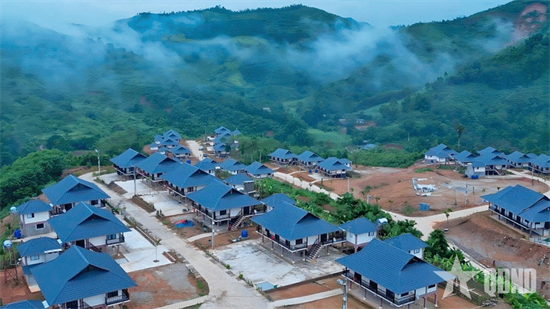 |
| Lang Nu residential area (Lao Cai province) reconstructed by military units (photo: qdnd.vn) |
The VPA plays a core role in responding to natural disasters, epidemics, and major incidents, directly contributing to stabilising social life, restoring production, and ensuring continuous economic activity. Practice over many years shows that in extremely difficult, urgent situations, the VPA has always been a force with close organisation, rapid mobility, strict discipline, high endurance for hardship, and a synchronous support system, ready to undertake and well complete all tasks. The VPA has opportunely taken part in overcoming the consequences of natural disasters, epidemics, and catastrophes, helping the people stabilise their lives, restore production, and quickly return socio-economic activities to a normal state. These activities contribute to protecting the lives and property of the State and people, minimising economic losses, ensuring the continuity of essential activities, cementing the people’s trust in the Party, State, and VPA.
As non-traditional security challenges increase, that role has even more direct significance for economic development. The reason is that effectively responding to natural disasters, epidemics, catastrophes, and major incidents is not just about dealing with immediate consequences, but also about protecting the people's livelihoods, safeguarding production and supply chains, maintaining social stability, and ensuring the economy is not disrupted in emergencies. In this respect, the VPA continues to affirm its core role in ensuring a stable, safe, continuous environment for the country's economic development.
Third, the VPA plays an important and direct role in implementing the Party's economic development lines, effectively performing its function as an army ready for production.
The documents of the 14th National Party Congress advocate “effectively performing the two strategic tasks of Fatherland construction and protection, closely, effectively combining defence and security with economic, cultural, and social development and foreign affairs to promote Vietnam's soft power, contributing to creating new stature and strength for the country”. That viewpoint requires a synchronous combination of development and protection in every national development strategy, plan, and programme. The VPA plays a direct role not only in giving strategic advice, but also in realising that viewpoint.
Over the years, the VPA has grasped and effectively implemented the Party's policy on closely combining defence and security with economy, culture, society, and foreign affairs, and on regional economic development as well as projects on building and developing the sea and island defence economy, and strengthening defence potential in strategic directions and areas. Corps, economic groups, defence - economic zones, and border guard units have actively participated in socio-economic development, creating stable employment and income for the people, improving the people's quality of life, building strong political bases, contributing to protecting territorial sovereignty and national border security. Military enterprises have been restructured in a compact manner with new development steps. These results affirm that the VPA has successfully implemented the Party's viewpoint on combining economic development with defence and security consolidation in the country's strategic areas and fields.
The VPA plays an important role in economic development, especially in the development of defence industry, dual-use technologies, military enterprises, and defence - economic resources. The 14th National Congress documents identify the tasks of improving the economy’s independence and autonomy, developing domestic economic sector to reduce excessive dependence on foreign-invested sector and foreign markets, fostering the development of science and technology in the fields of defence and security, building defence industry and security industry towards dual-use, increasing modernity, and high scientific and technological levels, capable of both meeting the requirements of Fatherland protection and making important contributions to socio-economic development. These orientations set direct requirements for the VPA in developing defence industry, promoting research, applying science and technology, innovation, and digital transformation, gradually mastering strategic foundational, core, and dual-use technologies. This clearly reflects the role of the VPA not only in ensuring national defence potential, but also in taking part in developing modern productive forces, improving the internal capacity and resilience of the national economy.
According to the 12th Military Party Congress, the entire VPA has built and developed an autonomous, self-reliant, self-strengthening, dual-use, modern defence industry, with some areas making breakthroughs and reaching targets early. The entire Military has grasped and effectively implemented the Party’s viewpoint on building and developing defence industry, making many breakthroughs in institutions, mechanisms, and policies for developing scientific and technological potential and defence industry to meet the requirements of building a modern VPA and the needs of the armed forces in the new situation; by 2030 the VPA shall gradually master foundational, core, advanced, dual-use technologies in research, design, and manufacture of defence industry products and modern, high-tech, strategic weapons and technical equipment. At the same time, an important breakthrough in fostering the development of science, technology, innovation, and digital transformation has been identified. These goals and breakthroughs affirm that the VPA is not only a force applying the nation's scientific and technological achievements, but also directly participates in creating the country's strategic technological capabilities.
It can be affirmed that the VPA has a very important role in realising the Party's economic development goals. This role should not only be seen in specific contributions in each field, area, or task, but must be placed within the strategic whole of Fatherland construction and protection. The VPA is the core force in protecting national independence, sovereignty, unity, and territorial integrity, maintaining a peaceful, stable environment for development; it directly takes part in building political bases, consolidating the people’s hearts and minds posture, and successfully fulfilling many socio-economic tasks associated with defence and security; it also participates in production, developing a dual-use defence industry, promoting the role of military enterprises, strengthening scientific and technological capacity, and improving the autonomy of the economy and the overall strength of the nation. Such a close link between these three dimensions creates the unique characteristics and values in the role of the VPA towards the country's economic development goals in the new period.
In the new era of development, in order to realise the goals for national development by 2030, with a vision to 2045, it is essential to continue to closely link socio-economic development with defence and security consolidation. In the process, strongly promoting the VPA’s role is of special importance. To that end, emphasis should be placed on the following main directions.
Firstly, continuing to grasp and consistently implement the Party's viewpoint on closely linking socio-economic development with defence and security.
All activities of the VPA related to economic development must be placed under the absolute, direct leadership of the CPV in all aspects, and the centralised, unified management and administration of the State, while the compliance with the law and correct goals must be ensured. It is necessary to grasp and effectively implement the viewpoint on “promoting the strength, mettle, and wisdom of the Vietnamese people, the great national unity bloc, and the people’s hearts and minds posture, combining national strength with the strength of the times, resolutely, persistently struggling to safeguard national independence, sovereignty, unity, and territorial integrity, protecting the Fatherland early and from afar, closely, harmoniously linking economic, cultural, social development and environmental protection with defence and security, raising the effectiveness of foreign affairs and international integration”. Besides, it is important to thoroughly grasp and implement the Action Programmes of the Party Central Committee and the Government for the Resolution of the 14th National Party Congress. The thorough grasp and implementation of the viewpoints and action programmes of the Party and Government across the entire VPA is of particular importance to ensuring that all activities of the VPA in participating in economic development are always closely linked with the requirements of defence and security consolidation and directly serve the cause of Fatherland construction and protection in the new situation.
Secondly, continuing to build a revolutionary, regular, elite, modern VPA as the core force in building strong, modern all-people national defence and firmly protecting the Socialist Vietnamese Fatherland in all situations.
To that end, it is necessary to proactively advise the Party and State on policies and strategies to mobilise resources to promote the building of a revolutionary, regular, elite, modern VPA and encourage its role as the core force in the cause of national defence and Fatherland protection. The overall quality, combat strength, and combat readiness of the entire VPA should be improved. Emphasis should be placed on raising the quality of training, strengthening night-time and high-intensity training in all conditions, close to combat realities, tasks, areas, and plans, and improving the quality of exercises at all levels across the VPA. It is vital to strictly maintain combat readiness regimes, grasp situational developments, closely manage borders, inland areas, airspace, sea areas, and cyberspace, and opportunely, effectively handle situations to avoid passivity. The content, policies, and solutions for building strong, modern all-people national defence with appropriate criteria, road maps, and steps should be studied and proposed. Resources and the development of science, technology, innovation, and digital transformation in the military and defence fields should be encouraged to improve combat capabilities on land, in the air, at sea, in cyberspace, and in electronic warfare, build a “Sustainable Air Defence Dome”, and form new combat units appropriate to the people's war posture and all-people national defence, with a view to successfully handling forms of high-tech warfare and firmly protecting the Socialist Vietnamese Fatherland in all situations.
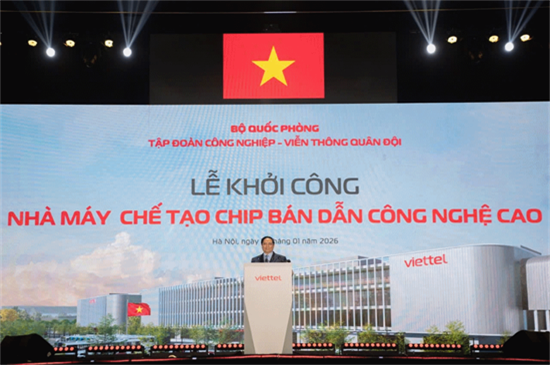 |
| Ground-breaking ceremony of Vietnam’s first semiconductor chip manufacturing plant by Viettel Group (photo: vov.vn) |
Thirdly, mobilising, managing, and effectively using economic - defence resources associated with the development of an autonomous, self-reliant, self-strengthening, dual-use, modern defence industry.
To that end, it is necessary to continue renewing and improving financial work across the VPA, closely implementing the medium-term public investment plan, and concentrating resources for military and defence tasks and key programmes and projects of the VPA and the nation. Due regard should be paid to promoting the application of digital technology in planning, finance, and defence economic management, strengthening inspection and supervision, ensuring strict management of finance, assets, and defence land, resolutely fighting against corruption, wastefulness, and negative practices. Doing so will create a solid foundation for the VPA to effectively perform military and defence tasks and make practical contributions to the country's socio-economic development.
Along with that, the entire VPA should grasp and resolutely implement the breakthrough in promoting the development of science and technology, innovation, and digital transformation, while developing an autonomous, self-reliant, self-strengthening, dual-use, modern defence industry. Emphasis should be placed on developing and mastering foundational, core, and advanced technologies in research, design, and manufacture of weapons, technical equipment, and defence industry products with high scientific and technological content. Simultaneously, it is important to develop dual-use technologies with wide application capabilities in civilian industrial sectors and closely link the system of defence research and production facilities with scientific, technological, and industrial facilities of the national economy, thereby, gradually forming a national industrial - technological capacity for serving defence demands and socio-economic development.
Fourthly, improving the legal system, institutions, and policies on defence and military affairs, combining defence and security with economy, and vice versa, promoting the role of military enterprises in national key projects, contributing to the country's socio-economic development.
Summary of practice and theoretical research should continue to be stepped up, with a focus on preliminary and final review of the implementation of the CPV's resolutions, conclusions, and strategies on military and defence affairs; due attention should be paid to supplementing and developing theories on national defence, Fatherland protection, modernisation of the VPA and all-people national defence, Vietnamese military art and culture, and the art of people's war in the new situation. It is necessary to proactively and closely coordinate with central agencies and organisations, local party committees and authorities, and relevant offices to make action plans and especially give advice to the Party and State on issuing a system of legal documents to institutionalise the CPV’s resolutions and formulate specific plans, mechanisms, policies, and laws on defence - military affairs, and on combing defence and security with economy, and vice versa.
There should be researches on the organisation, goals, steps, development focuses, mechanisms, and policies to maximise internal strength, utilise external strength, and effectively mobilise resources to promote the VPA's role in realising the country's economic development goals for the 2026 - 2030 period, with a vision to 2045 and beyond. Defence enterprises should be encouraged to expand their cooperation, take part in global supply chains, and manufacture dual-use defence industry products and equipment. Great value should be attached to improving the research, production, and innovation capacity of defence enterprises, promoting linkages with domestic and international industrial corporations and scientific - technological facilities, gradually developing defence technology and dual-use technology products capable of participating in regional and international markets. Doing so will help both improve the operational efficiency of military enterprises and strengthen the scientific and technological potential and autonomy of the national economy.
Fifthly, building a pure, strong, exemplary Military Party Organisation and a politically strong VPA.
To that end, it is vital to maintain and strengthen the absolute, direct leadership of the CPV in all aspects, and the centralised and unified management and administration of the State over the VPA, persistently build a politically strong VPA as the basis for improving the overall quality and combat strength of the entire Military. Due attention should be paid to building a strong Military Party Organisation in politics, ideology, morality, organisation, and personnel, with high leadership capacity and combativeness to lead and direct the entire VPA to excellently complete all assigned tasks. It is essential to make a breakthrough in upholding the cultural values of “Uncle Ho's Soldiers” in the new era, step up the study and following of Ho Chi Minh's thought, ethics, and lifestyle, implement Resolution 847-NQ/QUTW by the Central Military Commission, the Campaign entitled “Promoting tradition, devoting talent, deserving to be Uncle Ho's Soldiers in the new era”, and emulation movements and campaigns launched by the Party, State, and VPA through many creative, appropriate, effective ways.
Furthermore, importance should be attached to effectively implementing and turning the instructions of General Secretary To Lam, Secretary of the Central Military Commission, on “Two Firmnesses, Two Strengthenings, Two Preventions” and the “Five Pillars” motto into a deep political activity across the entire VPA. Besides, it is necessary to keep grasping and effectively implementing Conclusion 89-KL/TW, dated 24 July 2024, by the Politburo on continuing to execute Resolution 35-NQ/TW on “Strengthening the protection of the Party's ideological foundation and the fight against wrong, hostile viewpoints in the new situation”. The work of political education and ideological leadership should be well performed, with a focus on building and promoting political and spiritual factor among troops, ensuring that the VPA is always a fighting and political force absolutely loyal to and trusted by the Party, State, and people, and that officers and soldiers across the VPA always have political steadfastness against all difficulties, hardships, and dangers, and are determined to undertake and excellently accomplish all assigned tasks.
Deeply perceiving and bringing into play the role of the Military in implementing the country's economic development goals according to the Resolution of the 14th National Party Congress is an important issue, a great responsibility, and high determination of the VPA before the Party, State, and people. Well performing such a role will contribute to realising “the country's development goals by 2030”, remaining “strategic autonomy, self-reliance, confidence, advancing strongly in the era of the nation's rise for peace, independence, democracy, prosperity, civilisation, and happiness, firmly stepping towards socialism”.
Gen. NGUYEN TRONG NGHIA
Member of the Politburo
Secretary of the Party Central Committee
Member of the Central Military Commission Standing Board
Director of the General Department of Politics of the VPA