The entire military continues to promote its pivotal role in disaster control, prevention, rescue and relief
Currently, under the impact of climate change, various types of natural disasters are becoming increasingly complex, extreme, and unpredictable, causing heavy losses of life and property, directly affecting socio-economic development, national defence, security, and the lives of the people. This reality places increasingly high, comprehensive, and urgent demands on the task of disaster prevention, mitigation, and rescue operations. In this context, the entire military should continue to maximise its pivotal and leading role on the front lines, be ready to respond promptly and effectively to all situations, worthy of the trust of the Party, the State, and the People.
Fully aware of the harmful effects of climate change, natural disasters, and catastrophes, and deeply conscious of its assigned functions and duties, in recent years, alongside fulfilling its military and national defence duties, the entire Army has actively and proactively carried out the tasks of preventing, mitigating, and overcoming the consequences of natural disasters and catastrophes, as well as rescue and relief operations, considering this a political task, a “combat mission in peacetime”.
The General Staff has promptly advised the Central Military Commission and the Ministry of National Defence to report to the Party and State on perfecting the mechanisms, policies, and legal systems. At the same time, it has led and directed the entire Army to implement this task comprehensively, decisively, and effectively. On this “theatre without gunfire”, the Army has always been the core, vanguard force, arriving earliest and most promptly in the most difficult and dangerous places to protect the lives and property of the People. There have been many exemplary officers and soldiers who have not shied away from danger and have bravely sacrificed themselves in mission. Specifically, since January 2024 to date, the entire Army has mobilised over 1.8 million turns of officers and soldiers and tens of thousands of vehicles to participate in responding to and handling 7,632 cases relating to natural disasters and incidents; rescuing 7,562 people and 960 vehicles; relocating hundreds of thousands of households to safe areas, etc. In particular, during the implementation of the rapid “Quang Trung Campaign”, units deployed more than 312,000 officers and soldiers to build and renovate tens of thousands of houses, quickly stabilising the lives of the People. Through this, the core and pioneering role of the Army is further affirmed, enhancing the noble qualities of “Uncle Ho's soldiers”, strengthening the solidarity and close bond between the military and the People, and building an increasingly solid “People's heart and mind posture”.
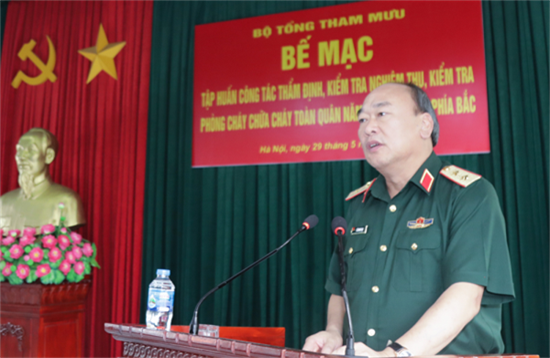 |
| Lt. Gen. Le Quang Dao speaks at a training on fire prevention and control for the Military in 2026 (Photo. bqp.vn) |
In the context of increasingly complex climate change, natural disasters and catastrophes are predicted to continue to develop more extreme on a larger scale in a more widespread area, coupled with growing non-traditional security challenges, which places new and higher demands on civil defence. Given this situation, in order to further enhance the core and leading role and better fulfill the “combat mission in peacetime”, the entire army should act decisively and effectively, focusing on the following key tasks and solutions:
Firstly, strengthen political and ideological education, raising the awareness and responsibility of officers, soldiers, and the People regarding the task of preventing and responding to natural disasters and catastrophes, rescue and relief operations. Party committees and commanders of agencies and units should always attach importance to political and ideological education; regularly brief of the tasks of disaster prevention, mitigation, rescue and relief to officers, soldiers, and the People to change their awareness and responsibility about these tasks. In particular, priority should be given to clarifying the Party's viewpoint on civil defence as an important component of the task of Fatherland protection in the new conditions, linked to the assurance of human security, socio-political stability, and sustainable national development.
As far as the method of implementation is concerned, it is necessary to continue to innovate the content and form of education and dissemination in a practical and realistic manner; closely integrate political education with traditional education to make troops motivated, responsible, and voluntary, regardless of difficulties and hardships. In the mean time, it is also necessary to strengthen information and propaganda, enhance their knowledge, skills, and innitiative in responding to and handling situations. The entire army should understand that disaster prevention and control, rescue and relief is a crucial political task. Thereby, they should uphold responsibility in leadership, guidance, and implementation; proactively prevent and resolutely counter the mindset of underestimation or reluctance to difficulties and hardships. Doing this will help making a strong and unified change in awareness and action, building high determination for successful task completion in all situations.
Secondly, improve the quality of planning, command, control, and coordination in disaster prevention, response, rescue, and relief. Agencies and units, especially the Department of Rescue and Relief, should leverage the role of the Office of National Civil Defence Steering Committee in advising, coordinating, directing, and guiding the execution of this task. Accordingly, they should proactively coordinate, monitor, update, and grasp the situation of incidents, natural disasters, epidemics, and environmental issues nationwide to propose to the General Staff and the Ministry of National Defence to advise the Government, the Prime Minister, and the National Civil Defence Steering Committee to direct ministries, sectors, and localities to adjust and improve the system of legal documents and civil defence plans at all levels, focusing on reviewing, advising, and supplementing the legal system on civil defence; consolidating and improving the effectiveness of the Civil Defence Command Boards in accordance with the organistional structure of the political system and the two-tiered local government model. Simultaneously, there is a need to research and refine the coordination regulations between central ministries and agencies, and between agencies and units and local governments, promptly addressing inadequacies in mechanisms, policies, and implementation methods.
Local military agencies at all levels should promote their core role in leading and coordinating with Party committees and governments at the same level to improve mechanisms for leadership and management, resource mobilisation, information exchange, and coordination regulations in preventing, combating, and mitigating the consequences of natural disasters and calamities, and make thorough preparation in all aspects according to the “four on-the-spot” principle. Develop, evaluate, and approve civil defence planning systems and response plans at each level, tailored to the characteristics of each locality, with a focus on major natural disasters and incidents. In particular, actively research and advise localities on the development of infrastructure and socio-economic development plans and projects linked to disaster prevention and mitigation, especially in highly vulnerable areas. Simultaneously, strengthen inspection, preliminary and final reviews; promptly supplement and develop the theory of civil defence; continuously improve plans and strategies; and enhance the quality of advice, guidance, and management to meet the demands of the new situation.
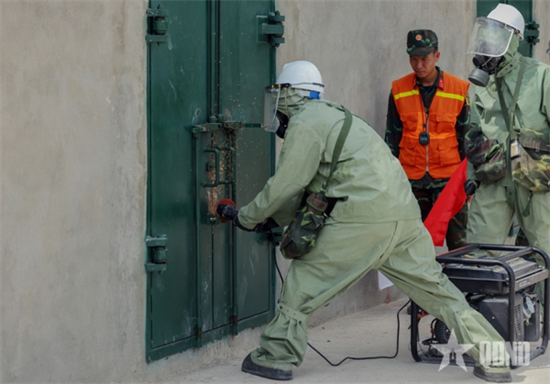 |
| An exercise on rescue and relief conducted by the Military in 2025 (Photo. bqp.vn) |
Thirdly, consolidate the organisation, forces, and equipment towards a lean, efficient, specialised, and flexible direction, effectively implementing the “four on-the-spot” principle. Along with advising on the consolidation of the Civil Defence Commands at all levels within the Army, the General Staff should focus on researching and proposing the organisation and staffing of forces for disaster prevention, response, rescue, and relief throughout the Army in a rational, effective manner and tailored with the Army's organisational adjustments; priorities should be given to the consolidation of specialised forces, promoting the development of on-the-spot forces, with the core being the militia, self-defence forces, and reserve forces, especially in critical, far-flung areas. Initially, focus on consolidating the organisation, staffing, and in-depth training of the 05 humanitarian assistance and disaster relief teams of the Ministry of National Defence under the Agreement on Disaster Management and Emergency Response among ASEAN countries, ensuring that they are ready to participate in relief activities domestically, regionally, and internationally. Further research and proposals should be made for the gradual establishment of a modern national-level civil defence task force, acting as the core, responding to large-scale, complex disasters across regions and sectors, creating a breakthrough in enhancing long-term response capabilities.
Agencies, units, academies, and schools should continue to study and seriously adhere to Circular No. 111/2025/TT-BQP dated 07 October 2025, of the Minister of National Defence on Regulations on civil defence training for forces in the Vietnam People's Army and the Militia and Self-defence forces; promote innovation in the content and methods of civil defence training towards practicality, improving skills in responding to various types of incidents and disasters; effectively combine traditional with specialised and modern equipment. Strengthen the organisation of competitions, drills, and exercises on basic and complex emergency situations; closely integrate civil defence content into regional defence exercises at all levels, improve command skills and coordination capabilities between teams and units; and build a truly lean, strong, specialised, and modern force for disaster prevention, response, and rescue throughout the army, capable of “on-site readiness, rapid mobility, and effective response” in all situations.
Fourth, promote the application of science and technology and digital transformation in disaster prevention, response, rescue and relief operations. In implementing Decision No. 934/QD-BQP, dated 13 March 2024, of the Minister of National Defence on the issuance of the Plan for implementing the Project on developing and enhancing the capacity to respond to incidents, natural disasters, and search and rescue operations until 2030, with a vision to 2045, under the management of the Ministry of National Defence, the General Staff has directed the Department of Rescue and Relief to take the lead and coordinate with relevant agencies to promote the application of science and technology and digital transformation, gradually build and develop a specialised information system and database on civil defence, natural disaster and incident response, and rescue and relief operations in a synchronised, interconnected, and unified manner from the Ministry of National Defence to the grassroots units. Simultaneously, data on key areas, forces, equipment, response plans, etc., is to be updated in a complete, accurate, and oppportune manner to effectively serve the work of adivise, command, and management.
Based on this foundation, data is to be collected, connected, and shared between agencies and units within the Army and with ministries, sectors, and localities, gradually forming a common data system. Research and build a unified digital command and control system throughout the Army, gradually connecting with the national system; integrate multiple information sources in real time, supporting quick and accurate decision-making, and enhancing command, control, and coordination capabilities in handling complex, large-scale situations. Promote the application of modern scientific and technological achievements in monitoring, detection, and early warning, especially remote sensing technology, unmanned aerial vehicles, artificial intelligence, and big data, to improve the quality of forecasting and warning, standardise information processing procedures, and enhance the effectiveness of coordination and the quality of disaster prevention, response, rescue, and relief efforts.
Fifth, strengthen coordination and cooperation with forces and localities, and expand international cooperation in disaster prevention, response, rescue, and relief. Agencies and units should enhance information exchange, data sharing, closely monitor the weather, meteorological, and hydrological developments, maintain strict duty rosters at all levels, proactively coordinate and cooperate with forces in the area, be ready to mobilise and deploy forces and equipment; resolutely avoid being made passive or unprepared in any situation. In particular, continue to adhere to and effectively implement the “four on-the-spot” principle, closely coordinate with local Party committees and authorities in mobilising and utilising forces and equipment, and synchronously implement measures to respond to and mitigate the consequences of natural disasters and calamities in an opportune, effective, and safe manner. During task execution, it is necessary to make exact calculations and assign specific tasks for each force in each area; emphasis should be placed on inspecting key areas and vulnerable regions; promptly adjust plans to ensure flexible handling of all situations.
Moreover, it is necessary to promote international cooperation on civil defence, rescue and relief in a practical and effective manner; strengthen information exchange and experience sharing; and participate in regional and international mechanisms and forums; hold and participate in joint exercises, training, and capacity building activities; ready to join in international humanitarian assistance and disaster relief activities. Besides, it is also necessary to proactive coordinate with relevant ministries and agencies to effectively implement bilateral and multilateral cooperation programmes with partners and countries in the region, thereby leveraging resources and experience to improve forecasting, warning, and response capabilities.
Deeply aware of the requirements and tasks of disaster prevention and control, rescue and relief, the entire Army is to continue promote the pivotal role, excellently fulfilling its “combat mission in peacetime”, worthy of the trust of the Party, the State, and the People, contributing to the building and firm protection of the Fatherland in the new era.
Lieutenant General LE QUANG DAO, Deputy Chief of the General Staff of the Vietnam People's Army