Strategic autonomy - a core factor in defending the Socialist Vietnamese Fatherland early and from afar
Amid rapid global changes, intense strategic competition among major powers, and increasingly complex and intertwined security risks, the task of safeguarding the Fatherland must be carried out early and from afar, even in peacetime. This reality leads to an urgent need to enhance strategic autonomy - a core factor in ensuring national independence and sovereignty, proactively controlling risks, and guiding the country's sustainable development under all circumstances.
Theoretical issues on strategic autonomy
In essence, strategic autonomy is the capacity of a nation to independently determine its development goals, identify its strategic interests, and choose methods for Fatherland defence on the basis of national interests, without being subject to external influence. This is an advanced level of self-reliance and self-strengthening, demonstrated through the ability to control various forms of strategic dependence in the process of international integration.
Strategic autonomy does not mean isolation or self-imposed seclusion; rather, it means proactively integrating into the world while maintaining the right to make decisions on fundamental issues. This capacity encompasses political, defence - security, economic, scientific - technological, and foreign affairs; any decline in one of these areas directly affects the capability to safeguard the Fatherland.
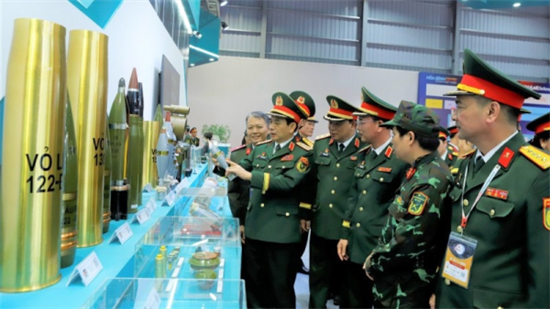 |
| Gen. Phan Van Giang visits an exhibition stand for Vietnamese defence products at Vietnam International Defence Expo (photo: qdnd.vn) |
In terms of its role, strategic autonomy forms the foundation for safeguarding the Fatherland early and from afar, first and foremost through the capacity to independently identify, analyse, and forecast security risks. As a result, a nation can shift from a reactive mindset to a proactive approach, prevent and address situations at their earliest stages. At the same time, strategic autonomy ensures the ability to maintain strategic decisions in the face of multidimensional influences from the international environment, preserving a stable and consistent development orientation based on national interests.
Regarding the relationship between strategic autonomy and international integration, these are two unified aspects of the development process. Integration expands space for development and access to external resources; strategic autonomy ensures the capacity to guide and control the integration process. The effectiveness of integration can only be sustainable when there is a solid foundation of autonomy; without autonomy, integration may evolve into dependence on technology, economy, finance, or development orientation.
As for the inevitability of strategic autonomy, the rapid advancement of science and technology is profoundly transforming the nature of competition among nations. Forms of strategic dependence are becoming increasingly sophisticated, extending to data, digital platforms, and global supply chains. This reality demonstrates that strategic autonomy has become a fundamental requirement for protecting national independence, sovereignty, and interests.
Practical foundations for the requirement of strategic autonomy
Complex changes in the international security environment. The world is evolving towards multipolarity and multiple centres of power; strategic competition among major powers is becoming increasingly intense and difficult to predict. Hot spots are no longer merely localised in nature but tend to expand and generate ripple effects on a global scale. Security threats may emerge early and from afar, even remain latent, requiring nations to strengthen their forecasting capabilities and autonomy in addressing strategic issues.
The growing strategic dependence due to globalisation. While globalisation promotes interconnectivity and interdependence among nations, it also creates strategic vulnerabilities. Dependence on core technologies, data, energy resources, and global supply chains is becoming increasingly evident. This reality requires a comprehensive understanding and proactive control of various forms of dependence, in conjunction with the need to safeguard national sovereignty and long-term development space.
Requirements arising from Vietnam’s practical situation. Vietnam is extensively integrating into the world and simultaneously affected by many major trends of the times. Its important geostrategic position creates favourable conditions for development while posing both traditional and non-traditional security challenges. The East Sea continues to experience complex developments; cyberspace and information space are becoming new fronts of strategic competition, where risks can emerge rapidly and be difficult to control. For that reason, strengthening strategic autonomy is a long-term and urgent requirement to ensure the country’s ability to maintain proactive response, strategic stability, and national interests.
Historical development and the need for strategic autonomy. The history of national construction and defence in Vietnam shows that when autonomy is maintained, the nation preserves its independence and sovereignty; when autonomy declines, the risks of passivity and dependence increase, potentially leading to the loss of strategic initiative. Hence, enhancing strategic autonomy is not only a response to contemporary practical demands but also a continuation of the law of development of the nation’s history.
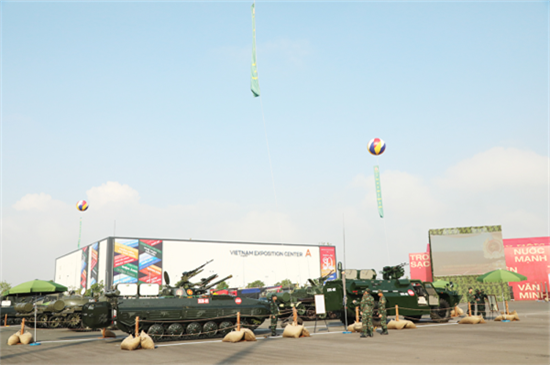 |
| Exhibition area of the Ministry of National Defence at Vietnam National Achievements Exhibition (photo: bqp.vn) |
Core elements of strategic autonomy
First, political autonomy. Strategic autonomy is, above all, autonomy in political lines and national development orientations. This factor plays a foundational role and influences all other areas, ensuring independence in strategic matters. In the current context, political autonomy means not only adherence to the goal of national independence and socialism, but also the capacity to identify external impacts early and proactively adjust policies based on national interests. This requires the ability to forecast, analyse, and flexibly address international changes as well as maintain domestic political and social stability. Political autonomy is also associated with cementing public faith, enhancing consensus, and building a firm “posture of people’s hearts and minds”, thereby laying a foundation for the unified, effective, and sustainable implementation of strategic decisions.
Second, defence and security autonomy. This is the area that most clearly reflects the nation's overall strength and directly safeguards the Fatherland under all circumstances. Defence and security autonomy is demonstrated via the building of politically strong people's armed forces that are streamlined in organisation, modern in weapons and equipment, and capable of maintaining combat readiness and effectively addressing situations early and from afar. In particular, developing an autonomous, self-reliant, self-strengthening, dual-use, modern defence industry is of importance to reducing dependence on external sources, enhancing strategic deterrence, and safeguarding the Fatherland under new conditions.
Third, economic autonomy. This is the direct material foundation for achieving political, defence, and foreign policy objectives. An economy lacking autonomy will find it difficult to sustain strategic independence in the long term. Thus, our priority is to maintain major economic balances, ensure economic, energy, food, and supply-chain security, and strengthen resilience against external shocks. In addition, it is necessary to reinforce internal strength through reform in the growth model, science and technology development, innovation, digital transformation, and human resource quality, thereby creating a substantive foundation for strategic autonomy.
Fourth, scientific, technological, and foreign policy autonomy. In the digital era, science and technology have become a new arena of strategic competition. Therefore, strategic autonomy requires not only access to technology but also the gradual mastery of core technologies, digital infrastructure, and national data resources. It also requires adherence to an independent, autonomous foreign policy line of multilateralisation and diversification of relations, without joining military alliances or choosing sides. This approach both expands development space and maintains strategic balance, ensuring national interests amid the increasingly intense competition among major powers.
Measures to enhance strategic autonomy
First, improving forecasting capacity and strategic thinking. Emphasis should be placed on developing independent analytical and forecasting capabilities, enabling the timely identification of trends in international, regional, and domestic developments so that policies can be proactively formulated and adjusted. Forecasting capacity should be aimed at accurately assessing the nature, scale, and timing of security-related impacts, especially from non-traditional security challenges, thereby ensuring initiative, timeliness, and effectiveness in addressing strategic issues.
Second, consolidating and enhancing national internal strength. National internal strength is the direct foundation of strategic autonomy. Hence, due attention should be paid to developing an independent, self-reliant economy in tandem with extensive and intensive international integration, promoting science, technology, innovation, digital transformation, and improvement in human resource quality. Major economic balances together with economic, energy, food, and supply-chain security must be guaranteed to strengthen resilience and adaptability to external impacts.
Third, building a robust all-people national defence posture in conjunction with the people’s security posture. The requirement is to closely integrate socio-economic development with defence and security consolidation, thereby laying a foundation for safeguarding the Fatherland early and from afar. The scope of protection should extend to cyberspace, information space, and other non-traditional security domains, while the capacity to detect, prevent, and promptly handle risks right at the outset should be enhanced.
Fourth, developing an autonomous, modern defence industry. Great value should be attached to gradually mastering technology and enhancing capabilities in research, production, improvement, and modernisation of weapons and equipment in a dual-use direction. Doing so will help reduce dependence on external suppliers and strengthen national defence and security potential and strategic deterrence capabilities as well.
Fifth, proactively participating in shaping international relations and firmly protecting the Party’s ideological foundation. Vietnam should actively participate in building and shaping international mechanisms and “rules of the game”, particularly in emerging areas such as cybersecurity, data, and digital economy. It should resolutely, persistently defend the Party’s ideological foundation, maintain stability in its cultural - social space, and enhance its adaptability and resilience against non-traditional security challenges.
Strategic autonomy is a fundamental requirement of decisive importance to safeguarding the Socialist Vietnamese Fatherland under new conditions. The task of Fatherland protection must shift from reacting to threats towards proactively preventing and controlling risks early and from afar. Practice has shown that only by enhancing internal strength, strategic forecasting capacity, and strategic adaptability can a nation maintain the initiative and safeguard its own independence, sovereignty, and interests. Therefore, improving strategic autonomy is the core condition for successfully fulfilling the task of Fatherland protection in the new situation.
Associate Prof. PHAN TRONG HAO, PhD
Former Full-time Scientific Secretary of the Central Theoretical Council