Building a contingent of military teachers to meet the requirements of breakthrough development in education and training in the new situation
Breakthrough development in education and training is a major policy of our Party and State, carrying particular significance for the cause of Fatherland construction and protection in the new era. It is also directly aimed at improving the quality of human resources for the building of a revolutionary, regular, elite, modern Vietnam People’s Army (VPA). In this regard, developing a contingent of military teachers is a key issue that requires focused leadership and direction, strategic thinking and vision, and resolute, effective action.
Throughout the history of human society, education has long been regarded as a factor of particular importance to the development of individuals, groups, communities, and nations.
Our forefathers taught: “Good nutrition builds a strong body; good education builds a sharp mind”, “a chest of gold is worth less than a bag of knowledge”, and “without a teacher, one cannot succeed”. President Ho Chi Minh clearly pointed out: without teachers, there can be no education; without education and cadres, there can be no economic or cultural development. Practice has affirmed that “teachers are the decisive factor in the quality of education and are held in high esteem by society”. Without good teachers, there can be no good students. “Good teachers are the most honourable people; although their names never appear in newspapers and they receive no medals, good teachers are unsung heroes”.
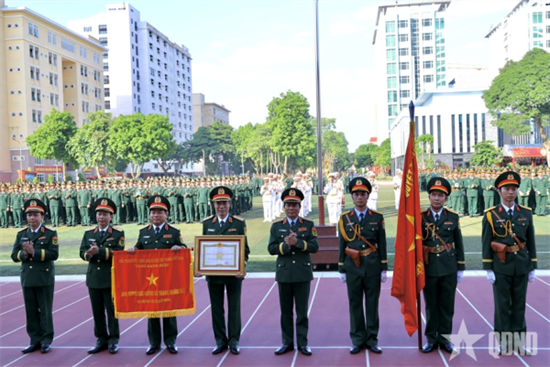 |
| Military Logistics Academy presented with the title of Hero of the People’s Armed Forces (photo: qdnd.vn) |
In the cause of building and defending the Socialist Vietnamese Fatherland, our Party has consistently identified education and training as a top national priority; education and training plays a decisive role in developing human resources and enhancing the country's potential and overall strength. Resolution 71-NQ/TW, dated 22 August 2025, by the Politburo on “breakthrough development in education and training” reaffirmed this position and clearly established that schools constitute the foundation, while teachers are the driving force for the quality of education and training.
Resolution 290-NQ/QUTW, dated 7 January 2026, by the Central Military Commission (CMC) on “breakthrough development in education and training in the Military” sets out the viewpoint that education and training in the VPA represents a strategic and foremost important task, as well as a key driver for the VPA's overall quality and combat strength. In this regard, learners are placed at the centre and regarded as the subjects of the educational process; the exemplary military pedagogical environment serves as the foundation; teachers and educational managers are the key and decisive factor; the application of science, technology, and digital transformation provides the driving force for education and training. This affirms that breakthrough development in education and training must first and foremost begin with personnel, with teachers serving as the core force directly translating policies, objectives, programmes, and methods relating to education into the actual quality of learners.
Fully aware of the important position and role of teachers in the quality of education and training and the building of military human resources, in recent years, the CMC, the Ministry of National Defence (MND), and Party committees and commands at all levels have paid considerable attention to resolutely, comprehensively adopting measures to build and develop the contingent of teachers and educational managers. In particular, the Project on “building a contingent of teachers and educational managers in the Military for the 2023 - 2030 period and beyond” has provided an important basis for academies and schools to remain proactive in personnel planning, training, and utilisation and gradually complete the structure of their teaching staff in accordance with their task requirements. In addition to standardising qualifications, military educational institutions have focused on enhancing professional competence, pedagogical skills, foreign language proficiency, information technology skills, the ability to work in international environments, and scientific research capacity among teachers and educational managers. They have also linked the development of the teaching staff with quality assurance in education and training and the building of an academic environment. The conferment of academic titles and policies to attract and make effective use of talents have been implemented in a systematic and substantive manner, thereby creating incentives for teachers’ dedication and development.
By the 2025 - 2026 academic year, the contingent of teachers and educational managers in the Military had been basically sufficient in terms of numbers, with an increasingly rational structure and improved quality, thus meeting the short-term task requirements and providing a basis for long-term development. The overwhelming majority of military teachers demonstrate firm political mettle, sound moral qualities, a high sense of discipline, a strong sense of responsibility, and a thorough understanding of the need to preserve the qualities and prestige of teachers and the cultural values of “Uncle Ho’s Soldiers”. In teaching, teachers have gradually renewed their content and methods in close alignment with training objectives, learning outcomes, and training programmes, paying due attention to developing learners' qualities, capabilities, independent thinking, and ability to apply knowledge. In scientific research, many teachers have proactively identified and addressed issues arising from training, combat readiness, force building, and military art study. Research findings have been selected and incorporated into training programmes, curricula, textbooks, and reference materials, thereby enhancing the scientific and practical relevance of the training process.
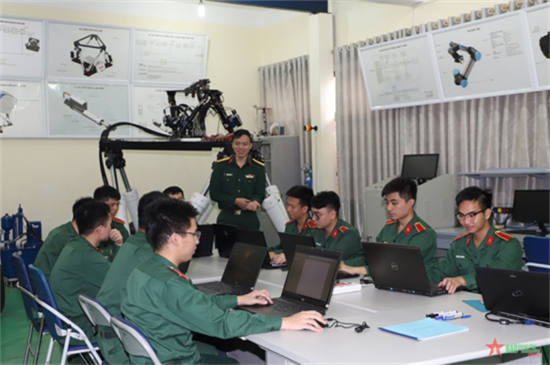 |
| A training session at Military Technical Academy (photo: qdnd.vn) |
Teachers always play an important role in providing political and ideological education, educating learners in tradition, morality, and law, and fostering learners’ political steadfastness and sense of discipline, thus contributing to shaping learners' worldview, methodology, learning motivation, sense of responsibility, and qualities as revolutionary soldiers. In training disciplines associated with military science and technology and emerging fields, teachers constitute an important force in acquiring, studying, updating, and transforming new knowledge into training content, helping improve learners' ability to master modern weapons, technical equipment, and methods of warfare. In addition, teachers directly strengthen the ideological “resilience” of officers and learners by proactively providing scientific arguments, guiding perception, and combating wrong, hostile views, thereby safeguarding the Party's ideological foundation within the VPA. Highly qualified teachers with scientific prestige and dedication to their profession have truly become exemplary figures in terms of personal qualities, working methods, self-study, and dedication to the cause of education and training in the VPA. These achievements affirm the growing maturity of the Military's teaching staff, laying an important foundation for meeting the requirements of breakthrough development in education and training in the new period.
At present, the cause of Fatherland construction and protection is facing a combination of opportunities, favourable conditions, difficulties, and challenges. The rapid development of science and technology, particularly artificial intelligence (AI), big data, digital technology, simulation technology, and other emerging technological fields, is profoundly transforming production methods, social governance, and the conduct of warfare. For the VPA, the process of modernisation is placing increasingly high requirements on the quality of human resources. Certain emerging, specialised, and cutting-edge fields require highly qualified personnel and teachers, while the training and professional development needed to build a pool of leading experts require considerable time.
Therefore, building the VPA's teaching staff must be approached at a new level, with clearly defined priorities, a long-term vision, and effective measures to bring about substantive progress and achieve the overall objective: to build a contingent of teachers who meet the standards prescribed by the State and the MND, express their political resolve and absolute loyalty to the Fatherland, the Party, the State, and the People, remain steadfast in the Party's revolutionary goals and ideal, demonstrate exemplary moral qualities, a pure lifestyle, and a strong sense of discipline, possess high qualifications, a modern knowledge base, and comprehensive capabilities, adopt professional and scientific teaching and working styles and methods, maintain appropriate health conditions, ensure adequate numbers and a rational structure, facilitate a fundamental and comprehensive reform in education and training, the development of science and technology, and the building of a revolutionary, regular, elite, modern VPA, and contribute to building and firmly defending the Fatherland in the new situation. To that end, attention should be paid to effectively implementing the following key measures.
First, strengthening the leadership and direction of Party committees and commands at all levels over the building of the teaching staff. This is an essential requirement for translating the resolve of the Party, State, and CMC into concrete action, ensuring that the breakthrough development in education and training and the building of the teaching staff are uniformly disseminated and implemented.
Accordingly, the building of a contingent of teachers must be incorporated into the overall work of Party building, personnel work, and school development. In this work, the centralised leadership of Party committees and Party organisations, the unified management of commands, and close advisory and guidance work by competent agencies must be ensured. Party committees and commands at all levels should continue to thoroughly grasp and effectively implement the Politburo’s Resolution 71-NQ/TW, the CMC’s Resolution 290-NQ/QUTW, the Project on “building a contingent of teachers and educational managers in the Military for the 2023 - 2030 period and beyond”, and Circular 50/2026/TT-BQP, dated 25 May 2026, by the MND, detailing and guiding the implementation of a number of provisions of the Government's Decree 363/2025/ND-CP on “policies to attract and utilise talents in the VPA”. Based on those documents, the building of the teaching staff should be included in annual resolutions, work plans, and school development projects. Clear objectives, targets, timelines, and responsibilities should be assigned to each level, agency, and unit to ensure that tasks are performed in a coordinated fashion, with clearly defined priorities, in line with the actual circumstances of each unit, the requirements of education and training, and the development orientations of training institutions, and avoid generalised plans that lack a sound practical basis or delays in translating objectives into specific measures.
Inspections, supervisions, and preliminary and final reviews of resolutions, plans, and projects, particularly tasks for the 2026 - 2030 period should be regularly carried out to draw lessons, promptly identify difficulties and targets at risk of falling behind schedule, and adopt appropriate corrective measures. Leadership and direction must be closely linked to inspections and actual task performance; the level of fulfilment of objectives and targets must be seen as an important criterion for evaluations. In this way, the Party's lines, resolutions of the CMC and MND, and the Project on building the teaching staff will be executed in a uniform, continuous, proactive, and closely supervised manner, thereby laying a foundation for successfully fulfilling the breakthrough development objectives in education and training in the VPA.
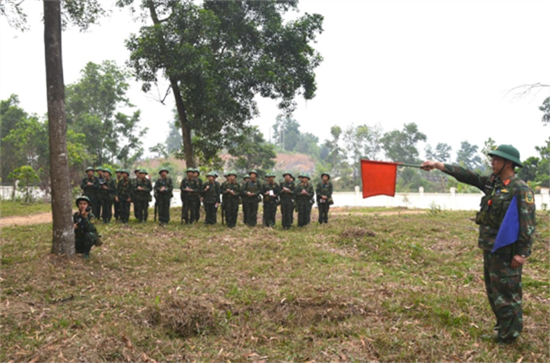 |
| Tactical training for cadets of Infantry Officer College No.1 (photo: qdnd.vn) |
Second, remaining proactive in personnel planning and recruitment, developing a teaching staff structure that meets the requirements of breakthrough development in education and training. Building the teaching staff requires a long-term vision, proactive preparation, accurate forecast of demands, and early mobilisation of necessary resources. Planning must be linked to development orientations; identifying potential personnel must be aligned with task requirements; recruitment must prioritise quality; the teaching staff structure must ensure balance, coordination, continuity, and development to meet both immediate and long-term requirements.
Training institutions should proactively identify officers, cadets, and scientific personnel who possess sound qualities, outstanding capabilities, creative thinking, passion for research, and promising development prospects for training and professional development to pursue careers as teachers. Due attention should be paid to young teachers, especially those with capabilities in emerging, specialised, and cutting-edge fields and disciplines directly serving the VPA's modernisation process. Recruitment must be substantive, with political and moral qualities, professional competence, pedagogical capabilities, scientific research capacity, and development potential being taken into account. Recruitment should not focus merely on academic qualifications or absolutise any single criterion; instead, candidates must be assessed comprehensively in terms of their ability to meet professional and military task requirements. At the same time, the teaching staff structure should be regularly reviewed and adjusted to ensure a balanced distribution across subjects, branches, specialisations, and training levels, thereby addressing localised shortages and surpluses and imbalances between fields. In addition, teachers should be sent for further training, professional development, research, and practical experience in accordance with personnel planning and the requirements of each specialisation. Practical positions at units should be regarded as an important environment for teachers to broaden their knowledge, experience, and professional capabilities.
Third, building a contingent of teachers who are politically steadfast, morally exemplary, and outstanding in personal character. This is the foundation for establishing the prestige, persuasive influence, and exemplary role of military teachers, and is of great importance to cultivating and developing the noble qualities of revolutionary soldiers among learners.
Accordingly, Party committees and commands at all levels should thoroughly grasp and effectively implement the Politburo’s Directive 07-CT/TW, dated 13 July 2026, on “stepping up the study and practice of Ho Chi Minh's Thought, morality, methodology, and lifestyle in the new stage of development”, Directive 899-CT/QUTW, dated 30 August 2026, by the CMC Standing Board on “stepping up the study and practice of Ho Chi Minh's Thought, morality, methodology, and lifestyle throughout the Military Party Organisation and the entire VPA”, the Politburo’s Resolution 24-NQ/TW, dated 22 August 2026, on “promoting the pioneering and exemplary role, sense of innovation, and spirit of daring to think, act, and take responsibility among cadres and party members in the new era”, and the CMC Standing Board’s Directive 676-CT/QUTW, dated 20 June 2026, on “strengthening leadership and direction in promoting the cultural values of ‘Uncle Ho's Soldiers’ in the new era”.
On this basis, teachers must take the lead in making a decisive shift from studying and understanding to practice, self-cultivation, and example setting in the performance of their duties and responsibilities. They must develop political steadfastness and a strong sense of preserving their honour and professional self-respect. At the same time, importance should be attached to improving their ability to identify, analyse, and address emerging issues and their capacity to defend the Party's ideological foundation, combat wrong, hostile views, and uphold the Party's principles, combativeness, and scientific nature in their teaching, research, and professional activities. Every teacher must be exemplary in words, action, conduct, working methods, and discipline observance, practise what they preach, remain impartial and objective in teaching, testing, and assessment, demonstrate a high sense of responsibility and dedication to learners, maintain a close, respectful, and humane relationship with their comrades and colleagues, and resolutely overcome manifestations of reluctance to face difficulties or embrace innovation, irresponsibility, “achievement disease”, and deviations from proper pedagogical conduct. Through these efforts, the VPA will build a contingent of teachers who are politically steadfast, morally exemplary, disciplined in conduct, professionally capable, and highly conscious of their exemplary role. Teachers will truly become those who directly impart knowledge, provide political and ideological education, and shape learners' zeal, belief, willpower, and working methods.
Fourth, developing teachers’ professional competence, scientific research capacity and mastery of new knowledge. “To have good students, there must be good teachers”. Hence, improving teachers' professional qualifications, pedagogical skills, and capacity to organise educational activities is a central and fundamental requirement. Teachers must regularly engage in self-study and independent research, update themselves on the latest achievements in military art, social sciences and humanities, and science and technology, renew their thinking, methods, and approaches to organising teaching work, shift from one-way knowledge transmission towards developing learners' thinking, methodologies, application capabilities, and problem-solving skills. The quality of lectures must be reflected in helping learners gain a correct understanding, think deeply, apply knowledge creatively, and effectively address issues arising in practice. This will help deal with the situation in which knowledge remains confined to educational institutions and teaching methods are monotonous and slow to change.
In particular, practical competence must be regarded as an important constituent of the professional expertise of military teachers. Practical activities involving force building, training, combat readiness, and operations at agencies and units represent a dynamic source of knowledge for supplementing, verifying, and developing professional expertise, providing the basis for teachers to renew teaching content and methods and orientate their research. Therefore, favourable conditions should be created for teachers to regularly engage with practical activities and participate in research, surveys, exercises, competitions, training, and other appropriate tasks. They should be encouraged to incorporate new issues, practical requirements, and grass-roots experience into lectures, specialised topics, curricula, and scientific research projects. These efforts will help overcome the detachment from reality and ensure that knowledge imparted at military educational institutions consistently possesses practical relevance, combativeness, and high applicability.
Alongside these efforts, strong progress must be made in enhancing teachers' scientific research, innovation, and technological mastery capabilities. Amid rapid scientific and technological advances, particularly the far-reaching impact of AI and digital transformation on education and training, teachers must be capable of accessing, evaluating, exploiting, and gradually mastering new achievements to improve the quality of teaching and research. Attention should be paid to developing foreign language proficiency, research methods, and skills in exploiting data, digital learning materials, and technological platforms. AI, simulation systems, and educational technologies should be applied to create new approaches to teaching and research, instead of merely replacing traditional tools. Besides, scientific research must be linked to major, complex, and emerging issues in force building, training, combat readiness, defence industry, and Fatherland protection. Strong research groups and specialised research areas should be established to create a favourable environment for teachers with outstanding capabilities to develop into reputable experts and scientists capable of providing professional leadership. These efforts will help build a teaching staff with in-depth expertise, sound pedagogical skills, a thorough understanding of practical realities, scientific thinking, research capabilities, and the ability to master new knowledge and technologies. Such a contingent will be capable of addressing theoretical and practical issues and directly improving the quality of education and training, contributing to building the VPA in the new situation.
Fifth, strongly renewing mechanisms for employing, assessing, and making effective use of teachers, creating incentives for their dedication. Competent agencies should adhere to relevant regulations, particularly Law 73/2025/QH15 on Teachers, and continue conducting reviews, surveys, and research into existing policies and regulations of the State and the MND to give advice to competent authorities on amendments, supplements, or promulgation of documents governing mechanisms, entitlements, and policies for teachers, ensuring consistency and alignment with the development trends of the country and the VPA, as well as the practical requirements of education and training.
Investment and financial support should be gradually increased to meet the actual requirements of training and professional development for teachers and educational managers. Existing financial support for professors, associate professors, and PhD holders directly engaged in research and teaching as well as for senior lecturers, experts, and officials invited to teach at military training institutions should continue to be provided. Favourable conditions should be created to attract scientists, experts, and cadres holding leadership and command positions at agencies and units to participate in education and training in the VPA.
The assessment of teachers must shift decisively from an emphasis on personal records and academic qualifications towards substantive evaluations of task performance. Such assessments should be linked to teaching quality, learners' academic and training performance, scientific research effectiveness, and level of contributions to schools and units, and teachers' efforts in self-study and self-improvement. A system of specific and transparent assessment criteria should be developed to suit the characteristics of different professional titles, branches, specialisations, and training levels. Periodic assessments should be combined with evaluations based on actual products and results. These assessments must enable the classification of teachers, the identification of those with outstanding capabilities for more effective use, the recognition of those requiring further professional development, and the timely removal of teachers who fail to meet their task requirements.
In addition, mechanisms for the employment, rotation, and appointment of teachers must be proactively reviewed and improved. Due regard should be paid to developing working conditions, academic environments, infrastructure, and research facilities, and improving teachers’ material and mental life to enable them to maintain long-term commitment to their institutions. A healthy military pedagogical environment characterised by democracy and discipline should be created to encourage self-study, research, and innovation and uphold professional honour, responsibility, and prestige among teachers. Outstanding teachers and collectives with innovative and effective approaches should be promptly commended and honoured, thereby creating incentives for professional advancement and spreading a spirit of dedication throughout the teaching staff. Besides, mechanisms for managing teachers on digital platforms should continue to be improved, with a unified database established to cover personnel, qualifications, capabilities, teaching and research results, practical experience, and professional development records. This will better facilitate personnel planning, employment, assessment, and development.
Breakthrough development in education and training in the VPA is a task of strategic and long-term significance, requiring strong determination, resolute and coordinated action, and outstanding measures. In this regard, the development of a contingent of teachers plays a decisive role in the quality of human resources - the central factor in building a revolutionary, regular, elite, modern VPA capable of safeguarding the Socialist Vietnamese Fatherland in all circumstances.
Gen. NGUYEN TAN CUONG
Member of the Party Central Committee
Member of the CMC Standing Board
Chief of the General Staff of the VPA
Deputy Minister of National Defence