Da Nang Border Guard effectively implements ethnic policies in border areas in accordance with President Ho Chi Minh’s teachings
During his lifetime, President Ho Chi Minh advised the border guard forces: “In areas inhabited by ethnic minorities, attention must be paid to their customs and traditions; we must always assist and educate them. When the people trust and respect the cadres, they will wholeheartedly support us, even to the point of making sacrifices for us.”¹ Deeply imbued with President Ho Chi Minh’s teachings, in recent years Da Nang Municipal Border Guard has consistently attached great importance to effectively implementing ethnic policies in border areas in close association with firmly safeguarding the assigned sovereignty and border security.
After the establishment of Da Nang City on the basis of the merger between Quang Nam Province and Da Nang City, Da Nang Border Guard was assigned responsibility for managing and protecting more than 157 kilometres of land border adjoining Sekong Province of Laos, with a population of over 6,657 households and 25,706 inhabitants, primarily from the Co Tu and Gie Trieng ethnic groups, together with 231 kilometres of coastline.
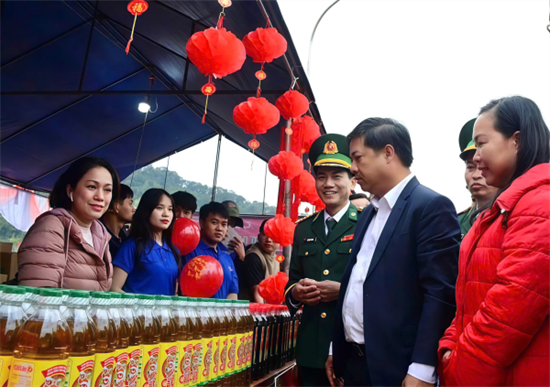 |
| Leader of Da Nang city visits local product exhibition of ethnic group |
Although the Party, the State, and local authorities have invested considerable resources in socio-economic development, gradually improving the material and spiritual life of the people, the border area continues to face numerous difficulties. The terrain consists mainly of high mountains and dense forests; the population is sparsely distributed; infrastructure remains incomplete; and the area is frequently affected by natural disasters. Consequently, economic, cultural, and social development in the border region remains relatively slow. In recent years, the political security situation and social order and safety in the City’s border areas have remained fundamentally stable. Nevertheless, a number of potentially complex factors persist. Hostile forces continue to exploit issues relating to ethnicity, religion, democracy, and human rights in order to intensify subversive activities, distort the Party’s guidelines and policies and the State’s laws, and incite division within the great national unity bloc.
In response to these realities, the City Border Guard Party Committee and Command, together with Party committees and commanders at all levels, have regularly organised the thorough dissemination and implementation of superiors’ resolutions and directives, while strengthening leadership and direction in synchronously and effectively carrying out mass mobilisation work in close association with the implementation of ethnic policies and the firm safeguarding of sovereignty and security in border areas. This has been identified as a central political task. Accordingly, the City Border Guard has proactively advised local party committees and authorities in promulgating numerous resolutions, programmes, and plans closely aligned with local conditions, clearly defining objectives, contents, implementation roadmaps, solutions, and the responsibilities of each agency and unit. Party committees and Party organisations at all levels have concretised these policies and measures in quarterly and annual leadership resolutions, while border posts and functional agencies have implemented mass mobilisation work in a rigorous and effective manner throughout the area. Particular emphasis has been placed on developing and implementing practical and effective programmes and models focused on disadvantaged areas and ethnic minority communities, closely linked with the all-people movement to safeguard territorial sovereignty and national border security, and with the building of an all-people border defence posture and a strong all-people border defence system.
Attention has also been paid to promoting grassroots initiative, flexibly and creatively applying the Party’s guidelines and the State’s policies and laws in accordance with the specific characteristics of border areas, thereby maximising the effectiveness of mass mobilisation programmes and models in ethnic minority regions. As a result, policies concerning ethnic minority communities in the City’s border areas have been implemented in a unified and effective manner by Party committees and commanders at all levels, while also bringing into full play the roles and responsibilities of relevant organisations and forces.
Da Nang Border Guard has actively promoted the propagration and dissemination of the Party’s and State’s policies on ethnic affairs in close association with the tasks of border construction and protection. Propagation efforts have focused on affirming equality among ethnic groups in all fields and combating ethnic discrimination and division; promoting national target programmes on sustainable poverty reduction, new-style rural development, and socio-economic development in ethnic minority and mountainous areas; preserving and promoting the fine cultural identities of ethnic communities; and improving education and healthcare services for people in remote and isolated areas. At the same time, efforts have been made to raise awareness and responsibility among ethnic minority communities in safeguarding border sovereignty, maintaining security and order, and countering hostile forces’ attempts to exploit ethnic issues.
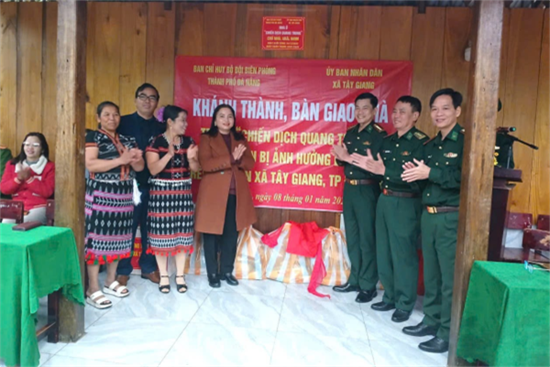 |
| Housing completion for ethnic people in the Quang Trung Campaign |
President Ho Chi Minh once advised: “To successfully reform customs and practices, propaganda and education work must be carried out persistently and continuously, step by step, without subjectivity or impatience.” Deeply imbued with his teachings, the Border Guard Posts of A Nong, Tr’hy, Ga Ry, La Ee, Dac Pring, and Nam Giang International Border Gate have proactively renewed and diversified communication methods in accordance with the principle of “three close attachments and four together” - listening to the people, speaking in ways the people understand, and acting in ways that earn the people’s trust. These units have combined centralised propaganda activities with direct engagement at the individual and household levels, flexibly integrating the units’ communication efforts with the implementation of local policies and tasks. Their mass mobilisation work has focused on strengthening solidarity among ethnic and religious communities and promoting patriotic emulation movements among ethnic minorities and religious followers, encouraging them to “live a good secular life and practise religion well.” Cadres and Party members from border posts participating in village, neighbourhood, and residential Party cell activities, as well as those assigned to households in border areas, have effectively fulfilled their responsibilities by persistently visiting homes, distributing leaflets, and directly advising and assisting local people to enhance awareness, strictly comply with the Party’s guidelines and the State’s laws, and actively build a new life.
Agencies and units have closely coordinated with local departments, sectors, mass organisations, and other forces, while bringing into play the role of religious dignitaries, key community figures, and reputable individuals in order to improve the effectiveness of communication and mass mobilisation efforts. They have proactively maintained a firm grasp of the local security situation, heightened vigilance, and actively combated all schemes and activities by hostile forces aimed at sowing division and undermining the great national unity bloc. Through these efforts, community cohesion and information sharing have been strengthened, creating marked improvements in the awareness and responsibility of Party committees, local authorities, and the people in implementing ethnic policies in border areas in association with the movement “All people participate in safeguarding territorial sovereignty and national border security in the new situation,” thereby contributing to building a strong all-people border defence posture in the area.
President Ho Chi Minh once emphasised: “Our ethnic policy aims to realise equality and mutual assistance among ethnic groups so that they may advance together towards socialism.”⁴ Fully aware of this principle, and recognising the economic, political, cultural, and social realities of border areas as well as the hardships faced by local people, Da Nang Border Guard has actively participated in socio-economic and cultural development in conjunction with strengthening defence and security in border and ethnic minority areas. As the investor for socio-economic development projects and the lead agency in implementing the Scheme on “Strengthening the task of safeguarding sovereignty and security of borders, seas, and islands in association with infrastructure development for socio-economic growth and the consolidation of defence and security in the new situation along the two border routes,” the City Border Guard has effectively carried out numerous activities contributing to the strengthening of grassroots political systems in border regions. Particular emphasis has been placed on investing in infrastructure development for economic, cultural, and social advancement in disadvantaged border and ethnic minority areas, closely linked with consolidating defence and security.
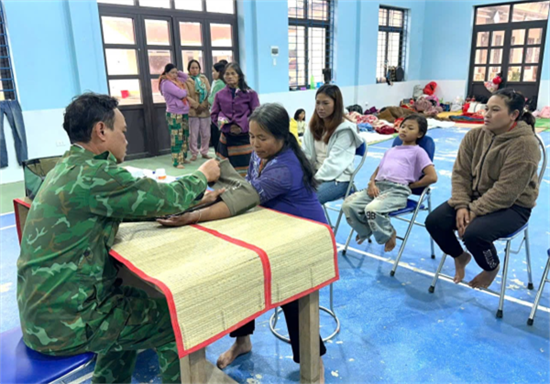 |
| Military medicine of Ga Ry Border Post conduct health check for Co Tu ethnic people |
Alongside persistent efforts in propagation, mobilisation, guidance, and support aimed at gradually transforming people’s mindsets and production practices, the City Border Guard has actively advised and coordinated with local authorities in surveying, planning, and implementing various models, projects, and practical initiatives to assist ethnic minority communities in transitioning towards sustainable economic models in line with new-style rural development criteria and local conditions. Upholding the motto “Border posts are our homes, the border is our homeland, and ethnic minority people are our own brothers and sisters,” border posts have actively implemented programmes and models for socio-economic development and poverty reduction, generating tangible benefits for local communities. These programmes and initiatives not only improve the living standards of local people but also contribute to integrating defence and security tasks with economic, cultural, and social development, thereby strengthening public confidence and building a firm all-people border defence posture.
Since 2016, in implementing the policy of the Border Guard High Command and the Ministry of National Defence on supporting disadvantaged pupils in border, maritime, and island areas, the City Border Guard Party Committee and Command have synchronously and effectively implemented a series of continuous and mutually reinforcing programmes, including “Supporting children’s schooling,” “Adoptees of Border Guard posts,” and the project “Army cadres and soldiers accompany children to school.” Border posts have each adopted between two and three ethnic minority children from particularly disadvantaged backgrounds, providing them with accommodation, living necessities, and direct care and mentoring by assigned cadres. Each year, in close coordination with local party committees, authorities, and schools, they directly supports and sponsors approximately 120 students, providing VND 500,000 per month for each child until the completion of upper secondary education. To date, support has been provided to 316 students, including six Lao nationals, thereby contributing to affirming and spreading the noble image of “Uncle Ho’s Soldiers” in the new era.
At the same time, agencies and units have regularly coordinated with the Vietnam Fatherland Front at all levels in effectively implementing the movement “All people unite to build a cultural life in residential areas” in border regions. Priority has been given to maintaining effective models such as “Border reading rooms” and “Cultural houses - Libraries”; organising cultural and artistic activities in coordination with local authorities; and developing border posts into cultural highlights for local communities. Through their practical effectiveness and profound humanitarian significance, these programmes and models have not only demonstrated the sense of responsibility and solidarity of cadres and soldiers, but have also attracted strong support and participation from authorities at all levels, sectors, enterprises, organisations, benefactors, and people both within and beyond the City.
Through concrete and practical actions carried out with dedication and responsibility, Da Nang Border Guard has contributed to effectively implementing the Party’s ethnic policies in disadvantaged border areas, building a firm “people’s heart-and-mind posture,” and firmly safeguarding territorial sovereignty and national border security in the new situation.
Senior Colonel HOANG VAN MAN, Deputy Commissar of the City Military Command, Commissar of the City Border Guard Command