Air Defence Division 367 focuses on effectively fulfilling training and combat readiness tasks
Improving the quality of training and combat readiness is the central task determining overall quality and combat strength, thereby contributing to building a comprehensively strong, “exemplary and typical” unit capable of successfully accomplishing all assigned missions. This has consistently remained the overarching objective and political determination of the Party Committee and command of Air Defence Division 367.
Building upon the achievements and experience gained over recent years, entering 2026, the Party Committee of Air Defence Division 367 issued a specialised resolution aimed at strengthening the leadership and direction of party committees, party organisations, and command structures with regard to training tasks. The resolution clearly identifies specific objectives, targets, and leadership measures, focusing on renewing four fundamental aspects: “thinking and awareness regarding training tasks; mechanisms for direction, management, and administration; training content, organisation, and methods; and support and assurance work.” The objective is to create firm and visible improvements capable of meeting the increasingly demanding requirements of managing and safeguarding the national airspace in the new situation.
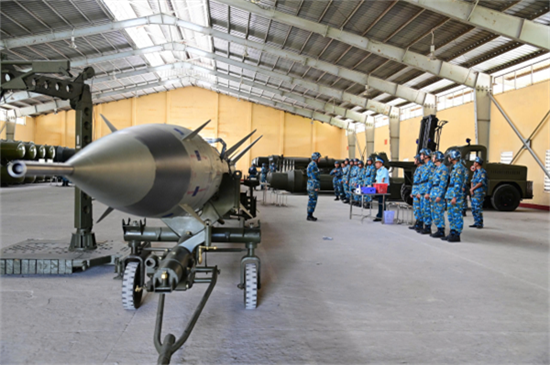 |
| Checking personal targets |
On that basis, the Division requires agencies and units to concretise these directives into resolutions and implementation plans, while intensifying dissemination, education, and task awareness activities so that officers and soldiers fully understand the position and significance of training and combat readiness, together with the advantages and challenges involved. Agencies and units actively promote emulation movements and bring into full play the role of mass organisations and youth vanguard groups in carrying out key political tasks, while fostering a strong sense of self-discipline, responsibility, and organisational discipline among officers and soldiers in training and combat readiness duties. At the same time, the Division has renewed the forms of organisation and methods of inspection and re-inspection in order to ensure objective and substantive evaluation, clearly identifying shortcomings, causes, and responsibilities of each collective and individual in leadership, direction, and implementation. Training results are regarded as an essential criterion for classifying party organisations and party members, as well as for evaluating, planning, assigning, appointing, and rotating cadres. As a result, 100% of the Division’s officers and soldiers possess a proper awareness of training tasks and demonstrate a strong sense of determination, responsibility, and commitment in implementation.
Due to the Division’s training characteristics, which involve multiple specialities and different training subjects while simultaneously maintaining guard duties and combat readiness, the Division places great emphasis on the training principle of “basic, practical, solid, safe, and economical.” Training is focused on combat crews in a synchronised and specialised direction closely aligned with operational tasks and suited to the existing organisational structure, staffing, weapons, and technical equipment, particularly in mastering newly introduced and upgraded weapons and equipment. To effectively implement this orientation, the Division requires party committees and commanders at all levels to uphold their roles and responsibilities in leading and managing training and combat readiness tasks, while strongly and comprehensively renewing mechanisms for directing, managing, and administering training activities. Accordingly, subordinate units have intensified decentralisation, clearly defining the responsibilities of agencies and commanders at each level, assigning specific duties, linking accountability to each responsible party committee member, and improving the effectiveness of coordination and cooperation among agencies and units in advising, directing, and administering training. At the same time, emphasis is placed on promoting overall synergy, self-reliance, and self-strengthening, while mobilising all available resources in support of training tasks. Alongside this, the Division has paid close attention to preparation work, from formulating plans and implementation to conducting inspections, preliminary reviews, and final reviews for drawing lessons learned, while overcoming the “achievement-oriented mindset” in training. Simultaneously, efforts have been intensified to renew training content, programmes, plans, training scenarios, operational assumptions, and exercise guidance and directing documents so that they closely reflect the characteristics of modern air defence operations. Close integration is maintained between direction and training organisation, together with monitoring, supervision, inspection, and close oversight of units by cadres at all levels. Regulations and prescribed routines are strictly maintained; field training activities, statistical registration, reporting, and the review of weekly, monthly, and quarterly training outcomes are conducted in accordance with decentralised responsibilities. Training is closely combined with discipline building and the development of regularity, while technical-specialist training is integrated with political and military education, with active emphasis placed on imparting skills and experience related to safety assurance.
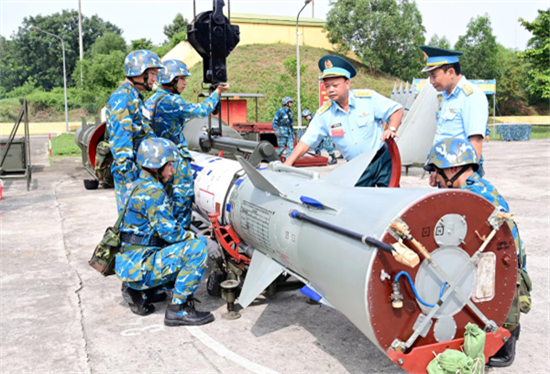 |
| Assembling round |
Identifying cadre training as the key breakthrough, the Division places emphasis on organising refresher training courses for personnel ranging from gun-section and squad leaders to battalion-level and staff officers. Training content is designed in a manner closely aligned with practical conditions and the tasks of each force, component, and combat crew, with particular attention devoted to thoroughly addressing shortcomings and deficiencies identified through inspections and examinations of training conducted at various levels. To help troops adapt to new operational conditions, the Division directs agencies and units to intensify training in combat readiness transitions, night training, and manoeuvre training; develop specialised training procedures for radar, anti-aircraft artillery, and missile units; and train personnel to proficiently operate weapons and equipment within the existing inventory, while progressively mastering new-generation weapons and equipment. Greater emphasis is also placed on training command-post combat crews, cross-training personnel to ensure they are “highly proficient in their own speciality while knowledgeable in others,” and improving capabilities in target detection and tracking, manoeuvre deployment and recovery of equipment, rapid movement and repositioning, as well as evasion and counter-strikes against enemy air firepower attacks employing high-technology weapons.
To achieve high-quality outcomes, the Division directs units to flexibly apply various training methods, particularly visual and demonstration-based instruction conducted directly at operational positions. At the same time, it actively promotes the “Digital Literacy for All” movement in order to improve scientific and technological knowledge, thereby providing a foundation for effectively operating new and modern equipment and technical systems.
Notably, due to the Division’s distinctive inventory of many newly introduced categories of weapons and technical equipment, while specialised training institutions for cadres and technical personnel remain limited, the Division pays particular attention to designing training programmes and plans and organising supplementary training courses for newly graduated officers and recently appointed personnel. These programmes focus on thoroughly clarifying technical and tactical characteristics, operational principles, and procedural steps in equipment operation and exploitation. Following each training phase, strict assessments and evaluations are conducted, and only those meeting the required standards are officially assigned to units to undertake their duties and responsibilities.
For subordinate units, the Division requires agencies and units to focus on fundamental training, taking mastery of weapons and technical equipment, particularly newly introduced equipment and systems, as the central objective, while closely combining training with discipline building and the establishment of regularity. Units place emphasis on training troops to proficiently operate weapons and equipment within the authorised inventory, competently perform their assigned duties and positions, and remain ready to assume alternative positions when required. At the same time, integrated and coordinated training is intensified to enhance coordination and interoperability among different positions.
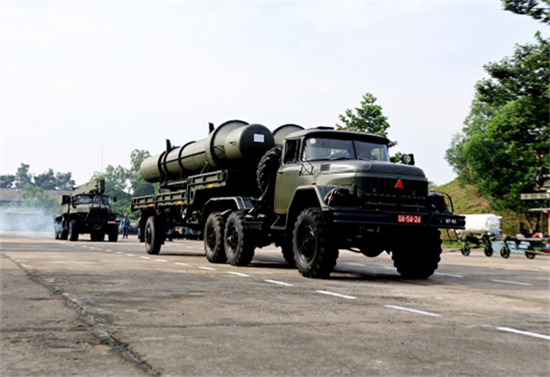 |
| Tactical training |
To meet the demands of modern warfare, the Division has strengthened training aimed at reducing the time required for deployment and recovery of equipment; manoeuvring and relocating combat positions; camouflage, concealment, and deception operations; and countering enemy reconnaissance, electronic warfare, and high-technology weapons. The role of model teams is brought into full play, while traditional and modern training methods, as well as basic and advanced training, are effectively combined. Priority is given to ensuring each individual masters combat movements and procedures as a foundation for coordinated unit-level training. Scientific rotation of training activities is also organised in order to maximise the efficient use of time, equipment, and training grounds. The Division has further intensified training and exercises employing simulation methods and real-time automated command systems, while integrating training with rehearsals for countering unmanned aerial vehicles and improving manoeuvre capabilities, particularly long-distance manoeuvre and operations conducted under night-time, complex terrain, and adverse weather conditions.
At the conclusion of each training subject and training phase, the Division organises competitions, evaluations, and exercises in a serious and rigorous manner in order to improve commanders’ organisational and command capabilities and strengthen combat coordination among subordinate units, thereby meeting mission requirements under all circumstances. As a result, the Division’s training and combat readiness quality has continued to improve steadily. Troops have become proficient in technical and tactical skills, capable of mastering assigned weapons and equipment, maintaining high manoeuvrability, and sustaining strong combat readiness. Inspection results show that 100% of assessed contents met required standards, of which nearly 80% achieved good or excellent ratings, while the Division maintained absolute safety throughout all activities.
Alongside improving training quality, the Division places special emphasis on enhancing combat readiness levels and capabilities, regarding this as a vital measure with decisive significance for mission accomplishment. The Division regularly maintains close coordination with units stationed in the area, particularly those under Military Region 7 and Military Region 9, in conducting research and forecasting the situation as a basis for supplementing and refining the combat readiness documentation system, operational plans, and coordinated combat plans against enemy airborne and seaborne landing operations, among others. Based on assigned tasks, subordinate units thoroughly grasp and strictly implement directives, orders, and regulations relating to combat readiness duties. Emphasis is placed on strengthening education to raise awareness among officers and soldiers, while intensifying the construction and consolidation of interconnected and solid fortification systems and combat positions; guard and duty regimes are maintained rigorously to prevent any passivity or strategic surprise. At the same time, the Division proactively coordinates with local party committees, authorities, and relevant forces in areas where units are stationed to implement plans for safeguarding political security and social order and safety, ensuring absolute security for key targets, especially during major holidays, Tet, and important political events of the country and the Army.
In parallel with these measures, the Division attaches great importance to ensuring adequate support for training and combat readiness tasks, particularly in logistics and technical support. Due to mission requirements, the Division manages a wide range of weapons and equipment, while environmental and climatic conditions exert considerable impacts on maintenance and operational use. To address this challenge, the Division directs agencies and units to thoroughly grasp and effectively implement higher-level resolutions and directives on technical work in the new period, with emphasis on effectively carrying out Campaign 50 on “Good, durable, safe, and economical management and operation of weapons and technical equipment, and traffic safety”; while strictly maintaining technical work routines and regulations.
Training aimed at improving the professional skills of technical cadres and personnel has also been intensified, particularly in handling technical incidents and repairing equipment damage. Regular monitoring, inspection, statistical review, and analysis are conducted to identify causes of malfunctions and promptly introduce effective corrective measures, ensuring that weapons and technical equipment remain synchronised and stable. As a result, the operational readiness coefficient of weapons and equipment has consistently been maintained at between 0.9 and 1.0, effectively supporting training and combat readiness missions. In addition, the Division consistently ensures timely and adequate logistical and financial support for all tasks, prioritising combat-ready, manoeuvre, exercise, and contingency forces. Efforts in agricultural production and animal husbandry have been promoted to improve troop nutrition and healthcare, alongside strengthened disease prevention and control measures.
Thanks to effective leadership and direction, together with the determined participation of all organisations and forces, the training quality and combat readiness capability of Air Defence Division 367 have improved markedly, contributing to firmly safeguarding the southern airspace of the Fatherland.
Senior Colonel DANG HONG TUAN, Division Commander