On preparations for strategic defensive operations in a war to protect the Fatherland
Strategic defensive operations are comprehensive in nature, involving multiple forces and domains and conducted under urgent and complex conditions. In response to rapid and unpredictable developments in the global and regional situation and the increasingly demanding requirements of Fatherland protection, preparations for strategic defensive operations require comprehensive study and a long-term vision.
Preparations for strategic defensive operations constitute an important component of military and defence activities and begin in peacetime. In essence, they involve comprehensive preparations in terms of national defence potential, posture, forces, and operational plans, with a direct focus on establishing the necessary conditions for organising and conducting strategic defensive operations. The ultimate aim is to maintain strategic initiative, effectively respond to defence and security situations, defeat acts of provocation and aggression, and firmly safeguard the sovereignty, unity, and territorial integrity of the Fatherland.
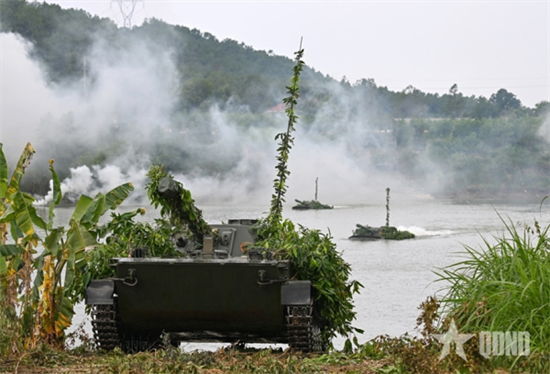 |
| Practising river crossing during Military Region 4's defensive operations exercise (photo: qdnd.vn) |
Any future war to defend the Fatherland, should one occur, would be a modern war characterised by rapidly evolving operational situations, an expanded battlespace, and a diverse range of operational forms, forces, and domains. Moreover, advances in high-tech weapons, unmanned systems, electronic warfare, cyberspace operations, non-contact warfare, and multi-domain operations are profoundly changing the way wars are fought. This reality makes it necessary to prepare for strategic defensive operations in a coordinated manner, with clear priorities, and closely combine ideological, organisational, and personnel preparations with developing material resources and capabilities, infrastructure, operational plans, and coordination mechanisms. Against this backdrop, the article discusses several key issues that merit attention.
First, improving the quality of strategic research, forecasting, and advisory work, perfecting plans for strategic defensive operations. This stage is critical to the quality of the entire preparatory process. Inadequate understanding and assessment of the situation, coupled with inaccurate forecasts, would make it difficult to ensure that the objectives, requirements, and content of preparations reflect actual conditions. As a result, even investment in forces, equipment, and posture may fail to deliver the desired results. Therefore, based on a thorough understanding of the Party’s lines on all-people national defence and people’s war as well as its policy of safeguarding the Fatherland early and from afar, there should be a decisive shift in thinking away from preparing merely to respond to threats towards proactively studying, identifying, forecasting, and managing risks. Emphasis should be placed on improving strategic situational awareness, research, analysis, and forecasting, particularly of developments likely to directly affect the strategic environment, areas of strategic importance to national defence and security, border, sea, and island areas, and sensitive domains.
Notably, strategic research and forecasting should be conducted regularly and continuously, as an ongoing, dynamic process and from a comprehensive, multidimensional perspective. A given entity may be an object of cooperation in one area and an object of struggle in another, while a particular situation may evolve through different levels. It is, therefore, necessary to assess the adversary’s capabilities, intentions, and courses of action alongside external factors, while taking full account of our own strategic posture and overall strength. On that basis, a system of scenarios and plans should be developed for different levels, with clearly defined criteria for identifying situations, conditions for transition between levels, reporting mechanisms, and well-defined decision-making authority. The determination for defensive operations should be established, and potential strategic situations should be anticipated both nationwide and in each strategic direction, strategic area, and operational environment. The theatres of operations should be proactively delineated, force dispositions adjusted, and preparations made for all aspects of operational support so as to maintain the strategic initiative under all circumstances.
Second, building strong armed forces as the core in strategic defensive operations. In the context of high-tech warfare and the growing prevalence of smart weapons, force development requires a systems-based approach and a balanced, coordinated organisational structure suited to the strategic operational determination. At the same time, the combined strength of all forces and the entire population should be mobilised and brought into full play, with the Vietnam People’s Army (VPA) serving as the core. Efforts should continue to build an elite, compact, strong, and modern VPA, enhance its overall quality, combat strength, and combat readiness, and attach importance to developing a contingent of cadres with political steadfastness, strong advisory capabilities, sound operational command skills, and the ability to master science and technology to meet task requirements under new conditions. Alongside this, efforts should be made to continuously improve training quality, combat readiness, mobility, and interoperability in modern operations. Due attention should be paid to developing the reserve force, the militia and self-defence force, and other forces involved in defending the Fatherland, so as to ensure that they can be mobilised and coordinated in operations when necessary.
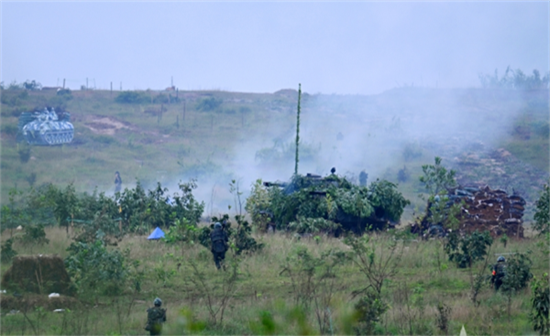 |
| Modern weapon systems employed during Military Region 4’s defensive operations exercise (photo: qdnd.vn) |
Throughout this process, special importance should be attached to building politically strong armed forces as a foundation for enhancing overall quality and combat strength. This is not merely a matter of developing personnel; it also provides the foundation for ensuring that the armed forces remain steadfast in their combat objectives and ideal, loyal to the Party, the State, and the People, and resilient enough to overcome difficulties and fulfil their missions under complex conditions. Simultaneously, the organisational structure of the regular forces should continue to be adjusted to make them more streamlined, compact, and strong. Efforts should be made to build a powerful reserve force as well as a strong and extensive militia and self-defence force, while gradually equipping these forces with modern weapons and equipment and developing their ability to operate and master these weapon systems. Building the armed forces should go hand in hand with developing the all-people force and consolidating the posture of all-people national defence. All necessary resources should be prepared in advance to ensure that they can be mobilised and converted into tangible strength.
Third, building an interconnected, multi-layered strategic defence posture that can be flexibly adapted. Building the strategic defensive posture is a central component of the country's preparations for national defence. In the current context, thinking should be renewed to focus on developing an integrated, open, and interconnected defensive space that closely links different operational domains and the forces operating within them. Accordingly, an integrated posture should be developed across all domains, with the military posture playing the central role and being fully integrated into the all-people national defence posture, which is closely linked to the people’s security posture. The defensive posture of military regions and provincial-level defensive zones should serve as the immediate foundation. Close links should be established among regions and theatres of operations, as well as among operational domains, including the land, maritime, air, cyberspace, and electromagnetic domains. Due attention should be paid to strategic areas, directions, and localities, as well as border, sea, and island areas.
In particular, given the rapid advances in science and technology, the strategic defensive posture should be extended to new strategic domains, especially the digital and cyberspace domains. Even in peacetime, socio-economic development strategies and master plans should be reviewed and formulated with due regard to national defence and security requirements. Priority should be given to transport, communications, energy, health care, and reserve-storage infrastructure, with a strong emphasis on connectivity, protection, and resilience. Important infrastructure and projects should be planned to both serve socio-economic development and meet national defence requirements when necessary. At the same time, thorough preparations should be made to ensure the continued functioning of the political system, essential production facilities, and public services in the event of crisis or disruption. Mechanisms for leadership, direction, management, coordination, and interoperability, as well as the mobilisation of local resources, should be further developed, alongside stronger links and mutual support among localities. These measures will help establish a robust, multi-layered strategic defensive posture capable of adapting to changing strategic situations and being flexibly adjusted and reconfigured as circumstances require.
Special importance should be attached to building the “people’s hearts and minds posture” as a firm socio-political foundation for the strategic defensive posture. The strength of national defence derives not only from forces and material resources but also from the people’s trust, determination, and shared commitment. Accordingly, information and mass mobilisation efforts should be intensified, while economic development should be linked with efforts to improve people’s livelihoods, ensure social welfare, and implement policies to support military families. The quality of defence and security education should also be improved; the role of the political system and the strength of the great national unity bloc should be brought into full play. These efforts will help strengthen public trust, build greater social consensus, foster a sense of responsibility, and generate lasting internal strength for the cause of Fatherland protection.
Fourth, closely combining socio-economic, scientific, and technological development with strengthening national defence, laying the groundwork for defensive operations. It is important to recognise that preparing for strategic defensive operations is not solely the responsibility of the armed forces or military authorities, but is also an important part of strengthening the country’s overall strategic position and capabilities. The strength of the country’s strategic defence rests on the close combination of military power and its political, economic, scientific, technological, cultural, and diplomatic potential, as well as the strength of national unity. Such a combination not only provides material and technical foundations and resources for national defence, but also enhances the country’s ability to mobilise, organise, and harness its combined national strength to meet the requirements of defending the Fatherland early and from afar. Therefore, the policy of promoting socio-economic development in close association with strengthening national defence and security should continue to be effectively implemented, especially in strategic areas, with due attention paid to dual-use development.
Defensive zones should be progressively strengthened to ensure that they can mobilise and effectively employ local resources to meet operational requirements in a timely manner. The development of science, technology, and defence industry should continue to be accelerated, while research, production, technical support, repair, and upgrading capabilities for weapons and equipment should be further enhanced. Links between defence industry and national industrial sector should also be strengthened. In modern warfare, the ability to master technology and provide technical support is crucial to sustaining combat strength and strengthening national defence resilience. Building upon the country's internal strength, defence diplomacy and international integration should be intensified to proactively foster strategic trust, prevent conflicts, resolve differences by peaceful means, expand opportunities for national development, enhance the country’s standing, and create favourable conditions for addressing challenges early and from afar.
Alongside these efforts, military scientific research and reviews of practical experience should be promoted to develop the theory of strategic defensive operations, the building of defensive zones, and the promotion of the strength of people’s war. Research should be grounded in Vietnam’s realities, closely monitor developments among potential adversaries and in the methods of modern warfare, and selectively draw on international experience. Research findings need to be applied to improving training content, updating operational plans, and proposing amendments to relevant mechanisms and policies. This will help forge closer links between the review of practical experience and theoretical development, as well as between research and its practical application, thereby contributing to improving the quality of preparations for strategic defensive operations to meet the requirements of Fatherland protection in the new situation.
Maj. Gen. NGUYEN QUOC THANH, PhD
Faculty of Campaign Operations
National Defence Academy