The Russian Aerospace Forces are focusing on modernising their strategic bombers, developing a new generation of multi-role fighter aircraft, and commissioning new long-range, precision, hypersonic aviation weapons. These steps not only help the Russian Air Force strengthen its deterrent capabilities and improve combat effectiveness, but also meet the requirements of modern warfare.
The modernisation of strategic bombers
Currently, Russia’s strategic bomber force consists primarily of the Tu-95MS and Tu-160M. Although researched and developed during the Soviet era, these aircraft remain a crucial component of Russia’s strategic nuclear triad and continue to be extensively modernised by Moscow in terms of avionics and weaponry to meet the demands of modern combat.
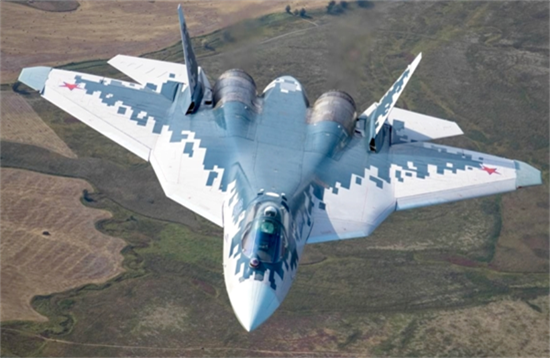 |
| Russian Su-57 fighter (photo: qdnd.vn) |
The upgrade programme for the Tu-95MS focuses on avionics, control systems, and the ability to integrate Kh-101 (conventional warhead) and Kh-102 (nuclear warhead) long-range cruise missiles. The integration of these missiles helps the Tu-95MS maintain its capability to carry out nuclear deterrence and precision long-range strike missions. The upgraded avionics on these strategic bombers will allow for improved accuracy in mission planning and execution. Besides upgrading individual systems, the Russian Air Force is also placing emphasis on increasing connectivity between bombers and reconnaissance vehicles, command centres, and other combat assets. Timely target data sharing is of vital importance in long-range strike missions, helping aircraft select appropriate weapon employment options and limiting the need to fly into enemy air defence zones. This is also an important basis for enhancing coordination with the fleet and ground force when concentrated firepower and precision long-range strikes are required.
Regarding the Tu-160M, the Russian Air Force is focusing its modernisation efforts on the capability to carry and launch a new generation of long-range cruise missiles, allowing the aircraft to strike targets from a great distance and reducing the risk of having to penetrate heavily defended airspaces. In modern warfare, the ability to launch weapons from a stand-off distance helps the aircraft mitigate the risk of being attacked by enemy fire. With a maximum speed exceeding Mach 2, a weapons payload of up to 45 tonnes, and an intercontinental range, the Tu-160M remains one of the strategic bombers with the greatest speed, operational range, and weapons payload in the inventory of the Russian Air Force. According to the road map, Russia will continue to step up the modernisation programme of its strategic bomber force, thereby not only increasing its nuclear deterrent capability but also maintaining its precision long-range strike capability amid a complex geopolitical context.
Enhancing the combat capabilities of multi-role fighter aircraft
For Russia, the Su-30 and Su-35 are core multi-role fighters in air superiority missions. Modern variants of these two aircraft families are classified as generation 4+ and 4++, developed from the Su-27 platform with numerous improvements in engines, radars, avionics, and weaponry. The Su-57 is the 5th-generation multi-role fighter aircraft of the Russian Air Force, designed to perform a variety of missions, from gaining air superiority to striking maritime and ground targets. In combat, the Su-57 can take on multiple roles: air-to-air combat, striking ground targets, and operating in high-threat environments. Facing the increasingly high demands of modern warfare, the Russian Air Force continues to develop and perfect the Su-57 towards improving its combat capabilities in complex threat environments. Besides advancing features related to stealth, sensors, and communication systems, the Su-57 is also being developed to bolster its data link capacity, thereby enhancing situational awareness and coordination with other combat elements.
The export version, the Su-57E, has been introduced by Russia at international exhibitions, both in static displays and in flight demonstrations. Notably, at the El Alamein International Air Show in Egypt in September 2026, Russia publicly displayed for the first time two types of aerial munitions, the S-71K and S-71M. The introduction of these weapons alongside the Su-57E demonstrates that Russia is looking to expand the use of long-range weapons and enhance the survivability of its 5th-generation fighter in modern air defence combat environments. Previously, Russia conducted coordinated testing of the S-70 heavy unmanned combat aerial vehicle with the Su-57, aiming to enhance reconnaissance, detection, information sharing, and target designation support for manned aircraft.
The showcasing of the Su-57E alongside the S-71K and S-71M, as well as the coordinated testing with the S-70, indicates that Russia is placing greater emphasis on a combined combat model involving manned aircraft, unmanned vehicles, and long-range weapons. In this framework, the Su-57 would not only perform air-to-air combat missions but also possess enhanced connectivity and coordination capabilities with unmanned vehicles, utilising long-range strike weapons to expand its operational scope and improve combat effectiveness. This approach allows the Russian Air Force to carry out precision strikes from relatively safe distances, reducing the risk of high-value fighter aircraft having to directly penetrate heavily defended airspaces.
Russia’s intensified promotion of the Su-57E alongside unmanned vehicles and weapons at recent international military exhibitions not only reflects its development orientation towards integrated air combat but also aims to market the capabilities of its 5th-generation multi-role fighter and accompanying weapon systems and combat vehicles to potential partners and customers.
The modernisation and diversification of aviation weapons
A notable direction in the modernisation of the Russian Air Force’s aviation weapons is enhancing the effectiveness of large-scale firepower employment. This requires selecting appropriate weapons and increasing the use of modern positioning, designation, and guidance equipment. On fighters such as the Su-30 and Su-35, the Russian Air Force is accelerating the integration of R-37M long-range air-to-air missiles alongside existing R-77-1 medium-range missiles to expand combat capabilities at various distances.
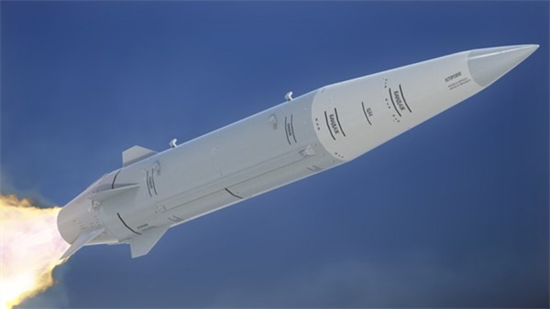 |
| Russian Kh-47M2 Kinzhal missile (photo: qdnd.vn) |
Regarding air-to-ground weapons, Su-34 fighter bombers are increasingly equipped with bombs with integrated wing kits and guidance systems, helping to extend the range and improve the accuracy of heavy high-explosive bombs, such as the FAB-500, FAB-1500, and FAB-3000. These weapons have been used by the Russian Air Force in practice, allowing aircraft to strike targets such as firing positions, fortifications, trenches, and command centres from greater distances compared to direct bombing. In modern combat scenarios, glide bombs enable the Su-34 to strike targets without having to penetrate deep into enemy defensive zones.
The development and expanded use of these weapons also demonstrate a shift from using conventional unguided bombs to guided bombs, aiming to improve accuracy and firepower, and reduce the risk to aircraft. When combined with reconnaissance data and modern guidance systems, glide bombs can be used more flexibly in terms of timing, approach vectors, and attack methods, thereby enhancing the aircraft’s mission effectiveness in combat environments with complex air defence systems. Alongside this, the Russian Air Force’s long-range missiles are also being modernised based on experience gained from actual combat. Besides air-launched cruise missiles like the Kh-101, Kh-102, and Kh-555, Russia also uses the Kh-47M2 Kinzhal air-launched ballistic missile in long-range strikes. These weapons are increasingly closely integrated with command, control, and target distribution systems, thereby improving coordination in long-range strikes. The Kh-101 and Kh-102 missiles are equipped with a combined guidance system of inertial navigation, satellite positioning updates, and flight path correction methods, helping the missiles maintain accuracy during target approach phase.
Another focused development direction is enhancing the autonomous operational capability of missiles during the target approach phase. The combination of multiple guidance methods, along with the ability to update and correct the flight path, helps the missile adapt better to changes in the combat environment. Through this, the Russian Air Force aims to maintain the effectiveness of long-range firepower even when the enemy steps up electronic countermeasures. Besides improving range and accuracy, the Russian Air Force’s long-range strike missiles are also focused on enhancing survivability against modern air defence systems. Some designs incorporate measures to reduce the risk of detection, increase anti-jamming and anti-electronic suppression capabilities, and utilise flight trajectories and approach methods programmed to deal with the characteristics of the target’s air defence system. These improvements aim to enhance the combat effectiveness of the missiles under conditions where enemy air defence systems are becoming increasingly modern and complex.
Along with precision-guided bombs and long-range strike missiles, the Russian Air Force also focuses on developing and using hypersonic missiles, including the Kh-47M2 Kinzhal, deployed on the MiG-31K aircraft. The Kh-47M2 Kinzhal missile can carry conventional or nuclear warheads and is designed to strike high-value, static strategic targets. The MiG-31K carries the Kh-47M2 Kinzhal to an appropriate altitude and speed for launch; after being launched from the aircraft, the missile continues to accelerate using its engine. With very high speed and manoeuvrability during flight, the Kh-47M2 Kinzhal is designed to shorten target approach times and pose difficulties for enemy air and missile defence systems. Being launched from an aircraft gives the Kh-47M2 Kinzhal a high initial altitude and velocity, thereby increasing its operational range compared to ground launches. The Russian Air Force is also researching, developing, and perfecting hypersonic missiles capable of being launched from various platform types.
The aforementioned modernisation trends indicate that the Russian Air Force is developing its air combat capabilities for higher system integration, combining manned aircraft with unmanned vehicles, long-range missiles, and precision weapons, in order to enhance combat effectiveness in complex air defence environments. This approach not only improves the combat capability of the Russian Air Force but also reflects notable trends in the development and competition of military aviation technology globally.
Sr. Col. DANG DONG TIEN
Former Officer of the General Department of Logistics and Technology