“Two preventions” - the Party’s strategic thinking on defending the Fatherland early and from afar
At the 12th Congress of the Military Party Organisation (MPO), General Secretary (now General Secretary and State President) To Lam - Secretary of the Central Military Commission - directed the MPO and the entire Military to effectively implement the “two steadfast commitments, two accelerations, and two preventions”. Among these, preventing the risks of war and conflict, as well as preventing all manifestations of degradation in political ideology, morality, and lifestyle, along with “self-evolution” and “self-transformation” within the MPO and the entire Military, is the concretisation of the thinking on defending the Fatherland early and from afar. This contributes to building a politically strong Vietnam People’s Army (VPA), maintaining the strategic initiative, and firmly protecting the Fatherland under new conditions.
In our Party’s theoretical awareness and strategic thinking on defending the Fatherland early and from afar, “prevention” is not merely an ordinary precautionary measure but also a proactive method to detect and eliminate external and internal risks that could threaten the independence, sovereignty, unity, and territorial integrity of the Fatherland, as well as the VPA’s political stability and combat strength. This is the concretisation of our Party’s consistent and overarching viewpoint on defending the Fatherland “early and from afar”, safeguarding the country before it is in peril, and creating a peaceful and stable environment for national development.
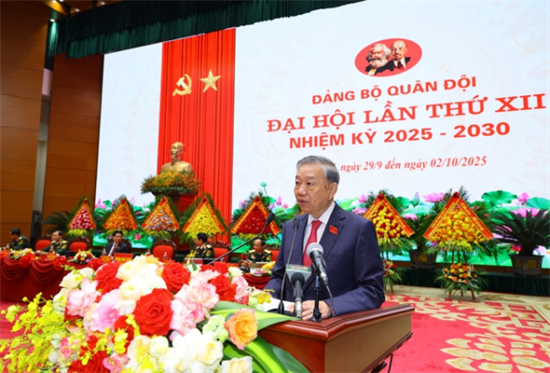 |
| Party General Secretary To Lam addresses the 12th Congress of the MPO |
Preventing the risks of war and conflict is, in essence, preventing external risks, which is our Party’s overarching strategic thinking in the cause of building and defending the Fatherland; it is a proactive defensive line aimed at maintaining a peaceful and stable environment for socio-economic development. The nature of “prevention” is to emphasise “preventing” over “countering”, proactively addressing issues from their roots rather than merely treating the symptoms or resolving consequences. This is the proactive identification, accurate assessment, and timely handling of risks and factors that could lead to conflict, instability, or threaten national independence, sovereignty, and security, and the country’s peaceful and stable environment. Concurrently, it involves synchronously deploying defence, security, diplomatic, and other related measures to control and neutralise threats early and from afar, preventing the country from being caught off guard strategically or by war and conflict.
In the context of rapid, complex, unpredictable situational developments on global and regional scales, increasingly fierce strategic competition among major powers, and intertwining traditional and non-traditional security challenges, the requirement to “prevent the risks of war and conflict” is of particularly critical significance. Effectively carrying out this task contributes to maintaining a peaceful and stable environment, protecting national interests, promoting the country’s combined strength, and creating a strategic initiative and favourable conditions for the cause of building and firmly defending the Fatherland in the new era of development.
Preventing all manifestations of degradation in political ideology, morality, and lifestyle, as well as “self-evolution” and “self-transformation” within the MPO and the entire VPA, amounts to preventing internal risks. This is a task of decisive significance for maintaining the revolutionary nature, glorious tradition, and combat strength of our Military, promoting the fine nature of “Uncle Ho’s Soldiers” in the new period. That entails the proactive identification and prevention of manifestations of degradation in political ideology, morality, and lifestyle, wavering in standpoint, a decline in combat morale, and violations of military discipline and State laws. It is to prevent these from arising, spreading, or transforming into risks that weaken the Party organisation and the combat strength of the Military. Reality shows that internal degradation is always a direct threat that diminishes strength, erodes fighting spirit, and undermines the dedication and devotion of soldiers; this creates opportunities for hostile forces to carry out “peaceful evolution”, promote “self-evolution” and “self-transformation”, and demand the “depoliticisation” of the VPA.
The MPO is the nucleus that firmly ensures the Party’s absolute and direct leadership in all aspects over the VPA. The leadership quality of the MPO directly determines the VPA’s revolutionary nature, combat strength, and ability to successfully accomplish all tasks entrusted by the Party, the State, and the people. Preventing all manifestations of degradation in political ideology, morality, and lifestyle, as well as “self-evolution” and “self-transformation”, is not only an objective requirement for Party building but also a requirement to maintain the Party’s absolute and direct leadership in all aspects over the VPA. In the context where hostile forces are stepping up their efforts to realise “peaceful evolution” and “depoliticise” the VPA, any signs of wavering in political stance and ideology, or a decline in combat morale, can be exploited to undermine our Military from within. Therefore, preventing all manifestations of degradation early and from afar is precisely about protecting the Party, protecting the VPA, and defending the Fatherland right from within our ranks.
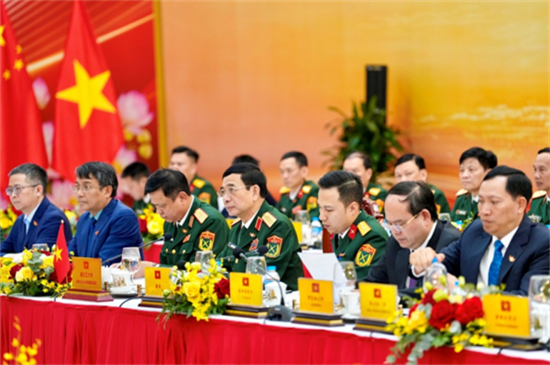 |
| 10th Border Defence Friendship Exchange between Vietnam and China |
The “two preventions” have a dialectical, unified, complementary, and mutually interactive relationship. “Preventing internal risks” is to maintain the “root”, ensuring the VPA always remains an absolutely loyal and reliable political and combat force of the Party, the State, and the people. “Preventing external risks” contributes to maintaining the “posture”, enhancing the prestige and defence capability of the country. In this relationship, preventing internal degradation acts as the foundation, determining internal strength; whereas preventing the risk of external conflict is the goal and a condition necessary for maintaining the independence, sovereignty, and sustainable development of the country. This reflects our Party’s strategic thinking on combining “building” with “combating”, and integrating the “internal” with the “external”, to forge great combined strength to defend the Fatherland early and from afar.
In the new era of development, the tasks of building the VPA, strengthening national defence, and defending the Fatherland pose increasingly high requirements. This requires continued thorough understanding and drastic, synchronous, effective implementation of the “two preventions”. To that end, it is necessary to focus on the following fundamental solutions.
First, proactively grasping the situation, enhancing strategic forecasting capacity, resolutely and firmly protecting national independence, sovereignty, and interests. The entire Military must proactively grasp and accurately assess the global, regional, and domestic situations, enhance the capacity for strategic study and forecasting, and promptly, correctly identify opportunities, risks, and factors that could impact our national defence, security, foreign affairs, sovereignty, and interests, in order to avoid being strategically caught off guard. On that basis, it is necessary to improve the quality of research and advisory work provided to the Party and the State in military and defence fields, with a focus on “...strategic countermeasures to handle military and defence situations in a timely, flexible, effective manner, avoid being passive or caught off guard, especially regarding maritime, border, and international relations issues, ensure the independence, sovereignty, unity, and territorial integrity of the Fatherland,... prevent and repel, early and from afar, factors causing instability and the risks of war and conflict”. There must be a close combination of defence, security, foreign affairs, economic development, culture, legal activities, and other related aspects. Concurrently, we must be resolute and persistent in “ensuring and protecting national interests to the greatest extent on the basis of the fundamental principles of international law and the United Nations Charter”, maintain principles and strategic objectives, but remain flexible in methods to prevent differences from escalating into confrontation or conflict.
Second, effectively taking measures to maintain both “internal contentment and external harmony”, “domestic peace and external stability”, and create a solid foundation of military and defence strength. To effectively prevent the risks of war and conflict, it is important to firmly establish both the posture and strength from within and sustain a favourable diplomatic environment. Accordingly, maintaining “internal contentment” and “domestic peace” is achieved by consolidating great national unity, strengthening the people’s trust in the Party, the State, and the VPA, building a pure, strong political system, ensuring sustainable socio-economic development, guaranteeing defence and security strength, and proactively, effectively resolving newly arising issues to prevent hostile forces from exploiting these issues for incitement and sabotage. Maintaining “external harmony” and “external stability” is achieved by persistently “implementing the foreign policy of independence, self-reliance, self-strengthening, peace, friendship, cooperation, and development, multilateralising and diversifying foreign relations, etc.”, enhancing defence diplomacy, building strategic trust, balancing relations with other countries, and resolving all disagreements by peaceful means on the basis of international law.
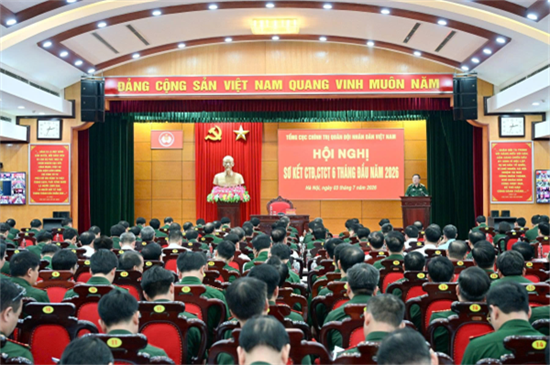 |
| Conference to review party and political work for the first half of 2026 held by the General Department of Politics of the VPA |
Furthermore, it is imperative to build strong, modern all-people national defence, develop a revolutionary, regular, elite, modern VPA, and consolidate the posture of all-people national defence closely tied to the people’s security posture and a firm “posture of people’s hearts and minds”. This involves promoting the combined strength of the entire political system and people, closely integrating political, spiritual, economic, scientific, and technological capacity with military and security capability, thereby creating deterrent strength and strategic initiative.
Third, proactively preventing signs of degradation in political ideology, morality, and lifestyle, as well as “self-evolution” and “self-transformation”, building a pure, exemplary, strong MPO coupled with building “exemplarily, typically” comprehensively strong agencies and units. Degradation in political ideology, morality, and lifestyle does not emerge abruptly but always begins with very minor manifestations, such as a decline in the will to improve theoretical capacity, a lack of responsibility in work, an inconsistency between words and deeds, or wavering in the face of toxic information in cyberspace and public opinion. If these initial manifestations are not detected and corrected in a timely manner, they will gradually accumulate and transform into ideological degradation, erosion of fighting spirit, and a loss of faith in the objectives and the path towards socialism. More dangerously, such degradation will lead to “self-evolution” and “self-transformation”. Hence, “we must prevent degradation right from when it is merely a seed, right at the state of manifestation; we must not allow it to develop to a higher level - ‘self-evolution’ and ‘self-transformation’”.
Concurrently, it is essential to regularly consolidate party organisations to be strong in politics, ideology, morality, organisation, and cadre work, maintain principles, discipline, and unity, and enhance the leadership capacity and combativeness of party committees and organisations, as well as the quality of the corps of cadres and party members. It is vital to thoroughly grasp and implement the motto of “taking building as the fundamental” and “prevention as the primary measure”, proactively detect early, deter from afar, and handle from the roots, and regard education and self-improvement as the foundation closely combined with inspection, supervision, and the strict handling of violations to prevent minor manifestations from developing into major risks. Due attention should be paid to building a healthy, regular, democratic, united, disciplined cultural environment, taking the task performance of agencies and units as the basis for evaluating the leadership capacity and combativeness of party organisations and the quality of cadres and party members. These efforts will help proactively prevent manifestations of degradation right from grass-roots level and create a foundation to build a politically strong VPA.
Fourth, regularly maintaining the principles of Party organisation and operation, building a contingent of military cadres who possess virtue, vision, and prestige before their units and the people. Maintaining the principles of Party organisation and operation, especially the principles of democratic centralism, self-criticism and criticism, collective leadership, individual accountability, strict discipline, and solidarity, is precisely the foundation for the Party’s sound leadership over the VPA. Accordingly, party committees, party organisations, and key cadres at all levels must adhere to the Party’s principles, promote democracy coupled with discipline, elevate individual responsibility, and resolutely overcome all manifestations of arbitrariness, localism, slack leadership, or disunity, thereby proactively preventing the risk of degradation, “self-evolution”, and “self-transformation”.
In addition, we must focus on building a contingent of military cadres with political steadfastness, pure moral qualities, leadership capacity, and innovative thinking, who dare to think, dare to speak, dare to act, dare to take responsibility, dare to be innovative and creative, dare to confront difficulties and challenges, dare to act for the common good, stay close to soldiers, and set an example in all aspects of their work. It is also necessary to effectively carry out cadre work; importance should be attached to substantive personnel evaluation, training, utilisation, inspection, and supervision and heightening the responsibility to set an example among cadres and party members, especially key cadres. A contingent of cadres with virtue, vision, and prestige will consolidate unity, strengthen trust, and create a widespread positive effect within their units and among the people, contributing to ensuring the Military’s revolutionary nature and combat strength as well as the Party’s absolute and direct leadership in all aspects over the VPA.
The “two preventions” strategic thinking embodies the inheritance and creative development of the Vietnamese nation’s traditional military art under new conditions. The close combination of preventing the risk of external conflict and internal degradation, “self-evolution”, and “self-transformation” creates a comprehensive, solid posture for defending the Fatherland in the new era of development. Therefore, the MPO and the entire VPA need to continue to thoroughly grasp this principle and adopt synchronous solutions to enhance troops’ vigilance and combat strength and maintain the revolutionary nature and qualities of “Uncle Ho’s Soldiers” in the new period. This is an important factor in firmly defending the Fatherland early and from afar.
Maj. Gen., Associate Prof., People’s Teacher NGUYEN BA DUONG, PhD
Former Member of the Central Council for Theoretical Studies