President Ho Chi Minh’s views on cadre evaluation and their application at grassroots-level units in the Military today
During his lifetime, President Ho Chi Minh used to attach special importance to the contingent of cadres and cadre work. According to him, in order to properly and effectively consider, employ and train cadres, the issue of decisive significance is, first and foremost, the accurate evaluation of cadres. His viewpoints and guidance on this matter remain fully relevant today and serve as a basis for leaders and commanders of grassroots-level units to apply in evaluating cadres in a proper, scientific and effective manner.
Cadres are an extremely important and highly essential factor, playing a decisive role in the success or failure of the revolutionary cause. President Ho Chi Minh affirmed that: “Success or failure in any work depends on whether cadres are good or poor.” Then, he required the Party to pay close attention to building the cadre contingent in the spirit of nurturing and educating cadres, just as a gardener diligently cultivates precious plants. The Party must value talents and cadres and cherish every individual who is useful to the common cause of the Party and the nation.
1. President Ho Chi Minh’s views on cadre evaluation
Cadre evaluation plays a particularly important role in cadre work. If cadres are the root of all work, then accurate cadre evaluation is the root of cadre work. President Ho Chi Minh thoroughly analysed and clarified that cadre work consists of a chain of interconnected stages, including cadre evaluation, cadre training, cadre utilisation, cadre promotion, cadre policies, and so forth, in which cadre evaluation is regarded as the starting point and the basis for implementing all the remaining stages. Through cadre evaluation, it is possible to clearly identify the strengths and weaknesses, merits and shortcomings of cadres so as to assign and employ them appropriately, thereby avoiding the risk of “asking a blacksmith to make a cabinet and a carpenter to forge a knife.” Through this process, each cadre can be assisted in promoting strengths and correcting shortcomings in order to make continual progress. Whether or not the planning, training, fostering, selecting, assigning and employing cadres are conducted correctly and appropriately depend largely on the stage of cadre evaluation.
To evaluate cadres accurately requires first and foremost the establishment of specific criteria. According to President Ho Chi Minh, cadre evaluation cannot stop at identifying the ability to get things done. It must clearly distinguish between a cadre who can do the job and a good cadre. President Ho Chi Minh provided the following experience in identifying whether a cadre is good or not. Those who like boasting about their achievements, who follow the crowd, who seek out only small tasks to perform, who obey orders in front of others but disobey them behind their backs, who often criticise others and praise themselves are not good cadres despite their capability to get work done. Those who quietly devote themselves to work without seeking recognition, who speak frankly, do not conceal their shortcomings, do not seek easy tasks while avoiding difficult ones, who always resolutely carry out the Party’s instructions regardless of circumstances and whose loyalty never changes are good cadres in spite of their somewhat limited work performance. According to him, morality is the foundation and the foremost criterion for evaluating cadres in a correct and comprehensive manner.
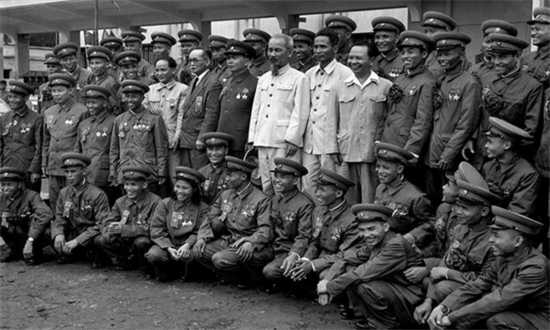 |
| President Ho Chi Minh took a photo with 43 heros of the people's armed forces in Hanoi in 1956 (Photo: VNA) |
President Ho Chi Minh also provided valuable guidance on methods of cadre evaluation. He pointed out that: “Everything in the world changes. Human thinking also changes. Therefore, the way we assess cadres must never be rigid because it too must change.” Accordingly, cadre evaluation should not stop at outward manifestations but must delve into their nature, character and qualities. It should not focus solely on a single action or a particular point in time, but should place cadres within the entirety of their working process and personal development. He further noted that the past should not be mechanically imposed upon the present, nor should the future be inferred solely from the present, because the past, present and future of an individual are not necessarily the same. “A cadre who made mistakes in the past will not necessarily continue making mistakes forever. Likewise, a cadre who has not yet made mistakes before may not be immune from mistakes in the future”.
In addition, President Ho Chi Minh emphasised that cadre evaluation must be closely associated with honest criticism of cadres. When cadres have shortcomings, leaders must promptly identify them and help them make corrections. Criticism must be conducted appropriately and at the right level so that cadres voluntarily recognise their mistakes and willingly rectify them, rather than doing so under pressure or coercion. He required that criticism be carried out patiently through explanation, persuasion, education and moral influence, while absolutely avoiding impatience or behaviour that humiliates cadres.
Who, then, is responsible for evaluating cadres? According to him, this responsibility belongs to the Party, first and foremost to party committees, party organisations and the leadership where cadres and party members are working and carrying out their activities. President Ho Chi Minh candidly admitted: “Up to now, our Party has not regularly practised the review of cadres. This is a major shortcoming.” According to him, to correctly assess cadres requires leaders and commanders first possess a pure and upright mind. Evaluation must be accurate, clear and objective, while resolutely combating all manifestations of bias and one-sidedness. It is necessary to avoid situations in which a person’s merits are exaggerated because they are liked, or their shortcomings are magnified because they are disliked.
Furthermore, in order to evaluate cadres accurately, leaders and commanders must show sympathy, honesty in criticism and democracy in evaluation. Ho Chi Minh believed that every individual has both positive and negative aspects. What matters is skillfully promoting the good while persistently helping to correct the shortcomings, enabling the good in each cadre to “bloom like flowers in spring” while the bad gradually disappears. Loving cadres does not mean indulging, tolerating or neglecting management. Rather, it means regularly caring for and assisting them in study, training and work so that they continuously improve. Only in this way can cadres be encouraged to dare to speak and dare to act while enabling organisations to correctly identify and distinguish good cadres from those who are not.
To evaluate cadres correctly, leaders and commanders must possess moral integrity, fairness, honesty and objectivity. However, in order to truly understand others, leaders must first understand themselves. Ho Chi Minh stated: “If one does not know oneself, it is difficult to know others. Therefore, if one wishes to know what is right and wrong in others, one must first know what is right and wrong in oneself. If one does not know one’s own strengths and weaknesses, one certainly cannot accurately recognise whether a cadre is good or bad”. According to him, every person has strengths and weaknesses. The important thing is to understand one’s own strengths and weaknesses, especially the weaknesses that need correction. The fewer shortcomings a person has, the more accurately he or she can evaluate cadres.
In summary, cadre evaluation is both a science and an art, and only those who possess great magnanimity can treat cadres with complete fairness and impartiality, free from prejudice, ensuring that no cadre is neglected or overlooked. President Ho Chi Minh’s valuable guidance remains a handbook for the Party and grassroots party organisations in cadre evaluation today.
2. Cadre evaluation at grassroots-level units in the Military in accordance with Ho Chi Minh thought
Fully grasping President Ho Chi Minh’s guidance, the Central Military Commission (CMC) and party committees at all levels have attached great importance to cadre evaluation. At present, cadre evaluation is carried out uniformly in accordance with the Regulation No. 600-QĐ/QUTW, dated 15 May 2026, issued by the CMC on the framework of standards for cadre positions at all levels in the Viet Nam People’s Army and the Regulation No. 500-QĐ/QUTW, dated 10 April 2026, on decentralisation of cadre management, planning, training, appointment, temporary suspension, removal from office, resignation and dismissal of cadres in the Viet Nam People’s Army. On that basis, the General Department of Politics annually issues guidance on self-criticism, evaluation and quality classification of party organisations, party members and cadres at all levels throughout the military.
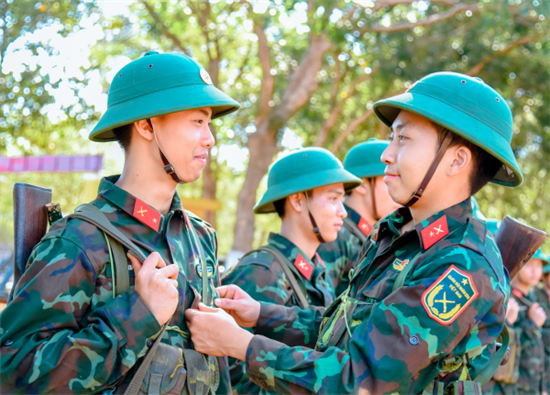 |
| Troops helping each other in training (Photo: baoquankhu7.vn) |
Cadres at grassroots-level units in the military are cadres of the Party holding different responsibilities and positions while operating within a distinctive military environment. This requires leaders and commanders to regularly pay attention to understanding and accurately grasping the actual quality of each cadre, especially their ideology, emotions, aspirations, strengths and shortcomings in daily work and life. In line with the viewpoint of “attaching importance to cadre evaluation in a democratic, transparent, fair and objective manner, conducted continuously, comprehensively and multidimensionally, based on clear criteria and specific products”, the following measures should be synchronously implemented in order to accurately evaluate cadres at grassroots-level units in the coming period:
First, enhanced awareness among cadres and party members, especially leaders and commanders of grassroots-level units, regarding cadre evaluation. Cadre evaluation must be carried out first and conducted carefully and seriously on the basis of objectivity, scientific principles, historical context, specific circumstances and developmental perspectives. Accurate evaluation serves as a basis for fostering, training and educating cadres so as to promote strengths, correct weaknesses and utilise cadres appropriately. Evaluation should be conducted from multiple perspectives, i.e., superiors evaluating subordinates, commanders evaluating staff, the masses evaluating cadres and party members, and cadres and party members evaluating the masses. All manifestations of formality, superficiality and group interests in cadre evaluation must be resolutely opposed.
Second, there is a need to regularly supplement and improve evaluation criteria to meet the requirements of military building in the new situation. Based on the general regulations of the CMC, each grassroots-level unit should determine appropriate evaluation criteria according to its practical circumstances and assigned tasks. The evaluation process must combine moral and professional criteria while particularly emphasising morality and personal conduct in accordance with Ho Chi Minh’s thought. Accordingly, the quality and effectiveness of task performance, organisational discipline, sense of responsibility, collective spirit and comradeship should serve as important bases for evaluating cadres accurately.
Third, procedures and principles of cadre evaluation must be strictly implemented. Party committees and unit leaders and commanders must thoroughly review cadre records, directly listen to cadres’ self-assessments and seek comments from party organisations and the masses both at the workplace and place of residence. Particular importance should be attached to the opinions of cadres, party members and the masses within the unit. Evaluation results must be publicly communicated to the individual concerned and to cadres and party members within the unit, then reported to higher authorities for consideration and recorded in personnel files to assist cadre management agencies in understanding each cadre’s record of endeavour and development.
Fourth, it is necessary to further innovate methods of cadre evaluation at grassroots-level units in the military. Cadre evaluation should be renewed in a multidimensional manner, based on criteria and specific work products, with results made public and compared with equivalent positions. Individual evaluation should be linked with collective performance and the results achieved by localities, agencies and units. Greater decentralisation should be promoted under the principle that “those who assign tasks are responsible for evaluation”. The responsibilities of collective bodies, individual members and particularly heads of organisations in cadre evaluation must be clearly defined. Mechanisms should also be established to enable cadres, party members and the masses to participate in supervising and evaluating cadres. The annual requirement for each cadre to make commitments to exemplary conduct and register a personal action programme throughout a term of office should continue to be implemented, thereby providing competent authorities with a basis for year-end and end-of-term evaluations.
Fifth, attention should be paid to building a contingent of leaders, commanders and cadre personnel officers who truly possess vision, competence and integrity. Heads of units must strictly uphold standards of revolutionary morality and public service ethics; practise diligence, thrift, integrity, righteousness and impartiality; promote exemplary responsibility and self-discipline in moral cultivation among cadres and party members, especially leaders, managers and heads at all levels. Leaders and commanders must genuinely engage in self-reflection and self-correction, cultivate a scientific, democratic and people-oriented working style, and earn the trust, affection and respect of their subordinates. Personnel officers must be exemplary in political qualities, ethics and lifestyle, professionally competent, fair, objective and united.
It can be affirmed that cadre evaluation is a key stage of cadre work, aimed at developing a contingent of cadres who are red and expert, capable of meeting the requirements of building a revolutionary, regular, elite and modern military. In the new situation, even greater attention must be devoted to cadre evaluation in order to build a strong military cadre contingent with integrity, competence and high prestige among units and the people, capable of successfully fulfilling all assigned tasks in the new era.
Senior Colonel, Doctor NGUYEN VAN THI, Faculty of Party and Political Work,
Political Academy