Improving the quality of flight training while ensuring flight safety is the highest priority, directly contributing to strengthening combat capabilities. Fully aware of this, Air Division 372 (hereinafter referred to as the Division) has focused on implementing a range of comprehensive and effective measures.
Within the all-people national defence posture for safeguarding the Fatherland early and from afar, the Division is tasked with organising training, maintaining combat readiness, and conducting combat operations, as well as managing and firmly protecting the airspace over the Central and Central Highlands regions and the airspace extending towards Truong Sa archipelago. Every flight conducted by the Division is not merely a routine training mission, but also an affirmation of national airspace sovereignty.
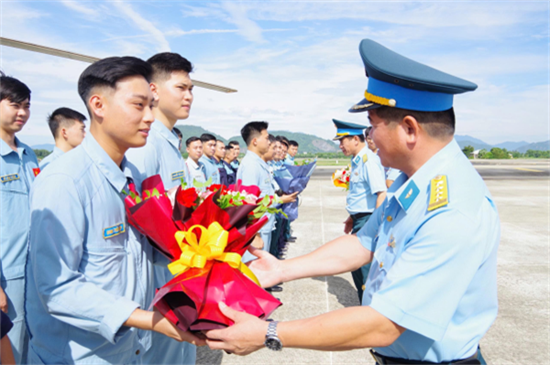 |
| The Division Command congratulates pilot trainees on their fulfilment of flight graduation exercise |
Over the years, the Division has undergone significant changes in terms of organisational structure and technical equipment. Flight training and flight safety assurance tasks are diverse, involving various types of aircraft, different categories of personnel, and a wide area of operations. Weather conditions have become increasingly complex and unpredictable, while natural disasters, floods, and storms frequently occur across the central provinces. Although personnel directly engaged in training have received basic training, some still have limited hands-on experience and skills. At times, the contingent of pilots, flight instructors, flight commanders, and aviation technicians has been insufficient, and their levels of proficiency have been uneven. Meanwhile, the requirements for training, combat readiness, and bombing and live-fire exercises have been increasingly demanding. Every year, in addition to its regular missions, the Division conducts joint training involving the use of air-delivered weapons with other services and corps and performs unexpected tasks, particularly natural disaster response, and search and rescue. These have had a considerable impact on the time available for flight training and the quality of training work.
Against that backdrop, the Division’s Party Committee and Command have consistently focused on leading and directing efforts to improve the quality of training and ensure flight safety. They regard this as a particularly important and continuous political task carried out under the direct leadership and direction of Party committees and the management and direction of commanders, political commissars, and junior political commissars at all levels; it is also seen as the responsibility of every organisation, cadre, and soldier.
Thoroughly grasping and implementing higher-level resolutions, directives, and orders, the Division Party Committee issued Resolution 489-NQ/ĐU, dated 27 June 2023, on strengthening leadership over training, flight safety assurance, and prevention of flight accidents and threats to flight safety. It also formulated and executed an action plan for the Resolution in a strict, comprehensive, and consistent manner. Besides, the Division attaches special importance to education work to raise awareness and a sense of responsibility among cadres and Party members, first and foremost Party committees and organisations, commands at all levels, pilots, and technical personnel, with regard to this important task.
On that basis, the Division directs Party committees and organisations at all levels to issue specialised resolutions on leading annual flight training and flight safety assurance, together with other specialised resolutions for live-fire and bombing exercises organised by the Air Defence - Air Force Service or the Division itself, and for participation in joint exercises involving multiple services and corps and the use of air-delivered weapons. The Division requires its units to review and accurately assess the actual situation and determine appropriate lines and measures to improve the quality of flight training and ensure flight safety in a comprehensive and practical fashion. Leadership is comprehensive but focused on key areas and priorities, with clearly defined objectives, targets, and responsibilities. Emphasis is placed on weak areas and stages as well as difficult tasks, such as night flight, maritime flight, flying under complex weather conditions, combat application flight, and the training of outstanding pilots. Accordingly, commanders at all levels translate these requirements into annual, monthly, weekly plans, and plans for each flying session, link training and flight safety targets with the exemplary responsibility of commanders and key cadres, and assign Party committee members to take responsibility for specific stages and specialised areas. As a result, the effectiveness and efficiency of leadership and direction by Party committees and commands at all levels over training and flight safety have been improved markedly, clearly demonstrating the Division's political determination.
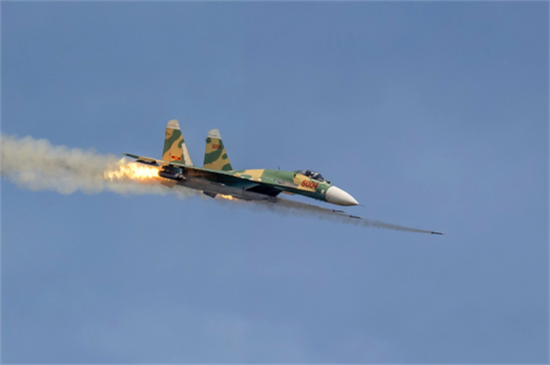 |
| Taking part in the Service’s live-fire exercise of 2026 |
Closely following and flexibly applying the training principles and guiding viewpoints of the Service, the Division executes its training plans in a strict manner, closely aligned with its task requirements and situation. It focuses on thoroughly disseminating and meticulously, fully, and accurately implementing the combat training orders of the Service Commander and the guidance from the Service's agencies. It proactively develops a system of combat training plans and documents in accordance with regulations and its assigned training targets, requirements, and content as well as its actual situation.
Having accurately assessed the proficiency of pilots and aircrew members, as well as the various support arrangements, the Division organises its flight schedule in a scientific and appropriate manner. It strictly conducts flight operations, while ensuring progress, appropriate intervals between flights, and flexibility in response to specific weather conditions. It also properly maintains the prescribed procedures in the three flight phases and four technical preparation phases. It attaches importance to ensuring regularity in combat training staff work and seriously carries out debriefings after each flying session and each flying week. Monthly and annual reviews are organised to promptly formulate measures to remedy shortcomings and weaknesses, thereby contributing to raising the quality of flight training.
Under the “Sustainable Air Defence Shield” Operational Plan for the 2026 - 2030 period and subsequent years, the Project on the Automation of Command in the Vietnam People's Army, and the Project on Protective Structures for Combat Aircraft at Airfields, which contribute to firmly protecting the Fatherland's airspace early and from afar in the new situation, the Division has been equipped with new, modern weapons and technical equipment to facilitate flight and airspace surveillance, management, and control, as well as command and control over training and combat readiness. Consequently, the Division's flight training mission has entered a new stage of development, with a requirement to conduct exercises at short notice, under time pressure, and closely aligned with the characteristics of the operational environment and the subject involved. To fulfil its tasks, the Division closely follows the prescribed training content and programmes; based on its mission requirements, it focuses on improving proficiency in aircraft handling, navigation, combat application flight, live-fire shooting and bombing, parachute dropping, and airborne deployment for its forces and friendly units. These efforts enhance the combat readiness and combat capabilities of pilots and aircrew members under all weather conditions. At the same time, the Division concentrates on carrying out training according to schedule for new pilots, pilot trainees, and pilots undergoing conversion training, as well as flight instructors and flight commanders.
Alongside training, ensuring the utmost safety of every flight is always a particularly important task, to which the Division’s Party Committee and Command regularly devote their highest level of political commitment and leadership attention. Accordingly, agencies and units across the Division regularly and continuously perform education work to raise their troops’ awareness of the significance and importance of flight safety during weekly collective conferences, weekly flight meetings, and pre-flight briefings. After each flight as well as following incidents that threaten flight safety within the Service, the Division conducts serious reviews and debriefings at all levels and promptly formulates measures to thoroughly address shortcomings and weaknesses.
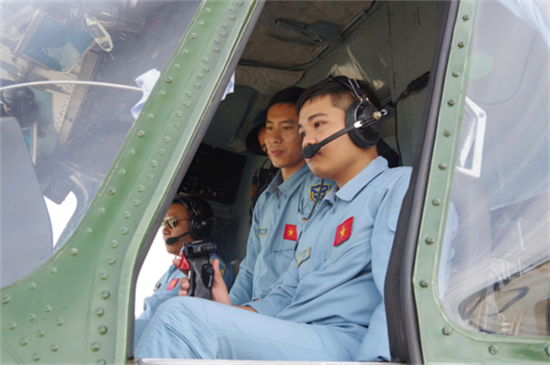 |
| Graduation exercise designed for cadets of the Air Force Officer College |
Based on reviews and analyses of the situation and objective, comprehensive assessments of the proficiency of pilots and aircrew members, the technical condition of aircraft and aviation equipment, weather conditions, ground support, and the psychological state of personnel involved in flying operations, the Division proactively develops scientific and rigorous flight safety plans on an annual, quarterly, and monthly basis, as well as for each specific mission in accordance with the prescribed levels of authority. Due attention is paid to anticipating potential safety risks, formulating and strictly adopting preventive measures at every level, in every specialised field, and for every individual. Flying operations are organised closely in accordance with the Flight Regulations, Flight Safety Regulations, combat training manuals, and regulations governing specialised fields. Discipline and procedures are strictly maintained through various flight phases, together with inspections carried out in accordance with the prescribed levels of authority to identify and correct shortcomings and weaknesses of units during their flying operations.
In addition, the Division ensures the adequate provision and serviceability of aircraft, technical equipment, and flight support facilities, promptly repairs faults affecting ground stations and communications equipment, thereby maintaining reliable command communications and aircraft guidance in all situations. Runways, taxiways, and aprons are regularly inspected and cleaned; the procedures for testing and analysing aviation fuel and lubricants are closely supervised in accordance with regulations.
Recognising that personnel are the most important factor in ensuring flight safety, particularly the role of leaders and commanders, the Division regularly provides further training to improve the proficiency of leaders at all levels, flight commanders, pilots, and aviation technicians. Flight commanders, flight instructors, pilots, and aircrew members actively study specialised theory, increase simulator training, and practise handling contingency situations.
Every flight conducted by the Division is the result of thorough preparation and close, coordinated, and synchronised efforts involving personnel, technical equipment, infrastructure, and command arrangements. Therefore, the Division attaches significance to providing adequate logistics, technical, radar, and lighting support for flight training and flight safety. Its agencies and units regularly carry out education work to raise awareness, a sense of responsibility, and professional ethics among technical personnel, while strictly adhering to established technical procedures and routines for each type of equipment. To maintain technical readiness for missions and flight safety, the Division carries out focused aviation technical inspections after six to eight flying sessions or following incidents in other units that threaten flight safety. It strictly maintains technical inspections at the prescribed levels of authority, paying particular attention to full compliance with procedures for the receipt, handover, preservation, and maintenance of aircraft and technical equipment. It also ensures the proper receipt, storage, and efficient use of refuelling materials, preventing deterioration, loss, leakage, and waste. Its units strictly observe technical maintenance days and maintain high standards of cleanliness on runways, taxiways, and aprons. They also closely implement fire prevention and firefighting measures, as well as patrol and guard duties to protect airfields. As a result, faults arising during flight operations are promptly detected and rectified, while aviation technical support and aviation munitions are effectively provided for all tasks.
With strong political commitment and sustained efforts to overcome difficulties, the Division has fulfilled 100% of its annual flight-hour and flight-training targets, maintaining the highest standards of flight safety. It has also achieved proficiency in operating its technical equipment, particularly newly introduced systems, ensuring that sufficient pilots, aircrew members, and flight commanders are always available for assigned missions, thereby contributing to improving its overall quality and combat strength, firmly safeguarding the airspace over the Central and Central Highlands regions of the Fatherland.
Sr. Col. PHAM QUOC VUONG
Commander of the Division