In contemporary warfare, armed forces around the world are shifting from traditional command and management to approaches driven by data, digital connectivity, and artificial intelligence (AI) to better grasp conditions on the ground, anticipate developments, make decisions, and leverage their resources; in this regard, automating the command of logistics and technical support plays a crucial role. It is, therefore, essential to research and apply international experience from this trend to meet the requirements of building a modern Vietnam People’s Army (VPA).
Automation of logistics and technical command is the process of incorporating personnel, operational procedures, data, and technology to enhance situational awareness, resource management, coordination, and decision-making support in military support work.
Evidence from advanced militaries shows that this trend is being implemented through different models and at different levels. The US Army develops GCSS-Army (Global Combat Support System-Army); NATO uses LOGFAS (Logistics Functional Area Services) for logistics planning, management, and coordination in a multinational environment; Russia employs automated logistics and technical command systems linked to the National Defence Management Centre; China promotes the development of a “smart logistics” model, expanding the use of big data, AI, and the Internet of Things (IoT) in management, command, and support.
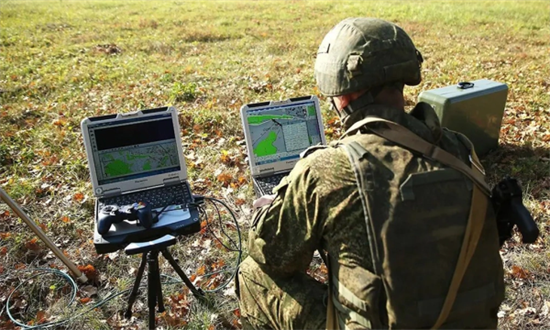 |
| UAV launching during a military exercise of Russia (photo: RIA Novosti/vnexpress.net) |
Despite different approaches, the above models all aim to improve the ability to gather, manage, and process information, shorten the time needed for command and coordination, enhance proactiveness in forecasting and organising support, and utilise logistics and technical resources more efficiently. Studying this trend and its challenges lays a strong foundation for determining directions and solutions for advancing the automation of logistics and technical command in the VPA.
The trend towards advancing the automation of logistics and technical command
Models of logistics and technical command automation in armed forces around the world (hereinafter referred to as the models) currently centre on four main pillars.
First, building a digital data foundation for logistics and technical command. This serves as the backbone of command automation. The models are shifting from decentralised data management to shared data systems in which data is collected, standardised, integrated, and updated consistently. With the development of IoT, positioning systems, sensors, and automated data collection tools, data is updated continuously to gradually form a near-real-time data stream. Data not only reflects the quantities, types, and status of weapons, equipment, and supplies, but also provides information on location, mobility, transport, military medical and repair capabilities, consumption levels, and support demands. This, in turn, improves the ability to monitor the status of resources and facilitates condition-based and predictive maintenance. The core value lies not merely in “having data”, but in ensuring that data is standardised, shared, interoperable, and reliable enough to support command and lay the groundwork for a shift from report-based management and coordination to data-driven command and coordination.
Second, developing smart command and coordination support systems. Built on connected and integrated data, the models increasingly use big data, AI, and analytical algorithms to process information, assess support status, identify bottlenecks, detect risks of shortage, and forecast demands for supplies, transport, maintenance, repair, and other support activities, thereby proposing appropriate options for allocating resources, adjusting transport, or organising support.
Thus, automation is shifting from fostering situational awareness to supporting analysis, forecasting, and decision-making, helping commanders not only know “what is currently available”, but also identify “what will happen”, “what needs to be done”, and “which option is more suitable”. Nevertheless, although the system provides support, final decision-making remains the responsibility of the commander.
Third, integrating logistics and technical support command with operational command. Based on integrated data and analytical tools, the models aim to form a logistics common operational picture (LCOP), bringing support information into the same situational awareness environment as operational information. This allows commanders to simultaneously grasp the status of forces, missions, locations, and support capabilities, ensuring alignment between operational decisions and the organisation of support. This also signifies a transition from relatively independent logistics and technical support coordination to the fully coordinated integration of support into operational command. Therefore, the value of the LCOP lies not only in its ability to display information, but also in creating shared situational awareness of support, providing a basis for command and resource coordination across the entire system.
Fourth, expanding automation across the logistics and technical support chain. This represents a higher level of development, as automation extends to execution, monitoring, and feedback. Once a support decision is issued, the system can provide assistance in coordinating transport, distributing supplies, issuing ammunition, conducting repair and maintenance, and deploying support forces; at the same time, it can monitor implementation progress, control resource flows, and update information about changes as they arise. Feedback data is then fed into the system, creating a new cycle of analysis and decision-making.
In the process, technologies such as transport robots, unmanned vehicles, smart maintenance lines, and supply chain optimisation algorithms are increasingly being researched and applied. Automation is gradually expanding from individual operational tasks to the entire support chain, creating close links between planning, implementation, monitoring, and adjustment of support activities. This is an inevitable development trend, contributing to more effective logistics and technical command and meeting the requirements of modern warfare.
A number of issues for the VPA to address
The above trend shows that logistics and technical command automation is changing how modern armed forces organise, command, coordinate, and provide support. For our Military, the study, establishment, and development of logistics and technical command automation must be integrated into the broader effort to build a modern VPA, aligned with force structure, military art, support methods, and practical conditions. In this regard, emphasis must be placed on effectively addressing the following key issues.
Firstly, building a unified, standardised, interoperable, reliable logistics and technical support data foundation.
Given the diversity of weapons and equipment in terms of types, origins, and generations, a support system spanning multiple specialties and levels, large quantities of supplies and vehicles, and differing operational procedures, logistics and technical data remains fragmented and inconsistent, creating a significant need to unify data catalogues, coding, structures, and standards. Therefore, the standardisation and development of shared data must come first, laying the groundwork for a “common digital language” across the Logistics and Technical Sector. Alongside the digitalisation of existing data, it is necessary to clearly identify data sources and responsibilities for updating, verification, management, and use to ensure that data is “accurate, complete, clean, up to date, consistent”, and interoperable from strategic to tactical levels. This provides the foundation for developing a database that effectively facilitates command and coordination and progressively shapes a unified logistics and technical picture.
Secondly, preventing fragmented approaches to automation that lack a unified architecture and road map.
As automation involves multiple branches, levels, units, and technologies, developing it to meet individual needs without an overarching architecture and common connectivity standards can easily create “digital islands”, making interoperability and integration difficult, leading to duplicated investment and wasted resources. Hence, it is vital to define an overarching architecture, common connectivity standards, and a unified development road map from the outset, clearly identify priority processes and areas, and combine the development of new systems with the connection and integration of existing ones. This will gradually create a coordinated, unified, and interoperable automation system capable of being upgraded, expanded, and developed over the long term.
Thirdly, ensuring security, safety, and the ability to maintain system operation under all circumstances.
As logistics and technical command becomes increasingly dependent on data transmission networks, databases, and automated tools, the risks of reconnaissance, electronic warfare, cyberattack, intrusion, sabotage, or data manipulation continue to grow. Therefore, due attention should be paid to system security from the design stage; a distributed architecture with redundancy, backup, and recovery capabilities should be developed to ensure that all levels and nodes can maintain essential functions when connectivity is disrupted and quickly synchronise once it is restored. To this end, it is necessary to achieve self-reliance in data transmission network infrastructure, sensor equipment, data collection and integration technologies, and processing platforms and software. It is essential to reduce dependence on external technologies and proactively control security and safety risks from the design stage and throughout the system’s life cycle. In particular, plans should be prepared for switching to appropriate command methods when digital systems fail, ensuring that dependence on technology does not become a weakness in support work.
Fourthly, reforming organisational structures and operational procedures, developing human resources, and properly defining the human role in automation.
Automation is only effective when accompanied by changes in organisational structures, procedures, and command methods. If new technologies are introduced while traditional methods of reporting, compiling, and processing information are still retained, it will be difficult to achieve meaningful improvements, and intermediate steps and workloads may even increase. Hence, our VPA should simultaneously review, standardise, and redesign operational procedures, gradually shift from report-based command to data-driven command, build a corps of logistics and technical officers with a digital mindset and the ability to use data and master the systems, while developing personnel with specialised expertise in data, AI, and information security. Notably, the boundary between automation and humans’ decision-making authority must be clearly defined: the system can collect, analyse, forecast, and propose, but the commander must retain decision-making authority and responsibility, as well as the ability to verify and intervene when necessary.
Automation of logistics and technical command is becoming an indispensable area of development in modern armed forces. However, this remains a new and complex domain encompassing many components, from personnel and operational procedures to national scientific and technological capabilities and military art. For that reason, comprehensive research must be undertaken to identify appropriate direction, road map, and feasible solutions to advance the modernisation of logistics and technical work and meet the requirements of VPA building in the new context.
Maj. Gen. DO ANH TUAN, PhD
Deputy Director of the General Department of Logistics and Technology