2026 NATO Summit - Strategic adjustment and implications for global security
Tuesday, August 11, 2026, 16:05 (GMT+7)
The 2026 Ankara Summit can therefore be seen as marking a significant adjustment in NATO’s thinking about its future development, while simultaneously reflecting the transition of the international security environment into a new phase. As major-power competition increasingly evolves into a comprehensive contest over national capabilities, strategic advantage will depend to a greater extent on the ability to generate and sustain national power across multiple domains.
Vigilance against the rhetoric of “neutralising” the Military in international integration
Monday, June 15, 2026, 14:09 (GMT+7)
In the context of deepening international integration and defence diplomacy, Vietnam has continuously expanded cooperation, actively participated in multilateral mechanisms, promoted dialogue, built strategic trust, and enhanced its international position. Taking advantage of this process, hostile forces have intensified the propaganda promoting the rhetoric of “neutralising” the Military with sophisticated interpretations that easily breed misconceptions.
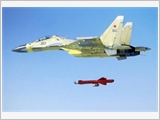
Development and employment trend of precision-guided munitions in recent conflicts
Thursday, May 21, 2026, 14:40 (GMT+7)
Over the past decade or so, precision-guided munitions (PGMs) have fundamentally transformed the conduct of warfare and become a major focus of investment and research for many countries worldwide. Recent conflicts, in particular, have shown that these weapons are evolving rapidly towards greater diversity, lower cost, flexible operational employment, multi-role capability, longer ranges, higher speeds, enhanced destructive power, and superior combat effectiveness
Global political–military landscape through the lens of the Munich Security Conference 2026
Saturday, April 18, 2026, 10:31 (GMT+7)
Munich Security Conference 2026 has laid bare a stark reality: the unipolar world order of the post–Cold War era is disintegrating, while a stable multipolar order has yet to take shape. In this high-risk transitional period, the combination of traditional military strength with flexible diplomacy, alongside economic and technological capabilities, will determine each nation’s position.
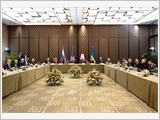
Prospects for the Russia-Ukraine conflict
Saturday, March 14, 2026, 06:25 (GMT+7)
The considerable differences in calculations, positions, and interests among the parties involved suggest that, despite numerous rounds of negotiations in recent years, the path towards a mutually acceptable and sustainable settlement remains fraught with obstacles. The prospects for peace negotiations depend not only on the will of political leaders but also on societal acceptance.

Changes in the 2025 US National Security Strategy
Tuesday, February 24, 2026, 07:25 (GMT+7)
According to several international researchers, the 2025 US NSS is a comprehensive roadmap to protect the sovereignty, foster the well-being and maintain the technological advantage of the US based on the pragmatic principles.
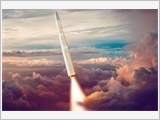
On the U.S strategic weapon policy and implications on world security
Saturday, January 24, 2026, 09:17 (GMT+7)
International public opinion hopes that, in the context of major challenges, maintaining a peaceful and stable environment is more urgent than ever. The United States and other major powers should find a balanced solution soon which can both ensure their national security and prevent the world from a new arms race.

The emergence of a new strategic order in the Middle East
Thursday, November 20, 2025, 10:19 (GMT+7)
Recently, the political and security situation in the Middle East has become increasingly complex, leading to a significant change in the region’s strategic order. This transformation is not simply a return to “the old order” or “a unipolar system”, but rather a shift towards a new and more complex strategic order
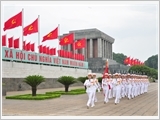
Command 969 improves operational quality, meeting task requirements
Wednesday, August 27, 2025, 14:28 (GMT+7)
Promoting the special political, historical and cultural values of President Ho Chi Minh's Mausoleum is of utmost importance in the cause of national construction and defence, posing very high requirements for the 969 Command with several difficulties and challenges.
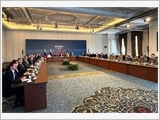
Scenarios for the end of the Russia-Ukraine conflict
Monday, August 25, 2025, 16:35 (GMT+7)
According to world political and military researchers, there is still no certain scenario for ending the Russia-Ukraine conflict. However, the world understands that the end of the above conflict will not only shape the future of these two countries but also test the resilience of international legal principles, and will also contribute to reshaping the regional security structure and possibly the world order for decades to come.