Development and employment trend of precision-guided munitions in recent conflicts
Over the past decade or so, precision-guided munitions (PGMs) have fundamentally transformed the conduct of warfare and become a major focus of investment and research for many countries worldwide. Recent conflicts, in particular, have shown that these weapons are evolving rapidly towards greater diversity, lower cost, flexible operational employment, multi-role capability, longer ranges, higher speeds, enhanced destructive power, and superior combat effectiveness.
Cost optimisation and large-scale warfare
Military researchers contend that the US’s overwhelming advantage in the research and deployment of PGMs is gradually eroding. Core technologies such as smart munitions, sensor systems, and command-and-control infrastructure are becoming increasingly widespread, affordable, and accessible. Furthermore, the explosive development of artificial intelligence (AI) and civilian technological platforms has narrowed the technological gap between the US and other nations. As a result, the capability to conduct long-range precision strikes with high accuracy and devastating destructive power is no longer Washington's exclusive advantage but is increasingly available to many nations worldwide.
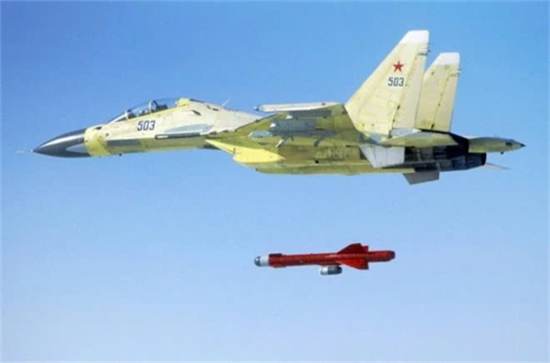 |
| Russia's Kh-59 cruise missile (photo: Ausairpower) |
One important reason for this trend lies in advances in manufacturing and software technologies, which have significantly reduced the cost of PGMs. A typical example is armed loitering unmanned aerial vehicles (UAVs), which are capable of conducting precise strikes against distant targets at relatively low cost, thereby enabling deployment in large numbers. Compared to advanced PGMs such as the US Joint Direct Attack Munition (JDAM) or Russia's Zircon hypersonic cruise missile, these UAVs may possess inferior performance characteristics. However, they compensate through large-scale deployment capability, greater operational flexibility, and high combat effectiveness. In many cases, this has significantly altered the battlefield dynamics of recent wars and conflicts.
Researchers also argue that these PGMs significantly reduce the cost of destroying individual targets. In practice, during the Russia - Ukraine conflict, Kyiv reportedly spent only a few thousand US dollars on a tactical UAV capable of supporting reconnaissance and surveillance for long-range strike systems and striking targets more than 800 kilometres away. Meanwhile, Moscow deployed a large number of Shahed-136 loitering munitions with an operational range of approximately 2,000 kilometres and a unit cost of only between 10,000 and 50,000 US dollars. Compared to the AGM-158 JASSM, a modern long-range air-to-surface cruise missile which features stealth capability, significant destructive power, and standoff launch capability, but costs between 1 million and 2 million US dollars, the cost of these newer PGMs is substantially lower.
Another important factor driving growing interest in this type of weapon is the enormous cost that opponents must bear in defending against such attacks, thus giving rise to asymmetric warfare. In April 2024, Iran launched more than 300 munitions at Israel, including loitering UAVs, cruise missiles, and ballistic missiles. With the support of the US and several Middle Eastern nations, Israel intercepted almost all of these threats. However, according to several reports, while Iran spent approximately 80 million US dollars on the attacks, Israel’s defence expenditure exceeded 1 billion US dollars. Researchers contend that the combination of high combat effectiveness and relatively low cost has made PGMs increasingly attractive to many countries around the world. The US employment of the LUCAS loitering UAV - priced at roughly 35,000 US dollars per unit, far cheaper than the MQ-9 Reaper UAV, which costs around 30 million US dollars, in Operation Epic Fury - is viewed as a shift in thinking regarding policies on the development and employment of PGMs.
Extending range and destructive power
In recent years, many countries have continued to invest in researching and developing PGMs in the direction of extending range and enhancing destructive power. Variants of cruise missiles, air- and sea-launched precision-guided bombs, and ground-launched tactical ballistic missiles have been continuously upgraded with the aim of increasing strike range and lethality. Russia has maximised the effectiveness of air-launched tactical cruise missiles (fired from beyond the range of enemy air defence systems) in its conflict with Ukraine. Russian air-to-surface missiles have been mainly launched from Tu-95 and Tu-160 strategic bombers, as well as Su-24 and Su-25 tactical aircraft operating around the Caspian Sea and the Rostov region. Missile variants such as the Kh-59, Kh-58, and Kh-31 have also been employed frequently.
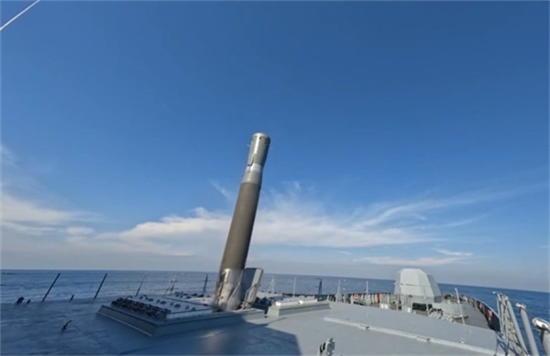 |
| Russia’s 3M22 Zircon missile (photo: Bulgarianmilitary) |
During Operation Epic Fury, the US reportedly deployed over 1,000 AGM-158 JASSM-ER air-to-surface missiles. These stealthy, long-range, high-precision missiles were used to neutralise Iranian S-300 and S-400 air defence systems without entering hostile air defence zones. Simultaneously, the US employed Tomahawk Block IV cruise missiles launched from surface vessels at ranges exceeding 1,600 kilometres to remain outside the range of enemy counter-strikes. Although the use of Tomahawks in this operation was not unprecedented, it signalled a significant shift in US approach to PGMs: from short-duration firepower strikes to prolonged operations using dispersed sea-based launch platforms while maintaining continuous firepower.
Another category of PGM highly valued for modernisation is army tactical missile systems. The PrSM (precision strike missile) saw its first combat deployment during Operation Epic Fury. Launched from the HIMARS (high mobility artillery rocket system) platform, it is designed to replace the US army’s previous generation of tactical ballistic missiles. For Russia, the use of tactical ballistic missiles to strike key targets has also been highly valued. In the conflict with Ukraine, the Iskander-M has been widely utilised to support air operations and destroy air defence systems, command centres, troop concentration areas, and military equipment, thereby shaping the battlefield in Russia’s favour.
Iran also employed the Dezful tactical ballistic missile in a large-scale aerial strike against Israel in March 2026. Notably, this missile has a circular error probable (CEP) of only 5 metres and a range exceeding 1,000 kilometres. It was used in combination with the Paveh cruise missile, which has a range of more than 1,600 kilometres and network-enabled capability intended to optimise strike coordination and effectiveness. With these tactical ballistic missiles, Iran’s large-scale strike reportedly overwhelmed Israel’s air defence system, allowing multiple targets to penetrate the defence network. In particular, Iran’s Fattah hypersonic missile, reportedly capable of speeds up to Mach 15, was able to penetrate Israel’s sophisticated multilayer missile defence system.
Rapid strike capability and strategic deterrence
Given the prominent advantages of PGMs, many countries - most notably the US, Russia, and China - have intensified investment and research in this field to enhance rapid-strike capability, strengthen strategic deterrence, and counter external threats effectively. Russia, in particular, has focused on hypersonic weapons, which Moscow describes as “sixth-generation military technology”, with the aim of securing a leading position in the new military revolution and claims to have surpassed the US in this domain. In practice, Russia has employed several hypersonic types in the conflict with Ukraine, most notably the Kinzhal hypersonic ballistic missile (with a range of 2,000 kilometres and a speed of Mach 12) and the Zircon hypersonic cruise missile (scramjet-powered, with a range of over 1,000 kilometres and a speed of Mach 9). Owing to their high speed, precision, and difficulty of interception, hypersonic weapons are widely considered to have a profound impact on the future of warfare.
The US proposed its prompt global strike (PGS) strategy using hypersonic weapons early in the 21st century, primarily to deter strategic rivals. By early 2026, the Dark Eagle Long-Range Hypersonic Weapon (LRHW) system was officially commissioned into the US Strategic Command, marking a pivotal shift as a conventional PGM was integrated into national-level decision-making chains. The role of the Dark Eagle is no longer limited to tactical or operational levels but has been elevated to an instrument of strategic deterrence. The Dark Eagle utilises a two-stage solid-fuel rocket motor combined with a hypersonic glide vehicle (HGV), reaching speeds exceeding Mach 5 and an estimated range of 2,700 to 3,500 kilometres. Upon reaching high speed, the glide vehicle separates from the missile and flies along a flexible atmospheric trajectory, making detection and interception far more difficult than conventional ballistic missiles. The US plans to deploy a certain number of these weapons under the European and Indo-Pacific Commands to deter rivals. As envisaged under the PGS strategy once a launch order is issued, the US hypersonic weapons could strike targets anywhere in the world within one hour.
China is also prioritising the development of hypersonic glide weapons with the aim of penetrating enemy missile defence systems. A key strategic objective pursued by China is the capability to directly threaten opposing carrier strike groups (CSGs). According to military experts, while carrier-based air defences may be capable of countering supersonic bombers, they face considerable difficulties in intercepting hypersonic glide weapons.
With these distinct advantages, many experts believe that PGMs will continue to evolve towards greater autonomy, longer range, and higher speed. For every nation, mastering the technologies related to these weapons is not merely a technical requirement but also a strategic imperative for protecting their national sovereignty and interests amidst increasingly unpredictable global geopolitical dynamics.
Consequently, the race for PGMs is expected to intensify, necessitating coordinated investment in high-quality human resources and defence R&D capabilities.
Sr. Col. DANG DONG TIEN
Former Officer at the General Department of Logistics and Technology