The 2026 NATO Summit demonstrates that the Alliance is recalibrating its strategy to address immediate challenges while simultaneously preparing for a period of strategic competition more complex than that of the post-Cold War era. The decisions adopted and announced in Ankara will not only shape the future trajectory of NATO but are also expected to have far-reaching implications for the international security environment in the years ahead.
Unprecedented challenges since the end of the Cold War
According to researchers, more than three decades after the end of the Cold War, NATO is confronting a security environment marked by profound changes. The interplay between traditional and non-traditional security challenges, coupled with increasingly intense strategic competition among major powers, has fundamentally altered the security thinking that shaped the Alliance’s development during the post-Cold War period.
According to experts, the most immediate factor driving this shift in NATO’s strategic thinking has been the Russia-Ukraine conflict. Since its outbreak, the conflict has brought large-scale warfare back to Europe, placing mounting pressure on the security of NATO’s eastern flank, while undermining strategic stability across the region and intensifying the trend towards military confrontation between NATO and Russia in the post-Cold War era. More than four years of conflict have also demonstrated that modern warfare is no longer simply a contest of military forces and weaponry, but a comprehensive competition in national capabilities, in which the defence industry, technology, supply chains, resource mobilisation, and the capacity to sustain prolonged military operations play decisive roles. In another theatre, the risk of widening instability and conflict in the Middle East is also exerting increasing strategic pressure on NATO. Developments in the region not only threaten energy security, freedom of navigation, and Europe’s strategic trade routes, but also heighten the risks of terrorism, extremism, and renewed waves of migration into the continent.
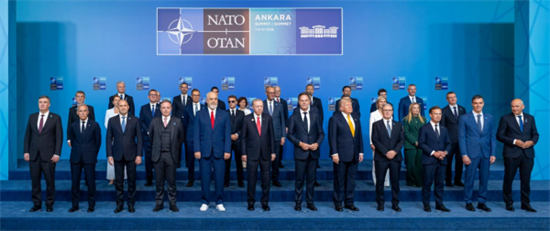 |
| NATO leaders attending the Ankara Summit 2026 (Photo: qdnd.vn) |
At the same time, China’s rapid rise presents NATO with challenges of a more comprehensive and long-term nature. Unlike Russia, the challenge posed by China does not primarily arise from the prospect of direct military confrontation, but from the rapid growth of its aggregate power across the economic, technological, military, and global influence domains. Beijing’s accelerated military modernisation is progressively altering the balance of power among major centres of global influence, not only in the Indo-Pacific but also in Europe and the Atlantic. NATO is also becoming increasingly concerned about the risks of dependence on China in such areas as advanced technologies, critical minerals, and supply chains, as well as the growing trend towards strategic coordination between Moscow and Beijing.
Alongside these external pressures, many experts argue that NATO is also being affected by adjustments in US policy. Washington’s demands that its European allies shoulder a greater share of the defence burden reflect a broader US tendency to reallocate resources towards strategic competition with other major powers. This places NATO under pressure both to strengthen its collective defence capabilities and to enhance the autonomy and responsibility of its European members in safeguarding common security. Against this backdrop, NATO is compelled to recalibrate its strategy with a view to developing a deterrence and defence architecture that is more adaptable to both present and future security challenges.
Adjustments at the 2026 NATO Summit
According to experts, in addition to carrying forward the core messages of the 2025 Summit in The Hague, the Netherlands - such as the requirement for NATO members to fulfil their commitment to increase defence spending to 5% of GDP by 2035 - the 2026 NATO Summit introduced several new developments that have attracted considerable public attention.
One particularly noteworthy feature was the concept of “NATO 3.0”, officially invoked for the first time by the Alliance’s leadership. The introduction of this concept represents more than a mere change in terminology; it reflects a significant adjustment in NATO’s thinking about its future development. Whereas NATO during the Cold War focused primarily on military confrontation between the two blocs, and the post-Cold War period prioritised crisis management and responses to regional challenges, “NATO 3.0” envisages an Alliance capable of sustaining long-term strategic competition. Within this framework, military power is closely interconnected with the defence industry, science and technology, supply chains, and national resource-mobilisation capabilities.
Another prominent message repeatedly emphasised by Secretary General Mark Rutte was that “NATO is delivering on its promises.” This not only affirms that member states are implementing the commitments they have collectively undertaken, but also reflects the efforts of Europe and Canada to shoulder a greater share of responsibility for common security. According to researchers, this essentially represents a process of strengthening the capacity of NATO’s European members to assume greater responsibility for their own defence, thereby reinforcing the foundations of the transatlantic alliance as the United States progressively adjusts the allocation of its strategic resources.
Researchers further note that statements made at the Summit indicate that NATO is shifting its emphasis from merely increasing defence procurement towards building the capacity to generate and sustain defence power. Rather than simply expanding force structures or acquiring additional military equipment, the Alliance is prioritising investment in defence-industrial capacity, technological research and development, strategic supply chains, military logistics, and the mobilisation of societal resources for defence. Initiatives such as the NATO Industry Gateway, the “NATO Engine” - designed to expand production capacity and establish a transatlantic defence manufacturing network - and efforts to mobilise approximately USD 217 billion in additional private-sector financing demonstrate NATO’s intention to build an industrial and technological foundation capable of sustaining military advantage over the course of prolonged strategic competition. This reflects an important shift in NATO’s understanding: advantage on the modern battlefield is determined not merely by the quantity of weapons available, but also by the capacity to manufacture them, innovate technologically, and sustain logistical support throughout the duration of a conflict.
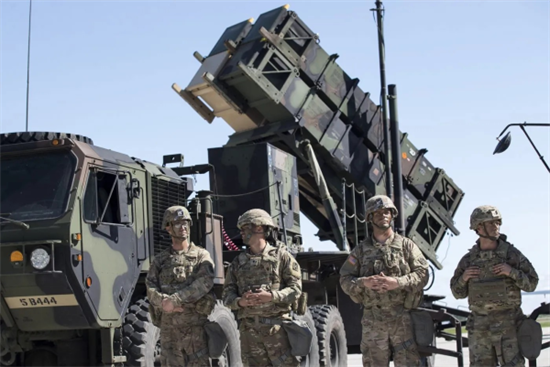 |
| The biggest exercise ever launched by NATO since the Cold War (Photo: The Hill) |
Viewed more broadly, the adjustments announced at the Ankara Summit indicate that NATO is accelerating the restructuring of its military capabilities and, in doing so, progressively repositioning the Alliance within the evolving landscape of global strategic competition. NATO’s strength is no longer measured solely by the size of its forces or the scale of defence expenditure, but increasingly by its capacity to integrate industry, technology, innovation, supply chains, and societal resources into its defence architecture. This may be regarded as one of NATO’s most far-reaching strategic adjustments since the Cold War.
An important impetus behind this transformation has come from changes in US policy towards NATO. Washington’s repeated demands that its European allies shoulder a greater share of the defence burden reflect a broader US tendency to reallocate resources towards global strategic competition. This pressure has become a catalyst for NATO to accelerate efforts to strengthen the capacity of its European members to assume greater responsibility for their own defence. This does not necessarily imply a diminution of US influence or its role within the Alliance. On the contrary, a NATO capable of shouldering a greater share of the collective defence burden would enable Washington to devote additional resources to its strategic priorities in the Indo-Pacific region.
Implications for international security
According to researchers, the decisions adopted at the 2026 NATO Summit have shaped the Alliance’s future trajectory while, at the same time, reflecting emerging shifts in the international security environment. In the short term, their effects are likely to be felt most acutely in Europe; over the longer term, however, NATO’s adjustments are expected to influence the evolving pattern of major-power competition and the development of the global security architecture.
First, with regard to the European security environment, NATO’s accelerated rearmament, expansion of its deterrence capabilities, and preparations for prolonged military competition are likely to further intensify strategic confrontation between Western countries and Russia. With strategic trust among the parties yet to be restored, the simultaneous increase in defence investment and military modernisation across NATO member states may fuel a new spiral of military competition, heightening the risks of miscalculation and localised conflict. Moreover, this trend is likely to make the prospects for restoring security dialogue and confidence-building mechanisms in Europe increasingly difficult.
From a broader perspective, NATO’s adjustments indicate that major-power competition is entering a new phase. Whereas military superiority was previously assessed primarily in terms of force size and the quantity and quality of weapons and equipment, strategic advantage is now increasingly dependent upon defence-industrial capacity, scientific and technological capabilities, supply-chain resilience, and the ability to mobilise national resources comprehensively. This also means that strategic competition is expanding into such fields as artificial intelligence, semiconductors, quantum technologies, outer space, critical minerals, and dual-use technologies. In other words, strategic advantage will increasingly be determined by a state’s capacity to generate and sustain military power, rather than solely by the military capabilities it already possesses.
Another noteworthy implication concerns the evolving division of responsibilities between the United States and its European allies. As NATO’s European members assume greater responsibility for regional security, Washington will be better positioned to concentrate resources on other strategic priorities, foremost among them the Indo-Pacific. In essence, this represents a reallocation of resources within the transatlantic alliance in response to a profoundly changing security environment. This trend is contributing to closer linkages between the European and Indo-Pacific security architectures, while also demonstrating that strategic competition is becoming increasingly interconnected across different geostrategic theatres.
The 2026 Ankara Summit can therefore be seen as marking a significant adjustment in NATO’s thinking about its future development, while simultaneously reflecting the transition of the international security environment into a new phase. As major-power competition increasingly evolves into a comprehensive contest over national capabilities, strategic advantage will depend to a greater extent on the ability to generate and sustain national power across multiple domains. International observers therefore consider that NATO’s ongoing adjustments are likely to affect not only the European security architecture, but also the broader configuration of global security in the years ahead.
NGUYEN MINH DAO, M.A., Department of the Americas, Ministry of Foreign Affairs