The culture of “Uncle Ho’s Soldiers” represents a value system that encapsulates the revolutionary virtue, humanism, and immense spiritual strength of the Vietnam People’s Army. In the new era, the preservation, cultivation, dissemination, and promotion of these noble values constitute not only a strategic imperative but also a steadfast foundation enabling the Army to fulfil, with excellence, every mission entrusted.
The Vietnam People’s Army is a political and military force absolutely loyal to the Fatherland, the Party, the State, and the People. It has been built, trained, and developed through two resistance wars against French colonialism and American imperialism, as well as through the war to safeguard the Fatherland and the process of national renewal. Having overcome countless hardships and sacrifices, the culture of “Uncle Ho’s Soldiers” has crystallised into a spiritual foundation and guiding compass for all activities of cadres and soldiers.
Today, as the country enters a new phase of development with a strategic vision toward becoming a developed, high-income nation by 2045, the Vietnam People’s Army continues to enhance the effectiveness of its core political missions. It is not only the principal force responsible for defending the Fatherland but also an active contributor to national socio-economic development, a pioneer in the application of science and technology, and a key factor in force modernisation. At the same time, the Army must confront numerous challenges posed by hostile forces’ schemes of “peaceful evolution” and the attempt to “depoliticise” the military, as well as emerging risks inherent to the digital age. In this context, promoting the cultural values of “Uncle Ho’s Soldiers” is essential for building a revolutionary, regular, elite, and modern Army capable of meeting the requirements of national construction and defence in the new era.
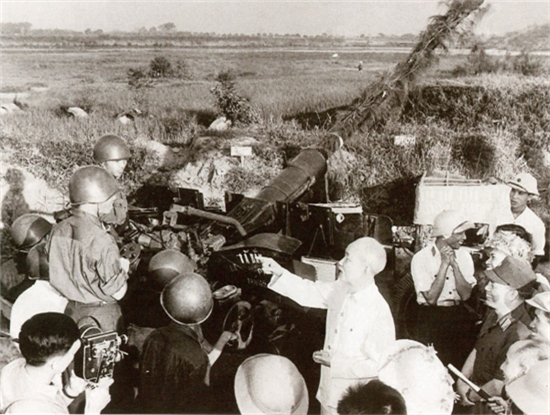 |
| President Ho Chi Minh and air defence troops protecting Hanoi in 1966 (Photo: nhandan.vn) |
The culture of “Uncle Ho’s Soldiers”: The core value of the Vietnam People’s Army
Cultural values are the norms, beliefs, and behavioural orientations acknowledged by a community as rightful and sustained across time. In Vietnam, values such as patriotism, filial piety, resilience, and a strong sense of community have served as enduring pillars throughout national history. These values are not only manifested in everyday social conduct but are also reflected in literature, the arts, customs, traditions, and the spiritual life of every Vietnamese citizen. Former General Secretary Nguyen Phu Trong emphasised that the cultural and human values of Vietnam must harmoniously integrate traditional virtues with the values of the contemporary era: patriotism, solidarity, self-reliance, compassion, integrity, responsibility, discipline, and creativity. These values are nurtured through the cultural foundations of the Vietnamese family - characterised by warmth, happiness, progress, and civility - and strengthened by an advanced Vietnamese culture imbued with national identity, grounded in the values of nationhood, democracy, humanism, and science. Above all, they are aligned with the national value system and the noble aspirations of the Vietnamese nation: peace, unity, independence, prosperity, strength, democracy, justice, civilisation, and happiness.
From this perspective, the cultural value of “Uncle Ho’s Soldiers” constitutes a system of political qualities, moral virtues, lifestyle principles, and behavioural modes forged throughout the revolutionary struggle and the process of building the Army under the leadership of the Party and the People. It is not merely the image of a revolutionary soldier shaped by Marxism-Leninism and Ho Chi Minh’s thought; it is also a cultural and spiritual symbol of the Vietnamese nation. This concept has been developed in numerous scholarly works, in President Ho Chi Minh’s writings, and in the Party’s Resolutions on Army building. The cultural value of “Uncle Ho’s Soldiers” is firmly rooted not only in the ideological foundation of the Party but also in the historical reality of the nation. This is most vividly expressed through the following qualities:
Absolute loyalty to the Fatherland, the Party, the State, and the People
In Ho Chi Minh’s thought, the revolutionary soldier must first and foremost be “loyal to the country and devoted to the people”. This is the core and decisive value that underpins all others within the cultural value system of “Uncle Ho’s Soldiers”. Such loyalty is not confined to political conviction; it is demonstrated through an unwavering readiness to endure hardship, sacrifice, and danger to safeguard national independence, sovereignty, and the peaceful, free, and prosperous life of the People. It embodies the soldier’s commitment to the supreme ideal of “national independence and socialism”.
Courage, resilience, and unyielding willpower
The courageous fighting spirit of Vietnamese soldiers has been forged from the nation’s ancient tradition of defending its homeland. The bravery of “Uncle Ho’s Soldiers” is evident not only on the battlefield - where they willingly “sleep in caves, weather storms, share meagre rations”, and embrace every hardship - but also in peacetime, when confronting natural disasters, epidemics, and undertaking rescue and relief missions at home and abroad. This quality is equally reflected in their noble sense of international responsibility, particularly their active participation in United Nations peacekeeping operations, where they demonstrate professionalism and composure in multicultural and conflict-ridden environments. Courage, therefore, is not merely a revolutionary virtue but a deeply humanistic quality - marked by selflessness and devotion to the community - a distinctive cultural hallmark of the Vietnam People’s Army.
A flesh-and-blood bond with the People
The image of “Uncle Ho’s Soldiers” originates from the intimate relationship between the Army and the people - often described as “fish and water”. Many scholars regard this as the most distinctive hallmark of the Vietnam People’s Army. President Ho Chi Minh made this clear: “Our Army is the People’s Army. It means it is the flesh and blood of the people. We fight to regain independence and unity for the Fatherland, to defend the freedom and happiness of the people. Apart from serving the people’s interests, our Army has no other interests of its own.” Today, this value is reflected in the Army’s active participation in socio-economic development in remote and isolated areas; in supporting the population in disease prevention and disaster relief; and in building the “people’s heart-and-mind posture” and the all-people defence posture. The close-knit bond between the Army and the People is a profoundly cultural value, embodying the very nature of an Army born from the People, fighting for the People, and devoted to serving the People. In return, the trust and affection of the People towards the Army constitute a crucial source of comprehensive strength in safeguarding the socialist Fatherland of Vietnam.
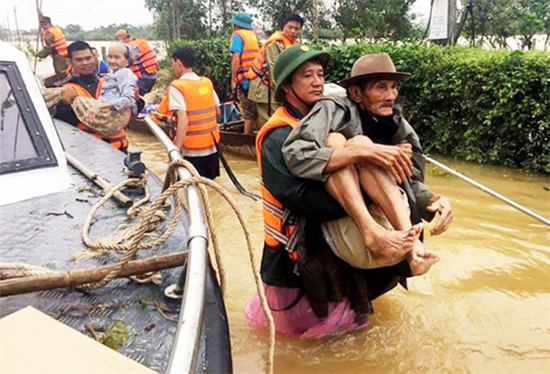 |
| VPA troops conduct disaster relief (Photo: qdnd.vn) |
Self-discipline, solidarity, and a strong sense of responsibility
Discipline is a fundamental element of any army. However, discipline within the cultural value system of “Uncle Ho’s Soldiers” carries a distinctive character: it is conscious, voluntary, and rigorous, arising from political awareness and a deep sense of social responsibility. Military discipline is grounded in firm revolutionary will, a profound awakening to the ideals of the revolution, and an internalised motivation that drives every soldier to act with self-awareness and initiative. Such discipline is transformed from cognition into attitude and conduct, guiding behaviour across all duties and relationships.
Solidarity is another vital attribute of the cultural identity of “Uncle Ho’s Soldiers”. President Ho Chi Minh asserted: “Unity is invincible strength.” Solidarity is not merely operational coordination; it is also expressed through affection, mutual support, and a willingness to make sacrifices for one another in all circumstances of duty and daily life.
The sense of responsibility characteristic of “Uncle Ho’s Soldiers” is reflected in their unwavering determination to accomplish their tasks, regardless of difficulty; their willingness to adapt proactively to the demands of military modernisation; and their commitment to maintaining discipline, ensuring that even minor infractions are avoided. Discipline, solidarity, and responsibility together form a distinctive organisational culture and constitute an essential source of effectiveness and strength for the Vietnam People’s Army.
Perseverance, creativity, and an unyielding commitment to mission accomplishment
Throughout more than eight decades of combat, construction, development, and fulfilment of the Army’s roles - as a fighting force, a working force, and a production force - perseverance, resourcefulness, and creative innovation have become defining attributes of “Uncle Ho’s Soldiers”. During the resistance wars against colonialism and imperialism, the ingenuity of Vietnamese soldiers - such as “using the enemy’s weapons against the enemy”, “leaving no tracks, cooking without smoke, speaking without sound”, and “moving artillery to high ground and firing at point-blank range” - contributed directly to many of the nation’s historic victories. Today, that same spirit is manifested in their readiness to serve in strategic areas, remote and mountainous regions, borderlands, and on islands; and to stand at the forefront of disaster response, storms, floods, and other emergencies. These actions vividly embody the noble mission and ideal of “Uncle Ho’s Soldiers”: to fight and, if necessary, to sacrifice for the independence and freedom of the Fatherland and for socialism; to overcome every difficulty; to fulfil every task; and to defeat every enemy.
Thus, the cultural value of “Uncle Ho’s Soldiers” is the crystallisation of patriotic tradition, revolutionary morality, and the unique cultural identity of Vietnam. It forms a foundational model of character for the Vietnamese people in the modern era - marked by patriotism, compassion, discipline, solidarity, and creativity. This value system not only strengthens the People’s trust in the Party and the State but also serves as a crucial foundation for building a revolutionary, regular, highly skilled, and modern Army capable of meeting the demands of safeguarding and developing the nation in a new era.
Promoting the cultural values of “Uncle Ho’s Soldiers” in the new era
Today’s global and regional landscape is marked by rapid, complex and often unpredictable developments. Although peace, cooperation, and development remain the overarching trends, competition and conflict continue to intensify, while non-traditional security challenges grow increasingly severe. Vietnam is entering a new phase of national development with a strategic vision and ambition to become a developed country by 2045. Alongside major opportunities, the country must also contend with the difficulties and pressures inherent in industrialisation, modernisation, and comprehensive international integration. Our Party and nation continue to face threats of “peaceful evolution”, ideological deterioration, and deviation from socialist orientation. To firmly safeguard national independence, sovereignty, unity, and territorial integrity; to defend the Party’s ideological foundation; and to maintain a peaceful and stable environment for national development, fostering the cultural values of “Uncle Ho’s Soldiers” in the new era becomes more essential and urgent than ever.
Firstly, in light of new circumstances, the task of defending the Fatherland - especially the protection of maritime, island and airspace sovereignty - faces numerous difficulties and challenges. At the same time, hostile and reactionary forces have intensified their sabotage activities against the Party, the State, the socialist regime and our Army, employing increasingly sophisticated, malicious and direct methods. This demands that the entire political system, including the military, respond more flexibly and promptly, while developing comprehensive solutions for fundamental issues - particularly the emerging ones. Accordingly, it is vital to uphold at the highest level the quality of absolute loyalty, the core value of the Vietnam People’s Army. This requires strengthening political and ideological education, revolutionary tradition, and the cultural values of “Uncle Ho’s Soldiers” forged through the nation’s struggles for independence and defence - instilling patriotism, loyalty to the Party, and devotion to the People among soldiers in the new era. At the same time, preventing ideological degradation, moral and lifestyle decline, and manifestations of “self-evolution” and “self-transformation” is not only a political requirement but also a long-term strategic imperative. It ensures that the Vietnam People’s Army fulfils its peacetime duties, firmly protects the Party’s ideological foundation, and safeguards the socialist Fatherland.
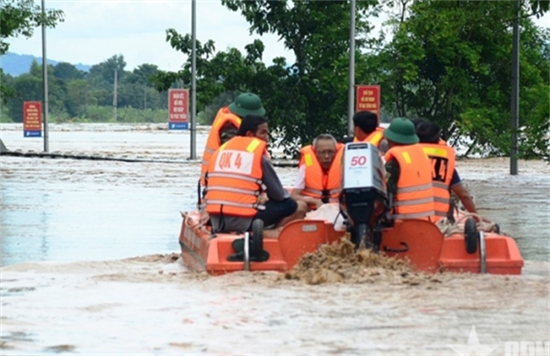 |
| Troops of Defence Area Command 5 - Anh Son conduct search and rescue (Photo: qdnd.vn) |
Secondly, in the era of rapid developments of science and technology, it is essential to further strengthen the readiness to confront the complex challenges of high-tech warfare, information warfare and cyber security threats. The spirit of overcoming hardship is reflected in the capacity to adapt swiftly, to confront and surmount difficulties and limitations in a modernised and highly volatile operational environment. Continuing the tradition of creativity characteristic of “Uncle Ho’s Soldiers”, the Army must accelerate the application of advanced science, engineering and technology in training, command, management and combat. This will help build a force that is not only loyal and disciplined but also elite, modern and fully prepared to accomplish all assigned missions in an era of integration and rapid development - ensuring the firm protection of national sovereignty and interests amidst new and evolving challenges.
Thirdly, promoting the spirit of “blood-and-flesh bonds with the people” in the new era is not merely the maintenance of a tradition; it is the translation of the cultural values of “Uncle Ho’s Soldiers” into concrete actions that enhance the quality of service and ensure companionship with the people across all domains. This is precisely the means through which the Army is built to be both modern and humane, consistently retaining the trust and closeness it enjoys in the hearts of the people. It is necessary to further intensify movements such as “The Army joins hands for community health” and civil-military cooperation projects in agriculture, education, healthcare and other fields, so as to support the people in achieving sustainable development. Particularly, in the face of new demands emerging in the context of the scientific and technological revolution, the Army must serve as the pioneering force in constructing a solid “digital posture” - a space in which the Party’s ideological values are powerfully disseminated, while information security is ensured and connections with the people are reinforced. If early identification and proactive responses are lacking, cyberspace may become an “ideological grey zone”, undermining the political and moral foundations and eroding the “people’s heart-and-mind posture” that our Party has painstakingly cultivated. The “digital posture” is the synthesis of technological infrastructure, data, security platforms and the digital-operational capacity of the political system. The “people’s heart-and-mind posture” is the embodiment of trust, resolve and social consensus. These two “postures” run in parallel and mutually reinforce one another. Every soldier must thoroughly internalise the principle that we “come from the people and fight and serve for the people”, striving to fulfil all duties under the Party’s leadership and to firmly build and defend the Socialist Republic of Vietnam.
Fourthly, self-discipline, solidarity and responsibility are regarded as foundational, principled elements that directly shape the quality, strength and character of the Vietnam People’s Army across all periods of its history. In the present context, the demands of military modernisation and national development pose greater challenges for self-discipline: each service member must cultivate a heightened sense of personal responsibility aligned with the country’s strategic development goals, proactively study, enhance their professional competence, adopt scientific working methods and strengthen their capacity to handle situations in an integrated environment. Strengthening political and ideological education, combined with building exemplary and transparent environments for management, inspection and evaluation, will allow self-discipline and strict observance of regulations to become an internal driving force rather than a requirement imposed from above. When discipline becomes a self-generated necessity, the qualities of “Uncle Ho’s Soldiers” are reinforced from the root, creating stronger solidarity and a heightened sense of responsibility capable of meeting the demands of national defence and sustainable development in the new era.
Finally, the broad dissemination of the image of Uncle Ho’s Soldiers - steadfast, modest, disciplined, compassionate, and ready to sacrifice for the Fatherland and the people, ever willing to undertake international duties - is a distinctive cultural symbol of the Vietnamese nation, contributing to the affirmation of Vietnamese identity and culture on the international stage. Through United Nations peacekeeping operations, multilateral defence cooperation, humanitarian assistance and disaster relief, the image of “Uncle Ho’s Soldiers” in the new era will stand as a noble and humane emblem, contributing through substantive actions rather than mere political declarations. This constitutes the foundation for strengthening the nation’s soft power - power derived from cultural value and credibility. To promote the cultural values of “Uncle Ho’s Soldiers” is to signal to the world a humane nation steadfast in its principles of peace, cooperation and development; thereby elevating Vietnam’s international standing, building strategic trust, expanding partnerships and contributing positively to peace and stability in the region and the wider world.
In sum, with values distilled over more than eight decades of building, fighting and maturing, the qualities of “Uncle Ho’s Soldiers” constitute a profound cultural treasure unique to our Party, our people and our Army. As the country enters a new era, the political requirements placed upon the entire Party, population and armed forces continue to grow. In this context, the full promotion of the cultural values of “Uncle Ho’s Soldiers” plays a foundational and essential role: it not only generates internal motivation and strength for building and developing the Army, but also contributes to the country’s sustainable development, the construction of Vietnamese culture and people, and the enhancement of national soft power on the international stage.
Assoc. Prof., Dr LE HAI BINH, Alternate Member of the Party Central Committee, Permanent Deputy Minister of Culture, Sports and Tourism