Logistics and Technical branch of the Artillery and Missile Command enhances support capabilities in the new situation
In accordance with General Secretary To Lam's guiding principle of “5 steadfast” in Military building and to meet the development requirements of the Artillery and Missile Command, the Logistics and Technical branch of the Command has deployed comprehensive solutions to enhance its overall capacity, ensuring full, accurate, and timely supply for tasks in all situations.
Following the Resolution of the Politburo and the Conclusion of the Standing Committee of the Central Military Commission, on 16 August 2025, the Ministry of National Defence issued a Decision to establish the Artillery and Missile Command, based on the Artillery Corps. This is an important milestone, a source of honour and pride, urshering in a new phase of development, but also placing a heavy responsibility for the Artillery and Missile troops. In this context, the Logistics and Technical branch plays an important role, directly determining the overall quality and combat strength of the force.
To meet mission requirements, the Logistics and Technical Department has proactively grasped the situation, coordinated with relevant agencies, and advised the Party Committee and the Command on many policies and solutions in its profession. In partucular, emphasis is placed on consolidating the structure and personnel of logistics and technical forces at all levels; developing the medium-term logistics and technical support plan for the 2026-2030 period. In addition, it has also advised and proposed the transfer of weapons and technical equipment between units; researched, evaluated, and proposed solutions on the production, improvement, and sourcing of technical equipment. Simultaneously, it has directed the comprehensive implementation of logistics and technical work, promptly meeting the needs of regular and ad hoc tasks, etc.
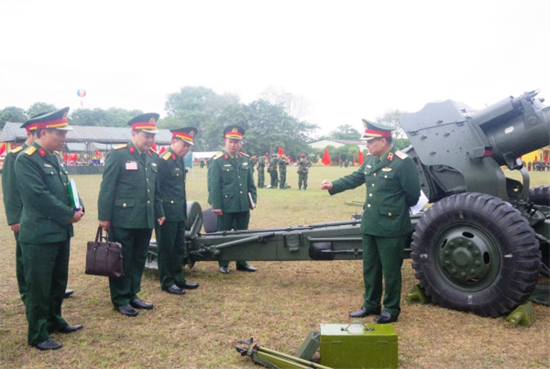 |
| Leader of the Artillery and Missile Command checks technical work |
Despite the achieved results, the Department still faces numerous difficulties and challenges, i.e. the increasing support need due to the reorganisation and establishment of new artillery and missile units; the complexn and demanding nature of support work, especially technical support for new and modern weapons and equipment. Meanwhile, the capabilities of the branch still have some certain limitations, and some aspects have yet to keep pace with practical requirements, etc.
Facing this reality, the Logistics and Technical branch upholds the spirit of “self-reliance and self-sufficiency”, “first see and first prepare”, continues to play the core role in advising and directing the synchronised implementation of solutions to improve support capabilities; focusing on the following key ones:
Firstly, effectively perform the function of advising the Party Committee, the Command, and leaders and commanders at all levels on logistics and technical work. Logistics and technical agencies and units at all levels throughout the force should thoroughly grasp the resolutions and directives of higher echelons, especially Resolution No. 1658-NQ/QUTW and Resolution No. 1656-NQ/QUTW, dated 20 December 2022, of the Central Military Commission on military logistics and technical work until 2030 and beyond; the Resolution of the first Party Congress of the Artillery and Missile Command for the 2025-2030 term; and at the same time, closely adhering to the direction of developing a “lean, strong, and modern” force, it shall continue to advise and propose to the Command on policies and solutions to improve the quality of logistics and technical work. Emphasis should be placed on researching and proposing the construction and improvement of the organisation and staffing of the Logistics and Technical sector in accordance with the force organisation plan; innovating and improving the quality and effectiveness of recruitment and support, especially the living conditions and health of soldiers; building a system of regulations and rules on the management, preservation, maintenance, and repair of new and modern weapons and equipment; mobilising resources to improve the capacity of logistics and technical support at all levels, etc. Continue to review and assess the support needs of each unit, give advise on the transfer of weapons and equipment between units, with priority given to newly established ones, those being relocated, and those performing training and combat readiness tasks.
Besides, it intensifies research and provides advice to the Command on the policies and plans for procurement, receive, and production of new and modern technical equipment, ensuring synchronisation with the systems of technical documentation, materials, and technological equipment to ensure effective operation throughout its lifecycle. Coordinate with research institutions and defence factories to survey, evaluate, and select suitable types of technical equipment; standardise the process of receiving and synchronising equipment, ensuring continuity in operation. Give advice on the planning, construction, and renovation of barracks for combined artillery units and newly established units according to the determined roadmap. Survey and propose the arrangement of warehouses and workshops of units, meeting the requirements for storing and providing technical support for new technical equipment upon receipt.
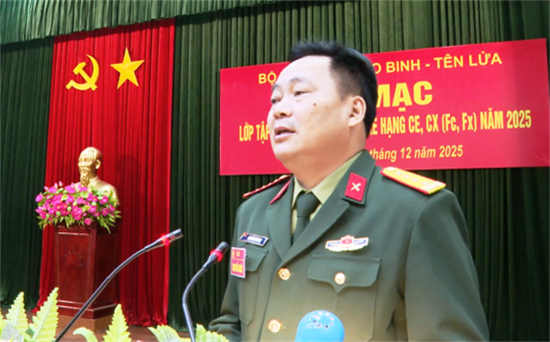 |
| Leader of the Logistical and Technical Department speaks at a training course |
Secondly, strengthen the construction and consolidation of the Logistics and Technical branch's organisation and staffing towards the “lean, efficient, strong, and modern” direction. Initially, the Department will focus on researching and advising the Party Committee and the Command on the development and issuance of a new organisational structure for logistics and technical service agencies and units at the operational level, ensuring synchronisation, balance, and suitability to the Command's force organisation. Priority shall be given to reorganising the operational-level support system towards development equivalent to a regiment, meeting the requirements for mobility, storage, and repair under new conditions. The system of storage depots and repair facilities will be reorganised towards a modern, scientific, and safe approach; forming a solid and interconnected defence system across strategic areas and directions.
Along with this, direct the logistics and technical agencies and units to actively innovate working methods and styles; strengthen management, inspection, supervision, decentralisation, and empowerment; promote the “Military Logistics sector following President Ho Chi Minh's teachings” emulation movement and the drive of “Managing and exploiting weapons and technical equipment effectively, durablely, safely, economically, and ensuring traffic safety”; and build all-strong, “exemplary and typical” logistics and technical agencies and units to meet both immediate and long-term development requirements.
Based on the new organisational structure and staffing, the sector will continue to improve its professional staff. In particular, priority should be given to selecting and recommending the deployment of officers to the Missile Department and newly recruited technical personnel specialising in missiles and artillery, gradually building and developing a core force to advise, manage, operate, and provide technical support for modern missile and artillery systems according to the roadmap of the Command.
Thirdly, promote the training and development of high-quality logistics and technical human resources. The Logistics and Technical Department will focus on advising the Command to issue policies and plans to improve the quality of human resources; directing the Sector to implement training and education work in a synchronous and effective manner. First and foremost, it will advise and direct the Training Centre to review and develop new training programmes suitable for the organisational model of the Artillery and Missile forces. Priority will be given to opening new majors and specialised training programmes for highly specialised technical personnel; upgrading traditional artillery specialties towards modernisation to create a high-skill human resource, meeting the needs of the Command and supplementing personnel for the entire Military.
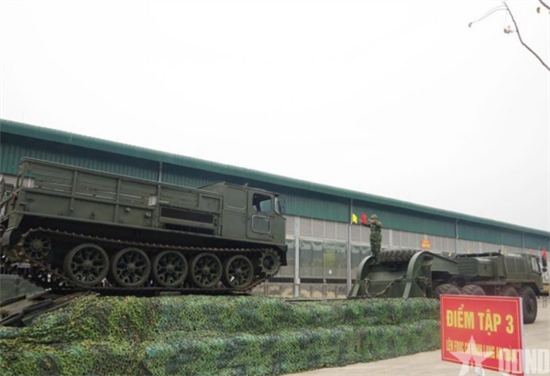 |
| Strengthening the training of human resources for logistics and technical branch |
In addition, the Department continues to advise and propose the in-depth training for technical staff both domestically and internationally, focusing on partners producing technical equipment and the Navy, and the Air Defence and Air Force, to gradually master technology and adapt to the requirements of managing and operating new generation technical equipment. Furthermore, it directs units to maintain the regularity of logistics and technical training, and to leverage the role of staff who have undergone in-depth training to conduct expanded training; holds competitions, contests, sports events, and drills... to improve the all-round skills of officers and staff, meeting the requirements of tasks in the new situation.
Fourth, promote digital transformation in the Logistics and Technical sector. Closely follow the goals and roadmap of digital transformation of the Ministry of National Defence and the Command, the Department continues to deploy solutions to develop the digital infrastructure of the sector; gradually integrates and synchronises software for managing equipment, supplies, and warehouses towards comprehensive automation and digitalisation; directs the sector to review and standardise operational records and procedures; builds a catalog of electronic identifiers for each type of technical equipment and logistical material, forming a unified and interconnected management database system from the Department to agencies, units, warehouses, and stations under the Command.
Based on the digital infrastructure, the Logistics and Technical Department regularly updates data, closely monitors the technical status, quantity, and structure of logistical and technical reserves, and promptly advises the Command on annual and periodical planning close to the practice of tasks. To make it highly effective, the logistics and technical cadres at the units should bring into play their core role in advising and implementing solutions to promote digital transformation that are appropriate to the unit's actual conditions and aligned with the Command's overall direction. Continue to promote the “Digital Literacy Movement”, creating an environment for logistics and technical staff to learn, update their knowledge, and be ready to receive and operate digital platforms, management software, and automated monitoring systems, fostering a scientific and modern working style in the digital environment.
Deeply understanding the functions, tasks, position, and role of logistics and technical work, and the requirements set forth by the new development of the Artillery and Missile Command, the Logistics and Technical branch of the Command will continue to closely follow practical realities, actively innovate thinking, improve the quality of advisory services, and decisively direct the synchronised implementation of solutions to enhance support capabilities, creating a foundation for the Command to successfully complete all tasks, gradually realising the goal of building a revolutionary, regular, elite, and modern Artillery and Missile force, meeting the requirements of national defence in the new situation.
Senior Colonel NGUYEN VU DUNG, Chief Logistics and Technical Officer , Artillery and Missile Command