Alongside artificial intelligence (AI), quantum technology is emerging as a new strategic factor capable of generating substantial advantages by amplifying the overall national power of countries that master it. Although it has yet to see a boom comparable to that of AI, the race to master quantum technology is becoming a new arena of competition among major centres of power. Breakthroughs in this field will profoundly affect the balance of power, strategic advantages, and the global geostrategic landscape in the decades ahead.
Impacts of quantum technology
Quantum technology essentially serves as a foundational technology that can greatly enhance the capabilities of many other economic and scientific sectors. Humanity is now in the early stages of the second quantum revolution, known as “Quantum 2.0”. While the “Quantum 1.0” wave gave rise to technologies such as semiconductors, lasers, and atomic clocks, this second wave focuses on three pillars: quantum computing, quantum communications, and quantum sensing.
 |
| Jiuzhang 4.0 quantum computer developed by China (photo: vov.vn) |
Once fully harnessed and commercially deployed, quantum technology could revolutionise materials science, enable faster and less costly research and development of new medicines, optimise financial and business strategies, enhance AI performance, and strengthen national defence capabilities, while also posing unprecedented threats to national security. According to a 2025 report by the US - China Economic and Security Review Commission (USCC), established by the US Congress, the convergence of AI and quantum technology could significantly expand capabilities in materials discovery, pharmaceutical development, and fundamental physics. However, from a security standpoint, quantum technology could also leave national security and the information security of businesses and individuals more vulnerable to attacks by hackers or intelligence organisations. This is because sufficiently powerful quantum computers could break a number of public-key cryptosystems currently in widespread use. For example, breaking RSA-2048 (a widely used public-key cryptosystem) would require an extraordinarily large amount of computing time on classical supercomputers. However, once quantum computers have a sufficient number of qubits and adequate error-correction capabilities to run Shor’s algorithm with the necessary reliability, this barrier will be broken. A problem effectively infeasible for classical computers could then be solved within a practical timeframe on a quantum computer.
Many researchers believe that, driven by strategic and sustained investment by major powers, the world is beginning to witness a boom in quantum technology led by major players such as China, the US, and the European Union (EU). The number of quantum inventions of international commercial value has increased fivefold over the past decade, while quantum-computing patents alone have risen nearly 60-fold since 2005. According to reports by the European Commission (EC), China currently accounts for approximately 46% of global quantum patent applications, the US about 23%, and the EU around 6%.
Strategic competition in the military domain
Major-power strategic competition in the military domain is becoming increasingly evident in the field of quantum technology. According to a report released in May 2025 by the US Defence Intelligence Agency (DIA), quantum communications, computing, and sensing could provide armed forces with enhanced capabilities in intelligence, surveillance, and reconnaissance (ISR), decryption, positioning, and navigation in GPS-denied or electronic warfare environments. Quantum-based advances could improve target acquisition and long-range precision-strike capabilities, thereby creating strategic advantages for early adopters. With regard to nuclear deterrence, quantum sensors could make nuclear weapon delivery platforms more difficult. Nuclear-powered ballistic missile submarines - the backbone of retaliatory strike capabilities - could potentially be tracked using quantum magnetometers capable of detecting minute magnetic anomalies, while quantum gravimeters could detect underground facilities or intercontinental ballistic missile (ICBM) silos. Stealth bombers designed to evade radar could also be detected by quantum optical sensors capable of exploiting atomic-level precision. With these advanced capabilities, quantum technology could erode the US technological lead as US adversaries acquire the ability to neutralise first-strike forces.
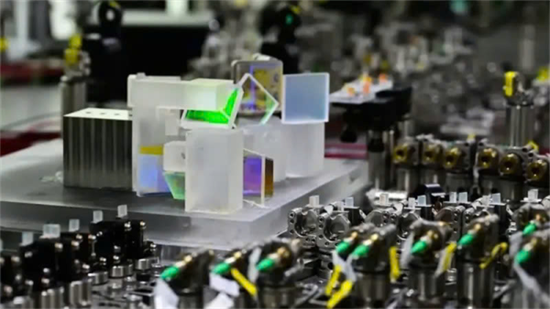
Many experts believe that quantum technology could generate asymmetric advantages in certain military domains, offering opportunities for major powers and countries with significant scientific and technological capabilities in the military domain to narrow some of the traditional US technological advantages. In late 2023, China and Russia conducted a quantum key distribution (QKD) experiment using the Micius satellite (the world’s first quantum satellite, launched by China on 16 August 2016) to establish a link between ground stations in China and Russia (approximately 3,800 kilometres apart). By 2025, a China-led research team had extended real-time QKD testing over a distance of approximately 12,900 kilometres between China and South Africa. These experiments indicate that QKD is gradually moving beyond laboratory demonstrations towards the establishment of intercontinental links. According to Nikkei Asia, China’s rapid rise in quantum computing could change the balance between traditional military capabilities and emerging technologies, potentially reducing the relative importance of such symbols of military power as aircraft carriers and stealth aircraft in future warfare.
 |
| Illustrative photo (qdnd.vn) |
Against this backdrop, the US Government has stepped up research and development in quantum technology while actively preparing defensive capabilities before sufficiently powerful quantum systems become available. In August 2024, the US National Institute of Standards and Technology (NIST) formally approved three post-quantum cryptography standards - FIPS 203, FIPS 204, and FIPS 205 - designed to protect data and information systems against the risk that quantum computers could break existing cryptographic mechanisms. As part of a road map for migrating information technology products, services, and infrastructure away from algorithms vulnerable to quantum attacks, many US federal agencies are transitioning to post-quantum cryptography. In September 2024, the US announced export controls on certain quantum-computing technologies alongside other advanced technologies. It also expanded channels of quantum cooperation with a number of partners and incorporated quantum science and technology cooperation into multilateral mechanisms such as the QUAD and AUKUS.
Implications of technological decoupling and approaches to global governance
Similar to the ongoing geostrategic competition in the field of AI, the race among major powers for leadership in quantum technology poses the risk of deepening global fragmentation into separate technological ecosystems and widening inequalities among countries. The World Economic Forum’s Global Risks Report 2026 notes that geo-economic confrontation, coupled with conflicting values, is leading countries to accept long-term isolation in exchange for short-term security advantages. If left unchecked, tighter export controls imposed by major powers and leading technology powers could fragment the global flow of knowledge and prevent a generation of scientists and engineers in developing and least-developed countries from gaining access to quantum technologies. Small- and medium-sized countries that lag technologically behind centres of power could face growing security and economic risks.
In Southeast Asia, for example, disparities in research resources and research infrastructure have resulted in significant differences in countries’ capacity to develop quantum technologies. Singapore has emerged as one of the region’s leaders in quantum research and development, while other countries remain in the early stages of developing the technology. Falling behind in this field could undermine ASEAN’s competitiveness and ability to attract investment, potentially resulting in significant economic losses.
To address this situation and make the global quantum technology race more equitable, promoting multilateral global governance frameworks for this cutting-edge technology represents a critical pathway. Accordingly, the United Nations designated 2025 as the International Year of Quantum Science and Technology (IYQ) to mark the centenary of quantum mechanics, raise global awareness, promote education, expand international cooperation, and narrow technological gaps among countries. The United Nations Educational, Scientific, and Cultural Organisation (UNESCO) has also announced the Global Quantum Initiative for Sustainable Development (GQI) for the 2026 - 2028 period, aimed at building capacity and ensuring equitable access to shared infrastructure under rigorous ethical frameworks. In addition, the Open Quantum Institute (OQI), an international collaborative initiative launched by the Geneva Science and Diplomacy Anticipator (GESDA) and hosted at the European Organisation for Nuclear Research (CERN) during its 2024 - 2026 pilot phase, seeks to broaden global access to quantum computing and ensure that this technology serves the common good rather than benefiting only a limited number of countries. These are encouraging steps towards creating a more level playing field for countries worldwide.
In summary, quantum technology should be developed in a manner that safeguards the legitimate interests of nations and businesses while promoting broad sharing for the common development of humanity, rather than serving merely as an instrument of geostrategic competition among major powers. As with AI, if the development of quantum technology remains concentrated in advanced countries, major technology corporations may seek to dominate key algorithms and monopolise global standards in order to maximise profits. Conversely, if governance frameworks are jointly developed by the international community to build broad-based capacity, share infrastructure, and enable transparent participation in standard-setting, quantum technology could become a driving force in advancing the United Nations’ 17 Sustainable Development Goals (SDGs).
Geostrategic competition among major powers is an objective reality, but technological polarisation is not inevitable. The efforts of the international community, particularly small- and medium-sized countries, to participate in the major powers’ technological competition and jointly shape global governance standards will determine whether quantum technology becomes an exclusive strategic asset or a shared driver of humanity’s collective progress in the 21st century.
VU DUY THANH, PhD
Ministry of Foreign Affairs