A shift in US military thinking from pursuing short-term wins to making preparations for prolonged, dispersed, and multi-domain conflicts is bringing about fundamental changes in force development, in which arms modernisation is regarded as a decisive factor. To this end, the US Military has prioritised investment in developing next-generation combat platforms, long-range precision strike weapons, and smart unmanned combat vehicles.
An emphasis on developing next-generation combat platforms
In the evolution of modern warfare, combat platforms capable of disabling enemy advanced defence networks and launching both nuclear and conventional strikes grant a critical edge. This requirement has prompted the US Military to commit to researching, developing, and acquiring next-generation combat systems for its forces in order to enhance long-range precision strike capabilities, sustain strategic deterrence, and preserve the ability to project military power around the world.
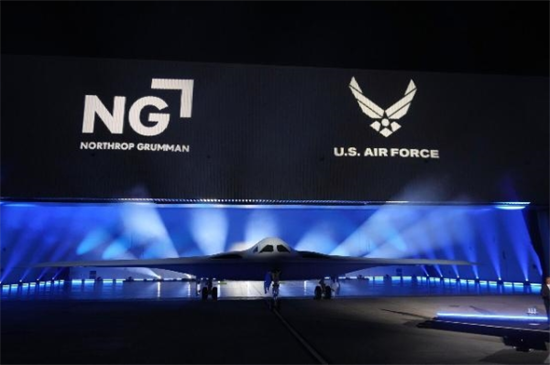 |
| US B-21 Raider (photo: Defense News/qdnd.vn) |
For air warfare, the B-21 Raider is currently the most prominent next-generation combat aircraft. As the US Air Force’s next-generation long-range stealth bomber, it is designed to replace B-2A Spirit and B-1B Lancer. More than three decades after the introduction of B-2 at the end of the Cold War, the US Air Force has unveiled a new strategic bomber. The requirements set for this next-generation aircraft include the capabilities to conduct a wide spectrum of missions with exceptional flexibility, sustain long-range operations, provide extensive battlespace coverage with substantial operational depth, integrate both current and future generations of US Air Force weapons, and flexibly engage multiple targets, together with strike capabilities on a global scale. Accordingly, B-21 Raider is expected to become the US Military’s most effective platform for realising its strategic objectives of strengthening nuclear deterrence, ensuring proper military engagement, and protecting its allies. With the intension of acquiring at least 100 B-21 Raider bombers to operate alongside 75 B-52J bombers, the US Air Force and Northrop Grumman have reached financial agreements and optimised the initial low-rate production process to gradually expand manufacturing capacity, stabilise delivery schedules, and minimise inflation-related risks for the contractor.
In the undersea warfare domain, the US Navy is investing substantial resources in developing Columbia-class strategic nuclear-powered submarines. At 170 metres in length and with a submerged displacement of more than 20,800 tons, it is the largest and most advanced nuclear-powered submarine in the history of the US Navy. A prominent feature of the Columbia class is its design, which is specifically intended to preserve stealth in an operational environment increasingly dominated by advanced anti-submarine warfare (ASW) systems. The submarine is powered by a life-of-the-ship nuclear reactor that eliminates the need for refuelling throughout its service life, thereby significantly enhancing its combat readiness. The Columbia-class submarine is regarded as one of the cornerstones of the US strategy to modernise its nuclear deterrent force over the coming decades. Under current plans, the US Navy will gradually replace Ohio-class submarines with the Columbia class, with the first vessel scheduled for delivery before 2029 to enable its first strategic deterrent patrol in 2030. The Columbia class is equipped with 16 Trident II D5 submarine-launched ballistic missiles (SLBMs), each with a maximum range exceeding 12,000 kilometres, capable of carrying strategic nuclear warheads to strike intercontinental targets with a high degree of accuracy and survivability.
With regard to the modernisation of the Army’s weapons and equipment, the next-generation combat platform currently being prioritised by the US Army is the M1E3 Abrams main battle tank, representing a revolutionary breakthrough through the integration of a hybrid propulsion system, enhanced automation, and active protection against threats posed by unmanned aerial vehicles (UAVs) and long-range precision-guided missiles. One of the most significant changes introduced in the M1E3 Abrams is the adoption of an unmanned turret. This design eliminates the traditional manual loader position, reducing the crew size to three personnel, compared with four in previous Abrams variants. All firepower operations are conducted from a protected armoured crew compartment within the hull, where crew members operate the vehicle via an advanced digital display system, allowing soldiers to become familiar with the platform and operate it more efficiently. The M1E3 Abrams can also be equipped with a larger or more advanced main gun as its development progresses. In 2026, the US Army received the first prototypes for operational testing by combat units, with the objective of introducing the production variant into active service by the end of this decade.
Efforts to modernise precision-strike weapons
In US military operational doctrine, precision-strike capability is seen as the backbone to effectively counter Anti-Access/Area Denial (A2/AD) strategies, thereby ensuring the freedom to deploy forces and maintain operational superiority. To this end, the Pentagon prioritises investment in the research, development, and fielding of various types of precision-strike weapons for the Air Force, the Navy, and the Army.
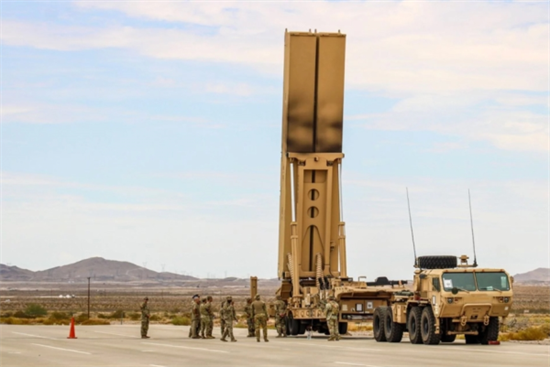 |
| Dark Eagle hypersonic missile system (US Defense Department/qdnd.vn) |
For the Air Force, the US has successfully modernised AGM-158 JASSM (Joint Air-to-Surface Standoff Missile), particularly AGM-158B JASSM-ER (extended-range) variant. This weapon stands as one of the US Air Force's most successful and pivotal long-range precision-strike assets to date. Meanwhile, the US Navy has upgraded Tomahawk Block IV, a surface- and submarine-launched land-attack cruise missile, marking a major leap in the development history of this legendary missile family. This cruise missile is now operational and has demonstrated its capabilities in numerous recent military campaigns. The success of Tomahawk Block IV has been so significant that the US Navy has opted not to retire it. Instead, it has launched a major recertification and modernisation programme to elevate existing Block IV to Block V. Notably, Block Va variants incorporate an advanced multi-mode seeker, transforming legacy missiles into ultra-long-range anti-ship weapons capable of locking onto and destroying large, manoeuvring warships at sea. Designed to strike land-based targets, Tomahawk Block Vb is equipped with a specialised multi-effect warhead featuring a programmable fuse, optimised to penetrate hardened concrete underground facilities or enemy bunkers.
Besides, Precision Strike Missile (PrSM) is a new-generation precision-strike weapon to which the US Army attaches great importance within its long-range fire modernisation programme. This family of ballistic missiles is designed to be launched from tracked M270A2 Multiple Launch Rocket Systems (MLRS) and highly mobile, wheeled M142 HIMARS, intended to replace earlier MGM-140 ATACMS tactical ballistic missiles. The standard version of PrSM is capable of engaging targets at a range of 500 km, and the US Army is aiming for a range of up to 1,000 km in future extended-range variants. With its exceptional precision, PrSM can engage high-value targets deep within enemy rear areas, including depots, command posts, air defence installations, and other critical assets. In the near future, PrSM will fully replace ATACMS to become the US Army's primary land-attack weapon system.
Furthermore, the US Army is determined to field the Dark Eagle hypersonic missile system by 2026. Dark Eagle employs a two-stage solid-fuel booster paired with a hypersonic glide vehicle, achieving speeds above Mach 5 and an estimated range of 2,700 - 3,500 kilometres. After being accelerated to high speeds, the glide vehicle separates from the booster and executes a gliding flight, flexibly altering its trajectory within the upper atmosphere. This unpredictable flight path makes detection, tracking, and interception by adversary air defence systems far more challenging compared to traditional ballistic missiles.
Development and modernisation of smart combat UAVs
The US Military's modernisation trend has shifted markedly from a quantitative race to the optimisation of technological superiority, networked collaborative combat capacity, and high operational flexibility. Leveraging its superior technology, the US aims to comprehensively expand the scope, capacity, and depth of strategic operations via the Multi-Domain Operations (MDO) concept; within this framework, autonomous UAV systems integrated with artificial intelligence (AI) have become a core pillar for both long-range reconnaissance and precision strike missions.
To realise the objective of making UAVs a core component of its force structure, the US is adopting a series of systemic adjustments aimed at developing new technologies, enhancing production capabilities, and deploying these systems on a scale sufficient to meet the demands of high-intensity, protracted warfare. Equipping the US Air Force with UAVs clearly reflects this modernisation trend. Compared to manned aircraft, UAVs offer greater deployment flexibility, reduce risks to human life, and maintain long-duration operations at a lower cost. Next-generation UAVs can penetrate deep into hostile air defence zones and act as indispensable force multipliers that integrate with fifth- and sixth-generation manned fighter aircraft to prepare for high-intensity conflict scenarios against rival powers. The most revolutionary advancement in current combat UAV technology is autonomy driven by intelligent algorithms. Unlike earlier generations that relied entirely on remote pilots via satellite links, these new-generation vehicles employ AI for autonomous navigation, battlefield analysis, and coordinated swarm operations with minimal human intervention. Two key combat UAV models under the “Collaborative Combat Aircraft” (CCA) programme, namely General Atomics' X-67A (derived from the Gambit platform) and Anduril's YFQ-44A Fury, are currently undergoing active testing and design refinement by the US Air Force.
Significant investments in resources and technological innovation underscore the US’s resolve to sustain its position as a global military superpower. However, the integration of breakthrough capabilities such as AI, hybrid engines, and hypersonic weapons into frontline combat platforms presents significant challenges concerning logistics, technical aspects, risk management, as well as legal and ethical questions about the use of force.
The implementation of these programmes extends far beyond the US Military’s force building process. Their outcomes potentially exert a profound influence on the trajectory of modern warfare and the global security environment for decades to come.
Sr. Col. DANG DONG TIEN
Former officer of the General Department of Logistics and Technology