Preventing and combating the scheme to promote ideological “self-evolution” and “self-transformation” among today’s younger generation
Attempts to promote ideological “self-evolution” and “self-transformation” among the Vietnamese youth have been intensified by hostile forces through various systematic, malicious schemes and plots. This issue must be prevented and combated promptly in order to firmly maintain the Party’s ideological foundation among the youth, contributing to safeguarding the Fatherland early and from afar.
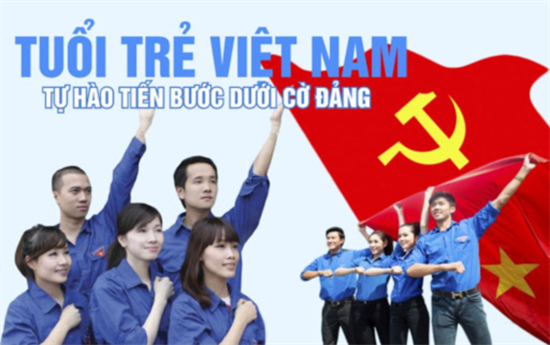
The younger generation is the vanguard force in the cause of national construction and defence, as well as a crucial reserve for the armed forces and strategic organs of the political system. That is why hostile forces consistently identify the youth as a key target in their schemes and tactics to incite manifestations of “self-evolution” and “self-transformation” in terms of political ideology, erode their trust and cause a “rupture” in the revolutionary ideal of the younger generation.
 |
| Illustrative photo |
In the context of rapid, complex developments in the global and regional situation, where defence and security tasks impose increasingly high demands, actively preventing and combating the plot to promote “self-evolution” and “self-transformation” among the youth must be viewed as an integral part of the task of protecting the Party’s ideological foundation. This is not merely an urgent requirement, but also carries long-term strategic significance, contributing to firmly defending the Party’s ideological foundation and the Fatherland early and from afar.
1. Promoting “self-evolution” and “self-transformation” among the younger generation - a malicious tactic of the “peaceful evolution” strategy
In the system of tactics used to sabotage the Vietnamese revolution, hostile forces have consistently created conditions to trigger manifestations of internal “self-evolution” and “self-transformation” as the shortest and least costly path to realise their aim of regime change. Among these targets, the youth, characterised by their dynamism, enthusiasm, and eagerness to learn, yet lacking truly firm political mettle and practical experience, have become the primary focus of hostile forces. Hence, hostile forces have synchronously deployed various types of “soft weapons” in the fields of ideology, culture, and information to gradually sabotage the ideological foundation and weaken the spiritual foundation and core beliefs among the younger generation.
With nearly 80% of Internet users in Vietnam engaging with social media, averaging almost 3 hours of daily usage, and particularly given the habit of approximately 45% of young people aged 18 to 34 frequently checking their phones immediately upon waking up and right before going to sleep, cyberspace has become a “frontline” without gunfire. Characterised by rapid, complex ideological permeation, cyberspace is being thoroughly exploited by hostile forces as a high-intensity, non-traditional combat environment. Consequently, the increased “density of exposure” to information creates conditions for distorted and hostile viewpoints to easily infiltrate, influence, and dominate the perceptions of the youth at all times.
One of their most dangerous manoeuvres is intensifying the dissemination of the idea of “de-politicisation” of the armed forces among the youth. They advocate the viewpoint that the Military and the Police only require technical expertise and professional qualities, and that the armed forces should maintain political “neutrality” without the need to be placed under the Party’s leadership. In essence, this is a malicious scheme aimed at severing the close political and ideological ties between the Party and the people’s armed forces, and denying the principle of the Party’s absolute, direct, all-round leadership over the Military and the Police. Through this, they aim to erode the revolutionary nature of “Uncle Ho’s Soldiers” and the soldiers of the People’s Public Security, gradually diminish the combat ideal, and shake the resolve of the upcoming generation of cadres and soldiers to serve the Fatherland and the People. When the “sword” and “shield” of the regime are ideologically compromised, the risk of a decline in the ability to defend the Fatherland from within becomes palpable.
Besides, cyberspace is also thoroughly exploited by hostile forces to propagate distortions and revisionism of history through increasingly sophisticated tactics. They disseminate misinformation, manipulate materials, and forge “evidence” to smear the nation’s traditional values and deny the contributions of heroic martyrs - the noble symbols of revolutionary heroism. They strive to distort the just nature of the wars of national liberation, creating a “vacuum of trust” and sowing historical doubt among the youth. This is a highly dangerous tactic; when national pride is eroded and spiritual values are distorted, the youth can easily fall into a state of cognitive wavering and diminished political will. This directly impacts their responsibility and determination to carry out the task of defending the socialist Vietnamese Fatherland in the new situation.
2. Identifying manifestations of deviancy and harmful impacts on the Party’s ideological foundation among the younger generation
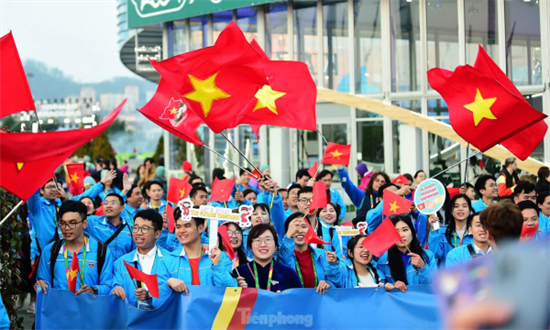
The process of “self-evolution” and “self-transformation” among the younger generation occurs silently and sophisticatedly, marked by gradual changes in perception, lifestyle, and political attitudes. A clear manifestation is that a number of pupils, students, and young people fall into a state of “fading interest in the Party, distancing from the Youth Union, and detachment from politics”. They experience a decline in trust and an indifference towards strategic issues related to independence, sovereignty, and the socialist path. Alongside this is a pragmatic mentality characterised by the reluctance in facing difficulties and undertaking responsibilities, which reflects the weakening of the political resolve and the spirit of devotion among the upcoming young workforce.
 |
| Illustrative photo (tienphong.vn) |
In a volatile digital environment, a section of young people is easily misled by misinformation. Lacking the ability to effectively filter information, they end up sharing and spreading inciting and subversive content. This reality not only reflects cognitive deviations, but also highlights a dangerous method of information dissemination: young people inadvertently turn themselves into intermediaries broadcasting hostile viewpoints, thereby facilitating plots to cause social instability. Practical experience shows that the digital environment consistently harbours numerous non-standard elements, imposing an urgent requirement on information management and control as well as the improvement of ideological “immunity” among the youth. In 2024, Vietnam required cross-border platforms to step up the prevention and removal of information violating Vietnamese law, resulting in thousands of subversive pieces of content being handled.
The most harmful impact of “self-evolution” and “self-transformation” among the youth is that it can directly lead to the weakening of the combined strength of all-people national defence, people’s security, and “posture of people’s hearts and minds”. The younger generation constitutes a massive social force, playing a core role in national construction and defence. When the ideological mettle of this force wavers, it creates an ideological security “vacuum”, providing conditions for hostile forces to undermine great national unity and ultimately cause internal political instability. Once the trust and political awareness of the younger generation are eroded, the spiritual foundation of the all-people national defence loses its solid pillar, directly threatening the stability of the regime and the sacred sovereignty of the Fatherland.
3. Fundamental solutions to preserve the Party’s ideological foundation among today’s youth
In the face of complex developments in the global situation and the rise of non-traditional methods of political sabotage, firmly preserving the Party’s ideological foundation among the younger generation must be identified as a strategic task. It bears vital significance for the cause of safeguarding the Fatherland early and from afar, requiring the synchronous deployment of fundamental, long-term, focused, and targeted solutions.
First, creating breakthroughs in innovating the content and methods of political theory education, in tandem with fostering traditions and a sense of national defence responsibility. The work of political theory education for today’s younger generation cannot stop at one-way, theory-heavy, and rigid lectures. Instead, it must be fundamentally innovated towards dialogue and interaction, providing timely, persuasive answers to the practical issues that the youth care about. Educational content must closely follow major issues of the country, as well as defence and security tasks in the new situation. Emphasis should be placed on clarifying the scientific, revolutionary, and vividly practical nature of Marxism - Leninism, Ho Chi Minh Thought, and the Party’s lines and viewpoints through the achievements of the national renovation process. Furthermore, due attention should be paid to fostering patriotic traditions, national pride, a spirit of independence, self-reliance, and civic responsibility in the cause of national construction and defence.
For revolutionary ideal and national defence responsibility to spread naturally, it is necessary to step up a reform in delivery methods. This includes increasing visual formats, graphic language, short videos, podcasts, and digital media platforms to suit the psychological characteristics of the younger generation and avoid imposition and dogmatism. The core objective is to make the younger generation deeply aware that defending the Fatherland is not only a legal obligation stipulated in the Constitution and the law, but also an honour and a noble political responsibility of every citizen.
Activities for political theory education and defence and security education must be carried out synchronously and uniformly across schools, units of the armed forces, and political - social organisations, ensuring interconnectivity and development. As a result, a firm political resolve and a clear sense of national defence responsibility will gradually be formed among the younger generation, making them ready to participate in building strong all-people national defence capable of defending the Fatherland in the new situation.
Second, promoting the vanguard role of the youth force on the ideological front. In the all-people national defence posture in cyberspace, the younger generation is identified as the vanguard force directly undertaking new, difficult, sensitive tasks. With the ability to quickly grasp digital technology and modern media trends, the youth force is well-positioned to participate in identifying, combating, and refuting malicious rhetoric and distortions right from their incipient emergence in cyberspace. This vanguard role must be organised and guided through core models and forces led by the Youth Union, youth organisations, and the armed forces. This ensures political and legal compliance as well as practical effectiveness, avoiding spontaneous or impulsive situations that lack control over the content and methods of struggle. Emphasis should be placed on building solid “ideological fortresses” in cyberspace through the proactive and oriented presence of the Youth Union and organisations. This involves actively spreading official information and multiplying good values, as well as “good people, good deeds” examples, following the motto of “using the beautiful to suppress the ugly” and “using the positive to repel the negative”. This directly contributes to protecting the Party’s ideological foundation, creating and maintaining a healthy cultural environment, and consolidating social trust. A vanguard, proactive, and oriented spirit will help closely bind the Party’s will with the people’s hearts and create combined strength for firmly protecting the ideological foundation early and from afar.
Third, strengthening the coordination mechanism between the armed forces and the Youth Union in managing and orientating the actions of the younger generation. This coordination needs to be developed into a close, synchronous, and seamless synergistic mechanism from higher-up to grass-roots levels and must be institutionalised through specific programmes and plans. It is necessary to clearly define the functions, tasks, and responsibilities of the People’s Army, the People’s Public Security, and all-level Youth Unions, ensuring regularity, continuity, and effectiveness in the process. In this regard, the Youth Union plays a nuclear role in gathering, educating, and orientating the younger generation via revolutionary action movements and practical activities with specific defence and security characteristics. Examples include the “Vanguard in Defending the Fatherland” movement, “Border March”, military semester models, and defence and security education activities linked with practical experiences. These aim to build firm political mettle and enhance the ability to self-identify and proactively combat manifestations of ideological deviation and distorted, hostile viewpoints.
Consideration should be given to building strong Youth Unions and organisations at all levels within the armed forces, serving as the core in the struggle to protect the Party’s ideological foundation, especially in cyberspace. Combining strict military discipline with the youth’s dynamism and technological sharpness will help create combined strength, bridge the “gaps” in ideological work, and firmly maintain the ideological foundation in both physical and digital spaces.
Fourth, consolidating cyberspace management mechanism and building a healthy cultural environment at grass-roots level. In the digital era, where cultural values tend to be “flattened” and rapidly mixed, national pride and cultural fortitude act as a spiritual “immune system”, preventing the younger generation from being dissolved by the negative impacts of globalisation. When each individual possesses sufficient cultural fortitude, they will become self-aware and active subjects in protecting the nation’s ideological sovereignty, proactively identifying and refuting distortions and hostile viewpoints in cyberspace. This is a crucial condition for forming endogenous ideological resistance, contributing to the firm protection of the Party’s ideological foundation against information warfare and non-traditional forms of sabotage, which are increasingly escalating in intensity and complexity.
Therefore, it is necessary to continue perfecting the legal corridor and resolutely exercising strict punishments in accordance with the law against acts of exploiting the Internet and social media to spread toxic ideologies, incite the younger generation, and cause socio-political instability. All sectors and localities must pay special attention to building a rich, healthy spiritual and cultural ecosystem imbued with national identity at grass-roots level. This will cultivate a solid cultural foundation for the younger generation, serving as a basis for orientating social awareness and behaviour, preventing the infiltration of alien and pragmatic ideological trends.
In the context of integration, where information boundaries become permeable, ensuring ideological security must rely on a dialectical and close combination between the “state management institution” and the “endogenous immunity” of the younger generation themselves. Building a younger generation with sharp critical thinking and the capacity to be “immune” to distortions and alien values is not only an urgent requirement, but also a vital task for the survival of the regime.
Alongside other forces in the political system, the Military needs to further promote its particularly important, direct, and vanguard role in fostering a younger generation that is firm in politics, ideology, and action resolve and capable of meeting the requirements of defending the Fatherland early and from afar. Under the Party’s leadership, close synergy among educational institutions, the armed forces, and political - social organisations will create a solid ideological ecosystem. This ensures that the younger generation will truly become future masters of the nation, possessing firm political resolve and sufficient capacity and responsibility to shoulder their national mission in the country’s new era.
Associate Prof. PHAN TRONG HAO, PhD