Recognised by both international and Vietnamese laws, freedom of the press and freedom of speech represent fundamental human rights. However, these rights are by no means unlimited, nor can they become a “shield” for certain institutions or individuals to spread false information, distort the truth, incite opposition against the State, or disrupt social order. Any act of exploiting “freedom of the press” to undermine national interests runs counter to the very essence of genuine freedom and must be resolutely rejected.
1. Freedom of the press is a progressive value, but not a “licence” for irresponsibility
In modern society, freedom of the press is hailed as one of the fundamental values of democratic life. A healthy press contributes to expanding the people’s access to information, promoting transparency, strengthening social criticism, and cementing public trust.
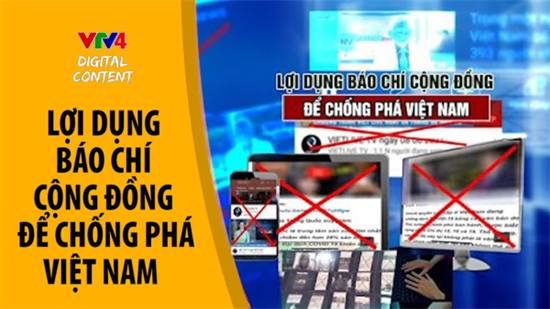
Nowadays, the development of the Internet and social media has endlessly expanded space for human expression. However, alongside the benefits brought about by digital civilisation, numerous negative consequences have also emerged, as cyberspace has become fertile ground for fake and distorted news aimed at manipulating public opinion and perception. Some extremist organisations and individuals have exploited this environment to turn the spread of false information into so-called “social criticism”, distortions into “multi-faceted information”, and subversive activities into “the struggle for freedom of the press”.
 |
| Illustrative photo |
Their familiar plot is the deliberate conflation of legitimate social criticism with acts of sabotage, distortion, and incitement and the dissemination of false information. This conspiracy is not new, but it is reiterated to create the illusion that any action under the name of “criticism” automatically becomes justified. Through this twist, distorted information is rebranded as “an alternative perspective”; fake news becomes “an unrecognised truth”; extremist incitement is labelled as “the fight for democracy”; legal measures against violations are distorted as “stifling press freedom”.
In fact, once the concealment is removed, these plots reveal themselves as deliberate distortions and falsifications intended to sow extreme distrust, deny achievements, provoke social division, and erode public confidence. Genuine social criticism, by contrast, must be grounded in verified information, evidence-based arguments, and constructive advice, with a view to improving policies, creating a more transparent society, and enhancing governance.
Another plot is exploiting emotion to replace legal judgement. Some people are described as “independent journalists”, “democracy activists”, or “prisoners of conscience” in order to create media effects, but such labels cannot alter their legal violations. No one is prosecuted merely for holding different opinions; acts such as spreading false information, distortions, defamation, and incitement, or infringing upon the interests of the State and the lawful rights of organisations and individuals cannot be exempted, even under the umbrella of “press freedom”.
It is also necessary to point out another widespread line of argument: the absolutisation of freedom in order to reject all forms of management. According to this logic, any legal measures against fake news, harmful content, or disinformation are immediately condemned as an attempt to “silence the press”. If such reasoning were accepted, would every country combating fake news be considered “anti-freedom”? Would every digital platform required to remove illegal content become a victim of “censorship”? Would every regulation on media responsibility amount to “democratic repression”? Such conclusions are not only unrealistic but also dismiss the global efforts to protect healthy public information space.
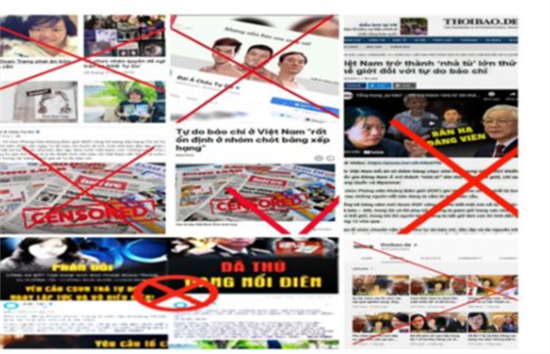
The truth is that the issue facing the world today is not whether information should be regulated, but rather how to regulate it in a way that both safeguards freedom of expression and protects society from fake news and disinformation. From this perspective, biased assessments of press freedom in Vietnam should be taken into full consideration. Some international agencies and reports tend to equate lawbreakers with individuals exercising legitimate freedom of expression, to equate legal action against anti-state activities with “press repression”, or to equate unverified personal media platforms with professional journalism. This is a dangerous conflation. If every act committed in the name of “criticism” were automatically exempt from responsibility, then the rule of law itself would lose its substantive meaning. Freedom would cease to be a legal right and become an unlawful privilege.
 |
| Illustrative photo |
2. The legal limits of press freedom are set in the international context
Ironically, many people frequently cite Article 19 of the Universal Declaration of Human Rights (1948) to defend freedom of expression, emphasising that “everyone has the right to freedom of opinion and expression”, including the freedom to seek, receive, and impart information through any media and across all frontiers. Yet they deliberately “ignore” the provisions concerning the limits of this right. Article 29 of the same document clearly states that the exercise of individual rights and freedoms shall be subject to limitations determined by law for the purpose of securing respect for the rights and freedoms of others and meeting the requirements of morality, public order, and the general welfare in a democratic society. This principle is reaffirmed in Article 19(3) of the International Covenant on Civil and Political Rights (1966). Clearly, in major international legal instruments, freedom of speech has always been placed within a framework of legal and social responsibility.
In the United States and Western countries - often cited as symbols of “press freedom” - the dissemination of harmful information is still controlled through strict legal systems. American law strongly protects freedom of speech, but it does not protect defamation, slander, incitement to violence, or acts that endanger the community. Individuals and organisations are entitled to sue media agencies if false information causes damage to their honour, reputation, or lawful interests. Similar legal frameworks exist across the European Union. In France, for example, freedom of speech and online communication are likewise accompanied by specific legal restrictions.
This demonstrates a clear reality: legal limitations on freedom of the press and freedom of speech are not a “special characteristic” of any one country, but rather a universal principle of all modern rule-of-law states. Those who loudly advocate for “absolute freedom” often invoke the West only at the level of slogans, while quietly ignoring the legal sanctions that accompany such freedoms. This selective approach may be intentional, but it cannot serve as the basis for any serious argument.
3. Vietnam guarantees freedom of the press within the framework of law
In Vietnam, freedom of speech and freedom of the press are constitutionally guaranteed rights and are further institutionalised through an increasingly comprehensive legal system. Article 25 of the 2013 Constitution affirms that: “Citizens shall enjoy the right to freedom of speech, freedom of the press, access to information, assembly, association, and demonstration. The exercise of these rights is prescribed by law”. Based on this constitutional foundation, laws such as the Press Law (2025), the Law on Access to Information (2016), and the Cybersecurity Law (2025) all uphold and protect freedom of speech. For example, while expanding the legitimate space for citizens’ expression, Articles 5 and 7 of the Press Law (2025) stipulate that: “1. The State creates favourable conditions for citizens to exercise the right to freedom of the press and freedom of speech in the press, and for the press to properly fulfil its role. 2. Press agencies and journalists operate within the framework of the law and are protected by the State…”. The same law also reaffirms the principle that the press is not subject to prior censorship before printing, broadcasting, transmission, or publication in cyberspace.
Freedom of the press is further reflected in the expansion of Vietnam’s information landscape. By November 2025, 778 press agencies operated nationwide, ranging from print newspapers and online media to radio, television, specialised journals, and scientific publications. More importantly, Vietnamese journalism has evolved from quantitative growth to qualitative development, embracing greater professionalism in organisation, modernisation in technology, diversification in audience engagement, and stronger responsibility in information handling. The National Press Digital Transformation Strategy to 2025, with orientations toward 2030, aims to build a press system that is professional, humane, and modern, improve audience experience, create new revenue streams, promote the digital content industry, and at the same time maintain the press’s role in shaping public opinion and safeguarding information sovereignty in cyberspace.
This development is also reflected in the increasingly prominent role of the press in national life. Journalism serves as a sharp weapon on the ideological and cultural front, an important channel for disseminating policies, laws, and regulations, a forum through which people express their thoughts and aspirations, a tool for social supervision and criticism, a vanguard in combating corruption, wastefulness, and misconduct, and at the same time, a leading force in countering hostile and false information, defending the ideological foundation, and protecting national interests.
However, a developed press cannot be measured solely by the number of media agencies, the volume of published works, or the speed of information dissemination. Its true value manifests itself in journalistic quality - accuracy, humanity, political integrity, professional ethics, and the capacity to serve society. Therefore, alongside provisions protecting press freedom, Article 8 of the Press Law (2025) specifically identifies 14 prohibited acts.
4. Upholding the rule of law to protect the genuine values of press freedom
In the digital age, when the boundary between reality and illusion, between verified information and fake news, has become increasingly fragile, protecting freedom of the press is not merely about expanding space for expression. At its core, it is about protecting the authenticity and humanity of information itself. No rule-of-law nation tolerates the distortion of truth or legitimises disinformation under the pretext of “freedom of expression”. Strict legal sanctions do not restrict freedom; on the contrary, they constitute the highest guarantee of citizens’ right to access the truth, protect national interests, and preserve a healthy media environment.
On the journey of accelerating digital transformation and proactively integrating into the international community, Vietnam remains determined to strictly address acts of exploiting press freedom to violate its legal systems, while protecting the living space of a truly revolutionary press: professional, humane, and modern, with the courage to defend the truth and the responsibility to serve the people.
NGUYEN THI MINH HUE
Deputy Director of the Department of Press and Publishing
Central Commission for Information, Education, and Mass Mobilisation