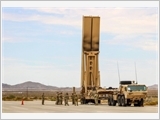
Modernisation trend in US Military’s weapons and equipment
Wednesday, August 26, 2026, 14:35 (GMT+7)
A shift in US military thinking from pursuing short-term wins to making preparations for prolonged, dispersed, and multi-domain conflicts is bringing about fundamental changes in force development, in which arms modernisation is regarded as a decisive factor. To this end, the US Military has prioritised investment in developing next-generation combat platforms, long-range precision strike weapons, and smart unmanned combat vehicles
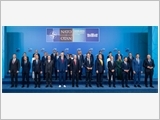
2026 NATO Summit - Strategic adjustment and implications for global security
Tuesday, August 11, 2026, 16:05 (GMT+7)
The 2026 Ankara Summit can therefore be seen as marking a significant adjustment in NATO’s thinking about its future development, while simultaneously reflecting the transition of the international security environment into a new phase. As major-power competition increasingly evolves into a comprehensive contest over national capabilities, strategic advantage will depend to a greater extent on the ability to generate and sustain national power across multiple domains.
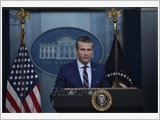
Reality and implications behind rising US defence budget
Monday, July 20, 2026, 09:01 (GMT+7)
Against the backdrop of intensifying strategic competition among major powers, further escalation of military conflicts and wars in several regions, and complex developments of non-traditional security challenges, the US has been steadily expanding its defence budget to preserve its military superiority, strengthen its deterrence capabilities, and reinforce its position as the world's leading superpower
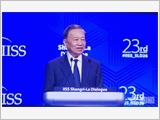
Global and regional political and security landscape from the perspective of the 2026 Shangri-La Dialogue
Saturday, July 18, 2026, 11:43 (GMT+7)
All presentations and discussions at the Forum highly agreed with the assessment that the global political and security situation is emerging with three fundamental crises including the international order, the development model, and strategic trust.
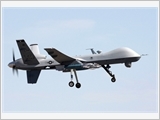
US UAV development efforts
Tuesday, April 28, 2026, 11:32 (GMT+7)
The US was the first country to develop and employ UAVs. As early as the First World War, the US tested Kettering Bug, a suicide UAV capable of carrying weapons to a target and detonating on impact. During the Second World War, the country continued to develop and use UAVs controlled via radio signals. During the Cold War, Washington tested and deployed a number of advanced unmanned systems, such as the Ryan Firebee system for reconnaissance missions over enemy airspace
Global political–military landscape through the lens of the Munich Security Conference 2026
Saturday, April 18, 2026, 10:31 (GMT+7)
Munich Security Conference 2026 has laid bare a stark reality: the unipolar world order of the post–Cold War era is disintegrating, while a stable multipolar order has yet to take shape. In this high-risk transitional period, the combination of traditional military strength with flexible diplomacy, alongside economic and technological capabilities, will determine each nation’s position.

Greenland: a focal point of geopolitical competition
Monday, March 30, 2026, 09:26 (GMT+7)
Despite being a sparsely populated autonomous territory with harsh natural conditions, the island of Greenland has recently emerged as a new focal point for geopolitical competition. This is particularly true following the assertive statements and manoeuvres by US President Donald Trump. This development reflects a shift in the strategic focus within major powers’ calculations, presenting challenges for both the region and the broader world

Changes in the 2025 US National Security Strategy
Tuesday, February 24, 2026, 07:25 (GMT+7)
According to several international researchers, the 2025 US NSS is a comprehensive roadmap to protect the sovereignty, foster the well-being and maintain the technological advantage of the US based on the pragmatic principles.
Overview of the global political and military landscape in 2025
Wednesday, December 31, 2025, 14:15 (GMT+7)
The most prominent features of the global political and military landscape in 2025 are the irreversible trend towards multipolarity of the world order and intense competition among major powers. Besides, worrying developments from the conflicts of Russia-Ukraine, Israel-Iran, India-Pakistan, etc., and the risk of US military intervention in Venezuela are posing significant challenges to global security and stability.
Strategic competition among major powers in the Asia-Pacific region and implications for ASEAN
Monday, November 24, 2025, 15:14 (GMT+7)
According to international observers, the formation of the US-led sub-multilateral security mechanisms QUAD, AUKUS, and other "trilateral, quadrilateral" security cooperation mechanisms can increase the risk of US-China confrontation and affect ASEAN's centrality in the regional security structure as shown through ARF, ADMM, ADMM+, etc. The risk of "securitising" cooperation areas will increase with the increasing momentum of strategic competition between major powers.