Measures and resources for implementing the National marine spatial planning for the period of 2021 - 2030, with a vision to 2050
Resolution No. 139/2024/QH15 on “National marine spatial planning for the period of 2021 - 2030, with a vision to 2050” was passed on 28 June 2024 at the Seventh session of the 15th National Assembly. Along with determining the scope of the planning, viewpoints, goals, visions, key tasks and breakthroughs,... the Resolution sets out 07 solutions and resources for implementing the Planning, including:
1. Review and amend the relevant laws and regulations; complete mechanisms and policies, establish and adopt criteria for and policies on development of a country that is recognised to be powerful in terms of its sea and be enriched by its sea, support policies and breakthrough mechanisms for the development of marine economic sectors and special administrative-economic units, free trade zones and bonded areas on coastal zones, islands and at sea, etc. Innovate marine governance methods towards modernity and effective competition; encourage and mobilise People of all strata, enteprises, levels and sectors in the implementation of the Planning.
2. Develop and apply marine science and technology; issue technical requirements and criteria according to international environmental standards to investment projects; increase investment in technical facilities and conduct basic investigation into natural resources and environment in deep and remote waters. Promote innovation and intensive application of scientific achievements, advanced technologies to perform key tasks and breakthroughs of the Planning.
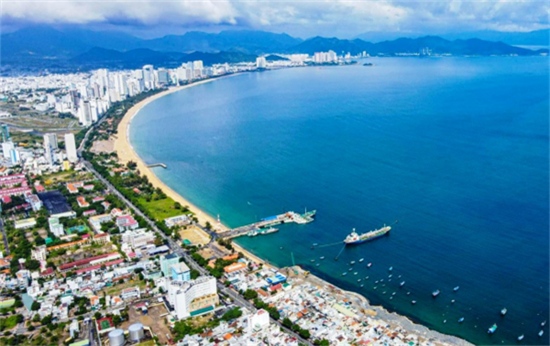 |
| A beautiful coastline of Vietnam |
3. Encourage and raise domestic and foreign investment capital to develop marine economic sectors; appropriately allocate resources to implement projects of national importance according to the Planning. Promote the leading role of public investment in attraction and mobilisation of social resources engaged in investment projects, especially marine economic sectors and fields. Focus on reasonable allocation of resources to serve basic investigation, statistics, processing of information and data and completion of a system of information and database on sea and islands.
4. Develop high-calibre human resources with in-depth and comprehensive expertise in seas and oceans; build and issue special mechanisms and policies to attract the talent, gradually forming a contingent of managers, scientists and experts of with international standard. Develop policies on support and improvement of training quality and build up a network of local training institutions providing marine human resources that reach the advanced regional level; effectively provide vocational training, thereby meeting labour requirements of marine economic sectors and people’s demand for change in jobs in coastal zones, etc.
5. Tighten supervision of implementation of the Planning; strictly handle acts of exploiting and using sea against regulations of law, causing environmental pollution, degrading and destroying marine resources; enable relevant parties to participate in implementation of the Planning and supervision of thereof to the maximum.
6. Promote and encourage international cooperation in the fields of seas and islands. Strengthen dialogues to promote maritime connectivity and global cohesion; enhance negotiation and conclusion in terms of maritime boundary delimitation; actively participate in international treaties and agreements on protection of marine environment, marine conservation, exploitation and use of shared waters.
7. Publicly and transparently announce the Planning according to regulations of law by using methods appropriate to each group of regulated entities. Strengthen information, propaganda and education work to raise awareness of entities and individuals about the Planning.
PHAM BINH