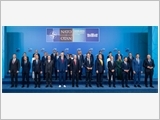
2026 NATO Summit - Strategic adjustment and implications for global security
Tuesday, August 11, 2026, 16:05 (GMT+7)
The 2026 Ankara Summit can therefore be seen as marking a significant adjustment in NATO’s thinking about its future development, while simultaneously reflecting the transition of the international security environment into a new phase. As major-power competition increasingly evolves into a comprehensive contest over national capabilities, strategic advantage will depend to a greater extent on the ability to generate and sustain national power across multiple domains.
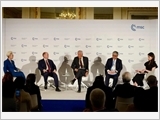
Global political–military landscape through the lens of the Munich Security Conference 2026
Saturday, April 18, 2026, 10:31 (GMT+7)
Munich Security Conference 2026 has laid bare a stark reality: the unipolar world order of the post–Cold War era is disintegrating, while a stable multipolar order has yet to take shape. In this high-risk transitional period, the combination of traditional military strength with flexible diplomacy, alongside economic and technological capabilities, will determine each nation’s position.

Greenland: a focal point of geopolitical competition
Monday, March 30, 2026, 09:26 (GMT+7)
Despite being a sparsely populated autonomous territory with harsh natural conditions, the island of Greenland has recently emerged as a new focal point for geopolitical competition. This is particularly true following the assertive statements and manoeuvres by US President Donald Trump. This development reflects a shift in the strategic focus within major powers’ calculations, presenting challenges for both the region and the broader world

Changes in the 2025 US National Security Strategy
Tuesday, February 24, 2026, 07:25 (GMT+7)
According to several international researchers, the 2025 US NSS is a comprehensive roadmap to protect the sovereignty, foster the well-being and maintain the technological advantage of the US based on the pragmatic principles.
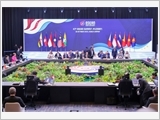
Strategic competition among major powers in the Asia-Pacific region and implications for ASEAN
Monday, November 24, 2025, 15:14 (GMT+7)
According to international observers, the formation of the US-led sub-multilateral security mechanisms QUAD, AUKUS, and other "trilateral, quadrilateral" security cooperation mechanisms can increase the risk of US-China confrontation and affect ASEAN's centrality in the regional security structure as shown through ARF, ADMM, ADMM+, etc. The risk of "securitising" cooperation areas will increase with the increasing momentum of strategic competition between major powers.

BRICS expansion: opportunities and challenges for ASEAN
Monday, March 24, 2025, 13:05 (GMT+7)
Since being founded by Brazil, Russia, India, and China in the early 21st century, BRICS has increasingly strengthened its role as a key driver of global economic growth. The group has garnered attention and aroused desire for membership from the international community, including ASEAN countries

Great power competition in Indo-Pacific
Friday, August 16, 2024, 07:58 (GMT+7)
Overall assessment of great powers’ Indo-Pacific strategies reveals that despite their different expression, all great powers put the Indo-Pacific at the heart of global security and interests of each country. Accordingly, strategic competition among great powers in Indo-Pacific is a unique issue characterised by cooperation, deterrence, and containment.
On Australian adjusted defence strategy
Saturday, September 30, 2023, 11:00 (GMT+7)
International military researchers point out that Australia has to face a possibly higher level of strategic risks due to the increasing strategic competition between major powers, the improvement in military capabilities, especially long-range strike capability of some countries in the region, along with issues of climate change, epidemics, the disruption of the global supply chain, etc. Faced with the movements in the Indo-Pacific region and non-traditional security challenges, Australia must certainly adjust its defence strategy to cope with new security challenges, while protecting its nation-state’s interests.
South Korea's Indo-Pacific strategy and Seoul's "position" in the region
Wednesday, April 26, 2023, 09:52 (GMT+7)
nder the three cooperation principles of inclusiveness, trust and reciprocity, South Korea affirmed that the focus of the new strategy is to promote a free, peaceful and prosperous Indo-Pacific region through the establishment of a rules-based order and cooperation on human rights. In a 37-page report, the South Korean Government presented nine core tasks to implement the Strategy.
Overview of power competition in Africa
Tuesday, February 28, 2023, 11:40 (GMT+7)
Cooperation and competition among countries, regional and international integrity are an inevitable rule in the trend of globalisation, and the motivation for countries to enhance the socio-economic development, assure the national defence and security. Therefore, all countries, the powerful ones in particular, should make equal cooperation and competition, co-development, avoid turning competitions into conflicts for their own benefits and conspiracy, which could endanger the security, stability and development in Africa particularly and in the world generally.