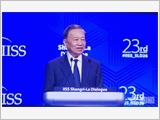
Global and regional political and security landscape from the perspective of the 2026 Shangri-La Dialogue
Saturday, July 18, 2026, 11:43 (GMT+7)
All presentations and discussions at the Forum highly agreed with the assessment that the global political and security situation is emerging with three fundamental crises including the international order, the development model, and strategic trust.
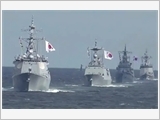
South Korea strengthens presence in Indo-Pacific region
Thursday, May 28, 2026, 14:25 (GMT+7)
It is believed that the announcement of the Indo-Pacific Strategy reflects South Korea's desire to become a key player on a global scale. This is not just a guiding slogan, but has become the central theme of Seoul's foreign policy, reflecting an effort to transcend traditional concerns – resolving issues on the Korean Peninsula.
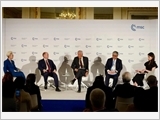
Global political–military landscape through the lens of the Munich Security Conference 2026
Saturday, April 18, 2026, 10:31 (GMT+7)
Munich Security Conference 2026 has laid bare a stark reality: the unipolar world order of the post–Cold War era is disintegrating, while a stable multipolar order has yet to take shape. In this high-risk transitional period, the combination of traditional military strength with flexible diplomacy, alongside economic and technological capabilities, will determine each nation’s position.

Changes in the 2025 US National Security Strategy
Tuesday, February 24, 2026, 07:25 (GMT+7)
According to several international researchers, the 2025 US NSS is a comprehensive roadmap to protect the sovereignty, foster the well-being and maintain the technological advantage of the US based on the pragmatic principles.
Cyber operations forces - a core component of many nations’ military power in the digital age
Sunday, February 22, 2026, 15:32 (GMT+7)
In the context of the rapidly evolving 4th Industrial Revolution, cyberspace has become the “fifth strategic domain” and a “new battlefield” where nations simultaneously engage in cooperation and fierce competition. Alongside traditional armed forces, cyber forces are emerging as a core pillar of military power, playing a vital role in the national defence and security strategies of many countries worldwide
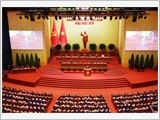
Congratulatory letters and messages from international parties, organisations, and friends to the 14th National Party Congress
Tuesday, February 10, 2026, 09:50 (GMT+7)
The Congress received nearly 900 congratulatory letters and messages from international political parties, organisations, friends and overseas Vietnamese communities. This was such a great source of encouragement and inspiration, and a vivid manifestation of the friendly cooperative relation between our Party and the international political parties, organisations and friends, also a connection from the overseas Vietnamese people to the country.
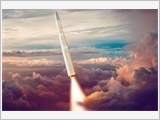
On the U.S strategic weapon policy and implications on world security
Saturday, January 24, 2026, 09:17 (GMT+7)
International public opinion hopes that, in the context of major challenges, maintaining a peaceful and stable environment is more urgent than ever. The United States and other major powers should find a balanced solution soon which can both ensure their national security and prevent the world from a new arms race.
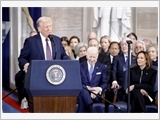
Overview of the global political and military landscape in 2025
Wednesday, December 31, 2025, 14:15 (GMT+7)
The most prominent features of the global political and military landscape in 2025 are the irreversible trend towards multipolarity of the world order and intense competition among major powers. Besides, worrying developments from the conflicts of Russia-Ukraine, Israel-Iran, India-Pakistan, etc., and the risk of US military intervention in Venezuela are posing significant challenges to global security and stability.
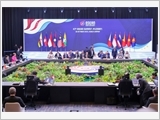
Strategic competition among major powers in the Asia-Pacific region and implications for ASEAN
Monday, November 24, 2025, 15:14 (GMT+7)
According to international observers, the formation of the US-led sub-multilateral security mechanisms QUAD, AUKUS, and other "trilateral, quadrilateral" security cooperation mechanisms can increase the risk of US-China confrontation and affect ASEAN's centrality in the regional security structure as shown through ARF, ADMM, ADMM+, etc. The risk of "securitising" cooperation areas will increase with the increasing momentum of strategic competition between major powers.

The emergence of a new strategic order in the Middle East
Thursday, November 20, 2025, 10:19 (GMT+7)
Recently, the political and security situation in the Middle East has become increasingly complex, leading to a significant change in the region’s strategic order. This transformation is not simply a return to “the old order” or “a unipolar system”, but rather a shift towards a new and more complex strategic order