Building a revolutionary, regular, elite, and modern People’s Army and People’s Public Security is one of the major orientations of our Party and State, as defined in the draft documents submitted to the 14th National Party Congress. Effective implementation of this strategic guideline will strengthen the overall quality and combat power of the People’s Army, meeting the increasingly demanding requirements of national construction and defence.
During the comprehensive reform of the country, along with socio-economic development, the armed forces in general and the Viet Nam People’s Army in particular has received strong attention and investment from the Party and State to gradually advance toward modernity. Certain services, arms, and units have been prioritised to move straight to modernity. As the country enters a new era of development, accompanied by breakthroughs in socio-economic progress, the task of firmly protecting the Fatherland will witness new developments, creating more demanding requirements for building a modern People’s Army.
Modernity is a key criterion for assessing the capability of an army. Depending on national conditions, each country may choose to modernise step by step or move directly to modernity. Building a modern army requires clearly defined criteria as a foundation for implementation. This includes comprehensive development in both personnel and weaponry, technical equipment across all services, arms, and units, covering all aspects, including political and ideological work, organisational structure and force design, competence, weapons and equipment, training, combat readiness, operational art, and so forth. However, building a modern army does not mean instantly achieving full modernity. It demands identifying specific criterion of a modern army and advancing directly toward those standards, without having to progress through lower developmental stages. This approach shortens the path toward modernity and allows subsequent consolidation and advancement in line with the modern standards of regional and global militaries.
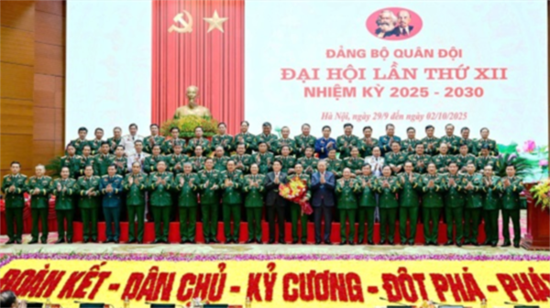 |
| General Secretary To Lam and State President Luong Cuong at the 12th Military Party Congress held in Octorber 2025 |
In recent years, our military has received significant investment from the Party and State to build toward modernity in line with the criteria of a modern force, gradually approaching the level of modern armed forces. The professional and technical qualifications of officers and soldiers have approached modern standards. The military has begun to reach the level of modern people’s war in defence of the Fatherland in several fields such as military art, regulations and discipline, command and control, training, and operations. Weapons and equipment of each service, arm, and unit have been gradually modernised.
Documents of the 13th National Party Congress affirmed the “building of a revolutionary, regular, elite, gradually modern People’s Army and People’s Public Security with certain services, arms, and forces advancing straight to modernity, establishing solid foundations for building a modern People’s Army and People’s Public Security by 2030.” Following this orientation, during the 13th Congress term, our Party set the goal of creating a firm foundation for building a modern People’s Army by 2030. However, after nearly 40 years of reform, the country’s capability, position, and reputation have grown significantly, providing a critical foundation for Viet Nam to advance into a new era of development. Therefore, the draft documents submitted to the 14th Party Congress set the goal of “build a revolutionary, regular, elite, and modern People’s Army and People’s Public Security, which are absolutely loyal to the Fatherland, to the Party, State, and people; are steadfast in the Party’s revolutionary ideals; possess high overall quality and combat strength; serve as the core force in national defence and security; advance toward the building of a modern national defence; and firmly safeguard the Fatherland in the new situation.” Thus, instead of waiting until 2030, the Party has determined that immediately after the 14th Congress, Viet Nam will build a modern People’s Army. This is a sound policy embodying the Party’s strategic vision.
First, this stems from global and regional developments. Although peace, cooperation, and development remain prevailing trends, the world and region are confronting more complex and unpredictable challenges. The global strategic landscape is shifting rapidly toward multipolarity, multiple centres of power, and deepening divisions. Great powers enhance realignment, form new coalitions, and intensify strategic competition in both scope and intensity. The Asia–Pacific and Indian Ocean regions continue to be dynamic economic centres but remain focal points of major-power rivalry, with risks of conflict and war, particularly territorial and maritime disputes, including in the South China Sea. To protect national interests, countries, especially major powers and developed economies, are increasing defence budgets and accelerating military modernisation, focusing on upgrading weapons, equipment, and technical systems.
In this context, Viet Nam must bring its military to a higher, modern level in order to proactively and firmly protect the Fatherland in the new revolutionary period. This requires increased emphasis on promoting quality of research, assessment, and prediction about global and regional developments as well as strategic intentions and alignments among major powers to timely make strategic recommendations to the Party and State to successfully respond to situations without falling into passivity and surprise, avoiding escalation of tensions into armed conflict or war, resolutely safeguarding national independence, sovereignty, unity, and territorial integrity on land and at sea while maintaining a peaceful, stable environment for development of the country.
Second, the guideline also comes from national defence requirements in the new era and the achievements of nearly 40 years’ reform. After the 14th National Party Congress in 2026, Viet Nam will enter a new era of development. Alongside robust socio-economic advancement, the mission of protecting the Fatherland will reach new heights driven by the Strategy of Safeguarding the Fatherland in 2023. This entails protecting national interests, safeguarding independence, sovereignty, unity, and territorial integrity, protecting the Party, State, people, and the socialist regime, safeguarding industrialisation and modernisation, maintaining national prestige, ensuring human and political security and a peaceful environment, and protecting critical national infrastructure, including energy systems, ports, airports, nuclear power plants, high-speed railways, cultural and defence facilities, and so on.
Today, with the population of over 100 million people, Vietnam is no longer a small nation. However, due to its long, narrow S-shaped territory stretching from north to south, the country is prone to division in wartime. In addition, given its vast maritime area with many islands and offshore archipelagos of immense economic and military value, should the war occur, the people’s war at sea would have certain limitations as compared to land operations. Thus, it is essential to build a military capable of conducting modern people’s war, including long-range, multi-domain, high-altitude, underwater, nighttime, and all-weather operations, with effective deterrence in peacetime and readiness to win wars in any form or scale. At the same time, it is vital to develop high-quality human resources, especially for the defence industry, ensuring their mastery of advanced, modern science and technology.
Moreover, after nearly 40 years of reform, Viet Nam has achieved historic accomplishments. National capability, position, and reputation have been elevated, forming a solid foundation for the new development era. This era will provide the military with high-quality human resources shaped by modern industrial production, which is an essential prerequisite for building a modern People’s Army. It will also provide financial and material resources, including the development of a modern defence industry. These are indispensable conditions for an advanced military. Thus, the new revolutionary period not only demands but also enables the building of a modern People’s Army.
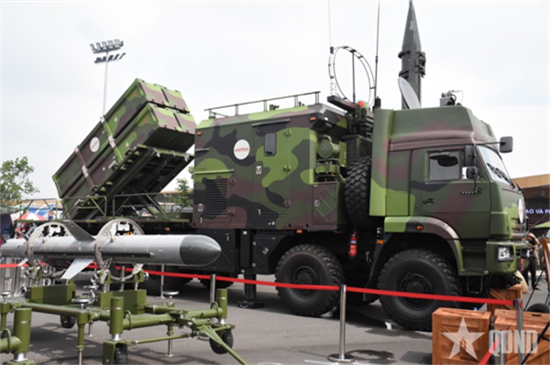 |
| One of the missle complexes developed by Viettel (Photo: qdnd.vn) |
Third, the policy is formulated on reality of building the military in recent years. Throughout the reform process, the Viet Nam People’s Army has steadily advanced toward modernity and achieved significant accomplishments, meeting increasingly complex defence requirements and establishing a solid foundation for modernisation. In the 2020-2025 period, we have essentially completed the goal of building a “compact, strong, and high-quality” force, creating essential conditions for building a modern military. Among the eight criteria for building a modern miliary, some have met modern standards while others now possess fundamental elements for modernisation.
Regarding political steadfastness, since its foundation, the Viet Nam People’s Army has always maintained political loyalty, strong will, and firm ideology in all circumstances and been a loyal and reliable force of the Party, State, and people, with a clear understanding of the mission of building a modern military. Moreover, it must continue to make breakthroughs in promoting and spreading the noble values and qualities of “Uncle Ho’s Soldiers” in the new era, fostering political and military culture, and strengthening patriotism, self-reliance, national pride, and responsibility. Special focus must be placed on building a cadre corps, especially the strategic-level ones, with the competence, integrity, and resolve to “think boldly, act boldly, take responsibility, innovate, confront challenges, and act for the common good.”
Organisational structure and force design, training and education, development of military and defence theory, international integration and defence diplomacy, and logistics and technical support also contain foundational elements of modernity. In recent years, the military has fundamentally completed restructuring toward a compact, strong, and effective force, aligned local military structures with the two-tier administrative model, and improved combat readiness of all units, better meeting mission demands in the new situation. Training has been renewed to reflect close-to-combat conditions and modern operational methods, enabling mastery of modern equipment. Research, review, and theoretical development have been carried out effectively with high quality. International integration and defence diplomacy continue to be promoted, contributing to enhancing position and prestige of the country and military in the international arena. The ways to deliver logistical, technical support witness innovation, creativity, and adjustment in accordance with policies and practical requirements of mission in the new situation. Therefore, in the coming time, the organisational structure and staffing of departments and units in the military need to be further streamlined to become more adept, compact, and strong, in line with criteria of building a modern military. Besides promoting operational methods of traditional people’s warfare, training and development of military, defence theory should also focus on studying new operational methods of modern people’s warfare, modern combined-arms operations, joint operations, and autonomous command and control. Logistical, technical support needs to be modernised. Additionally, it is necessary to further enhance international integration and defence diplomacy according to guidelines of the Party and State, especially Resolution No. 59-NQ/TW dated 24 January 2025 of the Politburo on international integration in the new situation and Politburo’s Conclusion No. 53-KL/TW dated 28 April 2025 on international integration and defence diplomacy through 2030 and beyond.
Criteria on weaponry, technical equipment, and defence industry reflect most clearly the military’s modernity. Over the past few years, Viet Nam has achieved certain advances, particularly in the Navy, Air Defense-Air Force, Artillery and Missile Force, Tank and Armored Force, electronic warfare, and cyber warfare. This creates a robust foundation for moving toward a fully modern military. In the coming years, the defence industry must accelerate the application of advanced, dual-use technologies, master core and foundational technologies, and design, manufacture, and produce advanced weapons, especially the strategic weapons, in a “leapfrogging” approach to meet demands of building a modern military.
Building a modern Viet Nam People’s Army is an inevitable requirement of national construction and defence in the new development era. With the foundations already laid and the opportunities presented by this era, we can firmly believe that Viet Nam will succeed in building a modern People’s Army. This is the confidence, hope, and pride the whole nation places upon an army from the people, of the people, and by the people.
Lieutenant General, Associate Professor, Doctor TRAN THAI BINH