Strengthening cooperation in the defence industry is one of the key priorities emphasised at the NATO Summit held in the Netherlands in June 2025, aimed at enhancing the Alliance’s collective defence capabilities, unity, and long-term sustainability. The context, achievements, difficulties, challenges, and emerging cooperation trends in this field within NATO are what have drawn significant international attention.
Context
Amid a complex and evolving international security environment, marked by intensified strategic competition among major powers and the growing prominence of non-traditional security challenges, countries as well as regional and international organisations, including NATO, have been compelled to strengthen cooperation to safeguard their core values, ensure the interoperability of weapon systems, enhance the effectiveness of defence procurement, share the burden more efficiently, and promote technological innovation.
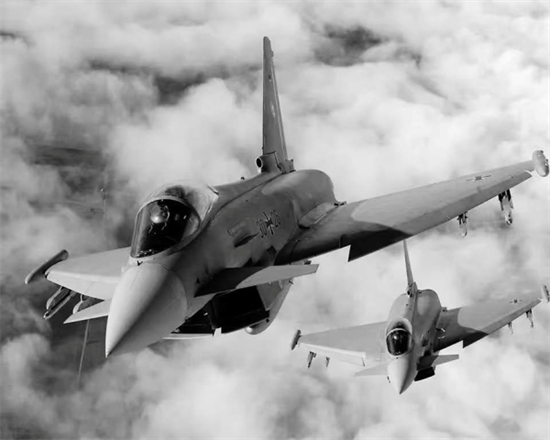 |
| Typhoon combat aircraft designed by many European states (photo: qdnd.vn) |
Particularly, the Russia - Ukraine conflict has depleted the weapon stockpiles of many NATO members and revealed several limitations in their defence production capacity. As a result, NATO leaders believe it is necessary to strengthen cooperation, enhance defence autonomy, and reduce dependence on external suppliers. Accordingly, the Hague Summit Declaration (June 2025) reaffirmed shared commitment to rapidly expand transatlantic defence industrial cooperation, to harness emerging technology and the spirit of innovation to advance collective security, to work to eliminate defence trade barriers among Allies and to leverage partnerships to promote defence industrial cooperation.
According to researchers, NATO’s foremost strategic goal is to build a unified, modern, sustainable, and highly interoperable defence industry among its members, capable of meeting the requirements of collective defence in an increasingly complex security environment. In addition, cooperation helps maintain the manufacturing capacity of traditional weapons and equipment, share the financial burden of defence programs, avoid duplication and waste of resources, promote joint procurement to achieve economies of scale, and move toward building a high-tech defence industrial ecosystem.
Achievements, difficulties, and challenges
In recent years, NATO has developed and refined a framework for defence industrial cooperation among member states through various programs and initiatives, including the Defence Production Action Plan (DPAP), the NATO Innovation Fund, and the Defence Innovation Accelerator for the North Atlantic (DIANA). This is regarded as an important step forward for NATO, marking its shift from ad hoc cooperation to a more systematic approach, aimed at building a unified industrial - technological alliance.
The establishment of these programs and initiatives has laid the foundation for a cooperative network linking enterprises, research institutes, and technology start-ups, enabling NATO to strengthen its autonomy and maintain technological superiority in the military domain over strategic competitors. At the same time, it helps member states enhance interoperability and standardise equipment in the design, testing, operation, and maintenance of weapons systems under NATO’s STANAG standards. This creates favourable conditions for new member states to adopt the Alliance’s standards and gradually improve the effectiveness of their operational coordination in multinational environments.
Defence industrial cooperation also enables NATO to expand collaboration with other countries, particularly those in the Asia-Pacific region, thereby reducing its dependence on US strategic raw materials and enhancing the Alliance’s global influence in the defence industry. At the 2024 Summit in the US, NATO leaders affirmed that the Alliance would broaden defence industrial cooperation with several Indo-Pacific partners, including South Korea, Japan, and Australia. Following the Summit, NATO signed the NATO - Japan Security and Defence Partnership Agreement (November 2024) and, together with South Korea, established a working-level consultative body on defence industry cooperation (June 2025).
According to researchers, NATO’s defence industrial cooperation, despite its advantages, also faces several major difficulties and challenges: (1) Significant disparities in industrial capabilities and defence budgets among member states. Within NATO, the US possesses the strongest defence industry, with research, development, production, and export capabilities far exceeding those of other members. The US annual defence budget alone accounts for roughly two-thirds of NATO’s total defence spending. Although several Western European members have relatively developed defence industries, they remain small in scale and fragmented. Meanwhile, Central and Eastern European countries still face limited production capacity and rely heavily on imported components and technologies. These imbalances create major obstacles to the implementation of cooperative programs. (2) Competition among defence companies and industrial conglomerates of member states. This constitutes a major barrier to NATO’s defence industrial cooperation. Each member state has its own security strategies, industrial policies, and economic interests, and tends to protect domestic defence enterprises, leading to competition for international contracts. This undermines the effectiveness of joint research, development, and production efforts, and hinders the goal of establishing a unified, highly competitive, and cohesive defence industrial base. Several multinational projects, such as the sixth-generation fighter aircraft program and the next-generation main battle tank program, have faced delays and a lack of consensus on technical standards. (3) Supply-chain disruptions and limited capacity to sustain long-term production. Following the outbreak of the Russia - Ukraine conflict, Europe’s defence base has revealed several shortcomings, including its inability to keep pace with actual demand and its heavy dependence on partners for components, materials, and spare parts. In addition, shortages of high-skilled labour, limited production capacity, and complex contract-approval procedures have further exacerbated supply-chain disruptions. (4) Intra-alliance political and administrative factors. Each NATO member state upholds its own defence policies and decision-making mechanisms, which complicates efforts to harmonise objectives and allocate resources for joint projects. In particular, procedures for budget approval, contract negotiation, and technology sharing are often shaped by national interests or domestic political pressures. Differences in administrative structures, legal frameworks, and technical standards among member states further complicate coordination, lengthen procedural timeline, reduce flexibility, cause delays, and undermine the effectiveness of cooperative programs.
Trends in Cooperation
Although NATO’s defence industrial cooperation has achieved certain results, the speed, scale, and level of integration among member states still fall short of the Alliance’s potential and expectations. According to researchers, in the coming period, NATO’s defence industrial cooperation is likely to develop along several key directions.
First, NATO will continue to promote institutionalisation and standardisation within its defence industrial cooperation framework. This process aims to establish a unified legal framework, coordination mechanisms, and common standards for the entire Alliance, thereby reducing fragmentation in planning and duplication in research and production, while improving the interoperability of weapons and equipment systems among member states. NATO is working to strengthen mechanisms for information sharing, resource allocation, and the application of technical standards through DPAP and DIANA. Standardising procurement procedures and defence product evaluation will also constitute a key factor in enhancing cooperation efficiency, shortening project timelines, and shaping a more integrated and unified defence industrial market.
Second, defence industrial cooperation will be closely linked to technological transformation and innovation. In the current context, innovation and technological transformation are considered key factors for NATO to maintain long-term military superiority. Accordingly, defence industrial cooperation will be deeply integrated with advanced research and technology development programs. It will also promote stronger connections between defence enterprises, research institutes, and private-sector technology companies, thereby bridging the gap between research and application, accelerating the dual-use technological transformation in the defence sector, and enhancing the Alliance’s industrial autonomy and competitiveness.
Third, NATO will diversify its partnerships and expand global supply chains. The Alliance will strengthen cooperation with partners, such as Japan, South Korea, Australia, and New Zealand in research, production, and the supply of strategic materials and hi-tech components. At the same time, NATO will encourage defence enterprises to invest in expanding production networks in order to reduce dependence on traditional suppliers, especially those associated with high-risk materials and components. Building flexible, multi-layered , and highly resilient supply chains will not only enable NATO to respond more effectively to crises, but also reinforce the Alliance’s shared defence-industrial base, thereby supporting its goals of self-reliance and collective security.
Fourth, NATO will focus on enhancing sustainability and economic security. NATO will emphasise building a defence industry that is both sustainable and capable of meeting defence requirements while supporting broader socio-economic stability. This commitment will be reflected in efforts to promote clean energy use, environmentally friendly materials, and the adoption of “green” production standards in the defence sector. The Alliance will also regard economic security as an integral component of comprehensive security, and at the same time, it will reinforce measures to monitor foreign investment, safeguard intellectual property, and control the export of sensitive technologies to prevent technological leakage and avoid strategic economic dependence. These efforts will help NATO better adapt to long-term development imperatives, strengthen strategic autonomy, and enhance resilience against potential shocks.
Fifth, NATO will strengthen strategic trust and political cohesion within the Alliance. NATO considers defence industrial cooperation as an essential tool to reinforce strategic trust, enhance political unity, and harmonise the interests of its member states. Joint investment, joint production, and the sharing of defence technologies will not only strengthen collective operational capabilities, but also create long-term interdependence, helping to narrow differences in national policies and strategic priorities. Amid ongoing disagreements over defence spending, burden sharing, and regional security orientations, defence industrial cooperation programs are emerging as a key tool for consolidating NATO’s political strength and internal cohesion.
According to researchers, defence industrial cooperation will be a strategic direction for NATO in the coming period, meeting urgent security requirements and establishing a long-term industrial - technological foundation. This cooperation also provides an important basis for NATO to maintain its competitive advantages in military technology, strengthen collective defence capabilities, and ensure the Alliance’s overall strength amid an increasingly complex global security environment.
VU KHANH